会議のマナーと進め方 — 司会から議事録まで
日本の企業における会議は、単に情報を共有する場ではなく、組織の人間関係や序列を反映する重要な儀式でもあります。適切なマナーを身につけておくことは、新人から管理職まで、すべてのビジネスパーソンにとって必須のスキルです。
Meetings in Japanese companies are not simply venues for sharing information — they are also important rituals that reflect the organization's interpersonal relationships and hierarchy. Acquiring proper manners is an essential skill for every businessperson, from newcomers to managers.
会議の3つの類型
日本のビジネス現場では会議を大きく3つに分けて考えます。第一に報告会、第二に検討会、第三に意思決定会議です。報告会は進捗や成果を共有することが目的で、議論は最小限に抑えられます。検討会は案を練るための場で、結論を出さないことも多いです。意思決定会議は最終決裁を行う場であり、多くの場合は根回しが終わっている前提で開かれます。
In Japanese workplaces, meetings are broadly divided into three categories. First, the report meeting (hokoku-kai); second, the deliberation meeting (kento-kai); and third, the decision-making meeting (ishi-kettei kaigi). Report meetings aim to share progress and results, with discussion kept minimal. Deliberation meetings are venues to refine proposals, often without drawing conclusions. Decision-making meetings are where final approval takes place, and in many cases they are held on the premise that pre-meeting alignment (nemawashi) has already been completed.
座席の順序 — 上座と下座
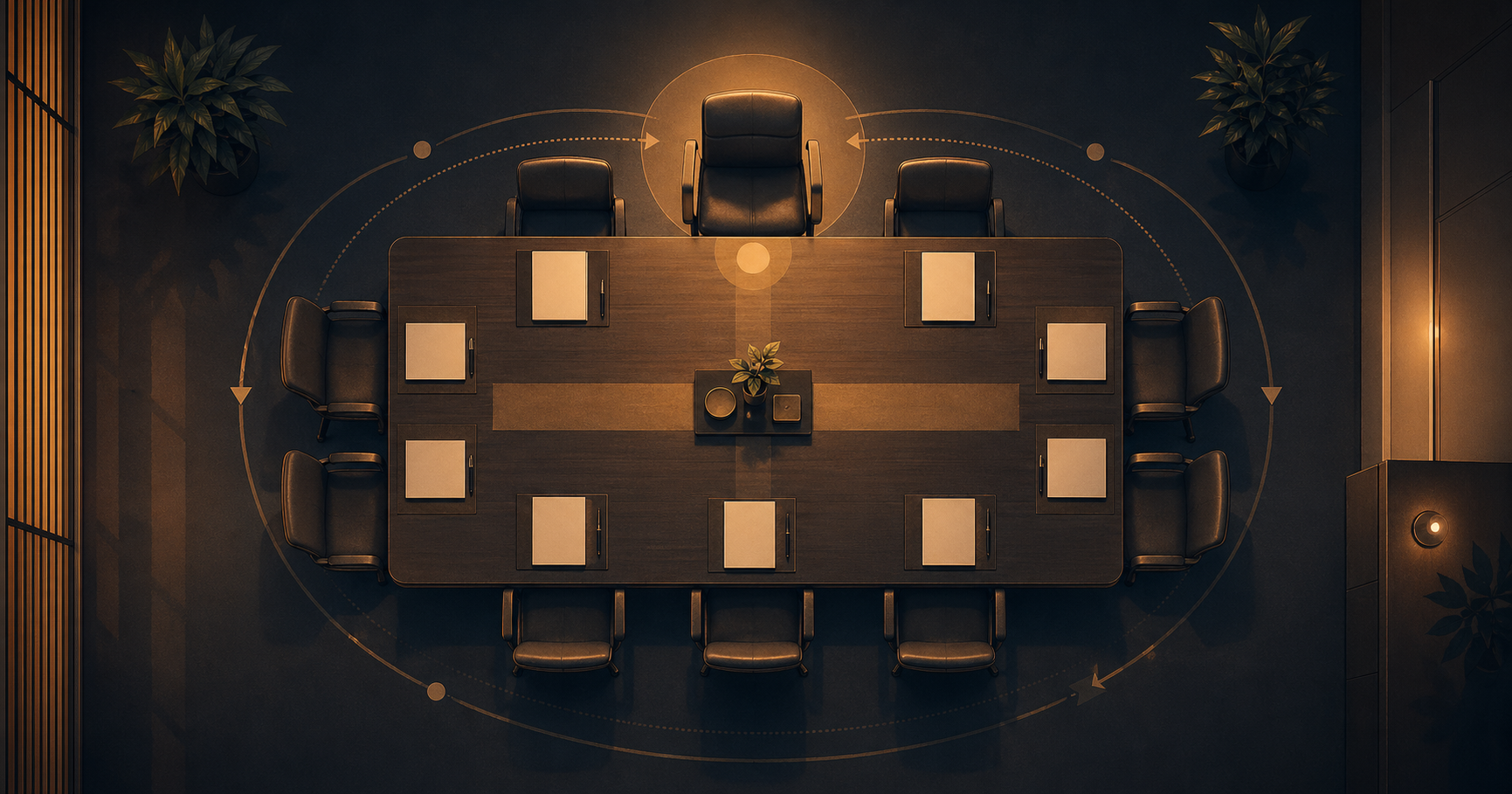
会議室の座席には明確なルールがあります。入口から最も遠い席が上座で、最も目上の人や来客が座ります。入口に最も近い席が下座で、若手や司会者、議事録担当が座ります。これは来客をドアの出入りや騒音から守るという配慮に由来しています。円卓の場合でも同様の考え方で、入口から遠いほど上位になります。
Meeting room seating follows clear rules. The seat farthest from the entrance is the kamiza (seat of honor), where the most senior person or visitor sits. The seat closest to the entrance is the shimoza (lower seat), where junior staff, the chair, or the minutes-taker sits. This originates from the consideration of protecting visitors from door traffic and noise. The same thinking applies at round tables: the farther from the entrance, the higher the rank.
会議の開始 — 挨拶と時間管理
会議は定刻に開始するのが原則です。5分前には全員が着席しているのが望ましく、遅刻は必ず事前に連絡します。司会は開始時刻になったら「お忙しいところお集まりいただき、ありがとうございます」と一言述べてから本題に入ります。アジェンダと終了予定時刻を最初に共有し、各議題に何分使うかを明示することで、時間超過を防ぎます。
Meetings should start at the scheduled time as a principle. It is desirable for everyone to be seated five minutes early, and lateness must always be communicated in advance. At the start time, the chair states briefly, "Thank you for gathering despite your busy schedules," before entering the main topic. Sharing the agenda and scheduled end time at the beginning, and specifying how many minutes each item will take, prevents time overruns.
発言の順序と挙手
日本の会議では、米国スタイルの活発な割り込みは歓迎されません。発言したい時は挙手するか、司会に目を合わせて指名を待ちます。役職が上の人から順に意見を求める傾向がありますが、最近は心理的安全性を重視し、若手から先に発言を促す企業も増えています。発言は結論から述べる(PREP法)のがビジネスの基本です。
In Japanese meetings, US-style lively interruptions are not welcomed. When you want to speak, raise your hand or make eye contact with the chair and wait to be called on. There is a tendency to ask for opinions starting from the most senior position, but recently, more companies are emphasizing psychological safety and encouraging junior staff to speak first. Stating the conclusion first (PREP method) is the business basic.
賛成と反対の表現
賛成を示す際は「おっしゃる通りです」「私も同感です」「その方向で進めていただければと思います」などの表現を使います。反対は直接的に「反対です」と言わず、「一つ気になる点が」「別の視点から見ると」「念のため確認させていただきたいのですが」など、クッション言葉を挟んで相手の面子を守ります。完全に否定するのではなく、「A案も良いと思いますが、B案も検討してはいかがでしょうか」と代替案を提示するのが望ましいです。
To express agreement, use phrases like "exactly as you said," "I share the same view," or "I'd appreciate proceeding in that direction." For disagreement, do not say "I disagree" directly; insert cushion words such as "there's one point I'm concerned about," "looking from another perspective," or "just to confirm, if I may." This protects the other party's face. Rather than completely denying, presenting an alternative is desirable: "Plan A is good, but how about also considering Plan B?"
議事録の書き方
議事録は会議の公式記録であり、会議に出席しなかった関係者にも内容を正確に伝える重要な文書です。標準的な項目は、件名、日時、場所、出席者(役職順)、欠席者、議題、決定事項、宿題(担当・期限を明記)、次回予定です。特に「決定したこと」と「保留」「未決」を明確に区別することが重要です。発言を逐一書き写す必要はなく、論点と結論を簡潔にまとめます。
Minutes are the official record of a meeting and an important document for accurately conveying content to stakeholders who did not attend. Standard items are: subject, date/time, location, attendees (in order of title), absentees, agenda, decisions, action items (specifying owner and deadline), and next scheduled meeting. It is especially important to clearly distinguish "decided," "pending," and "undecided." There is no need to transcribe every utterance; summarize discussion points and conclusions concisely.
議事録の回覧と承認
議事録は会議終了後、原則24時間以内にドラフトを作成し、出席者に回覧します。出席者は内容に誤りや追記が必要な箇所があれば修正を依頼し、最終版が確定したら関係部署に共有します。最近はSlackやNotion、Confluenceなどのツールを使う企業が増えており、紙での回覧や印鑑による承認は減っています。ただし、重要な意思決定を含む議事録は、今でも正式に承認を受ける手続きが必要です。
Minutes should in principle be drafted within 24 hours after the meeting and circulated to attendees. Attendees request corrections if there are errors or additions, and once the final version is fixed, it is shared with related departments. Recently, more companies use tools like Slack, Notion, or Confluence, and paper circulation and seal-based approval are declining. However, minutes containing important decisions still require a formal approval procedure.
会議の終了と閉会の挨拶
会議を終える際は、司会が今日の決定事項と宿題を再確認し、次回の予定を共有します。「本日はありがとうございました。引き続きよろしくお願いいたします」という締めの言葉が一般的です。退出の際は上位者から先に退室するのが原則ですが、最近はそこまで厳格ではない企業も多くなっています。来客がいる会議では、エレベーターまで見送るのが基本マナーです。
When ending a meeting, the chair reconfirms today's decisions and action items, then shares the next scheduled meeting. The typical closing is, "Thank you for today. We look forward to your continued cooperation." When leaving, the principle is for senior persons to exit first, though many companies are no longer strict about this. In meetings with visitors, seeing them off to the elevator is basic manners.