飲み会・ノミニケーション完全攻略 — 新人エンジニアのサバイバルガイド
飲み会は第二の会議室
日本の会社に入ると、必ず出会うのが飲み会文化です。「飲む」と「コミュニケーション」を合わせた造語「ノミニケーション」という言葉があるほど、酒席は同僚や上司と本音で話せる貴重な場とされてきました。
Once you join a Japanese company, you'll inevitably encounter nomikai (drinking party) culture. There's even a coined word — "nominication" — that fuses "drink" and "communication." Drinking events have long been treated as a precious space to talk honestly with colleagues and bosses.
飲み会の種類
一口に飲み会と言っても目的によって雰囲気は大きく変わります。新人が最初に呼ばれるのは歓迎会、年度末の移動の時期は送別会、12月は忘年会、1月は新年会が定番です。部署の少人数の部署飲みは気軽ですが、クライアントを招く接待は完全に仕事の延長と考えてください。
"Nomikai" covers a wide range of moods. As a newcomer your first invite is the welcome party (kangeikai). Around fiscal year-end transfers come farewell parties (soubetsukai). December brings year-end parties (bounenkai), January new year parties (shinnenkai). Small departmental drinks (busho-nomi) are casual, but client entertainment (settai) should be treated as a full extension of work.
上座・下座 — 座席のルール
和室でも洋室でも、基本原則は「入口から最も遠い席が上座、最も近い席が下座」です。上司や来客を上座にお通しし、新人は下座に座って注文や配膳を担当します。
Whether the room is tatami or Western-style, the rule is the same: the seat farthest from the entrance is kamiza (the seat of honor), the seat closest to it is shimoza. Bosses and guests are guided to kamiza; newcomers sit at shimoza and handle ordering and serving.
乾杯のマナー — 音頭とグラスの高さ
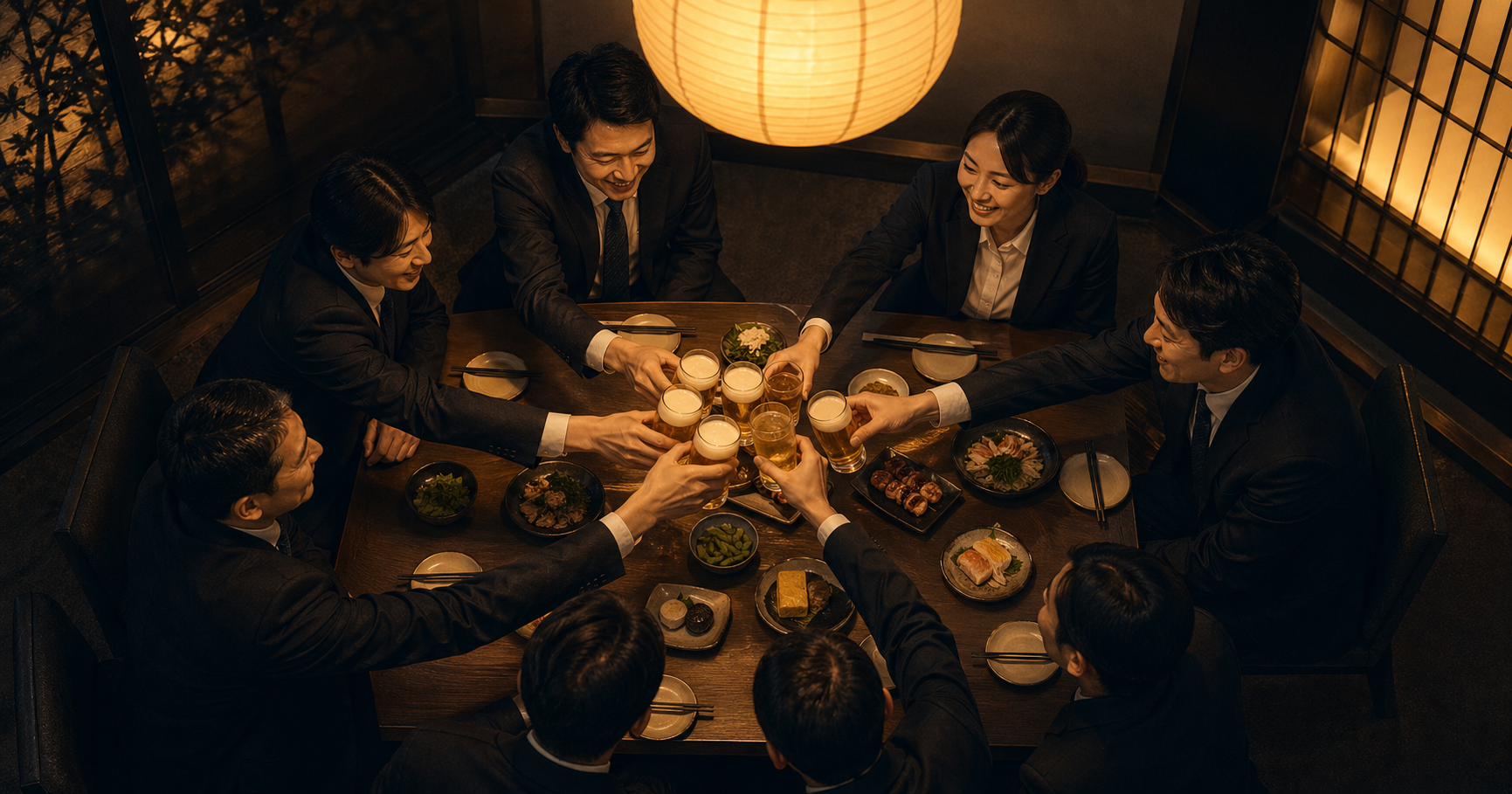
全員に飲み物が行き渡るまで飲まないのが鉄則です。乾杯の音頭は最上位の人や幹事が取り、一言の挨拶の後に全員で「乾杯!」と唱和します。グラスを合わせる時、目上の人より自分のグラスを少し低くするのが敬意の表現です。
The iron rule: don't drink until everyone has a glass. The toast is led by the most senior person or by the organizer (kanji), who gives a brief greeting before everyone calls "Kanpai!" together. When clinking glasses, hold yours slightly lower than that of any senior — a quiet sign of respect.
お酌と受け方 — 両手の作法
日本の酒席では自分で自分のグラスに注がず、隣の人のグラスが減ったらボトルを両手で持って注ぐのが基本です。ビールはラベルを上に、泡が3割になるよう傾けて注ぎます。受ける側はグラスを両手で少し持ち上げ、「ありがとうございます」と一言添えます。
At Japanese drinking events you don't pour for yourself. When the glass next to you gets low, lift the bottle with both hands and pour. For beer, keep the label facing up and tilt so the foam is about 30%. The receiver lifts their glass slightly with both hands and adds a quick "Arigatou gozaimasu."
一気飲みとアルハラ — 断る勇気
一気飲み(ジョッキを一気に飲み干す行為)や飲酒強要はアルハラと呼ばれ、現代では明確なハラスメントとして人事に通報できる行為です。「健康上の理由でこのペースで飲ませてください」「薬を飲んでいるので今日はノンアルでお願いします」と一言伝えれば十分です。
Ikki-nomi (downing a mug in one go) and any forced drinking are now openly called arupawa / aruhara — alcohol harassment — and can be reported to HR. A simple line like "Kenkou-jou no riyuu de kono peesu de nomasete kudasai" or "Kusuri o nondeiru node kyou wa non-aru de onegaishimasu" is plenty.
お通し — 断れない小皿
居酒屋に座ると注文していないのに小さな料理が出てきます。これがお通し(または突き出し)で、実質的には席料を兼ねたサービスです。一人300円から600円程度が相場で、拒否は基本的にできません。請求書を見て驚かないようにしましょう。
Sit down at an izakaya and a small dish you didn't order will arrive. That's otoshi (or tsukidashi) — effectively a service charge bundled as food. It's typically 300-600 yen per person and can't normally be refused. Don't be surprised when it shows up on the bill.
一次会 → 二次会 → 締め
標準的な流れは居酒屋での一次会(2時間食べ飲み放題)、カラオケやバーでの二次会、そして深夜にラーメンやお茶漬けで締める流れです。一次会は全員参加が基本ですが、二次会以降は完全に任意です。
The standard flow: an izakaya first round (often 2 hours of nomihoudai/tabehoudai), a karaoke or bar second round, and a late-night closer of ramen or ochazuke. Everyone joins the first round, but anything from the second round onward is optional.
支払いのルール
支払い方式は主に二種類です。会費制は事前に一人いくらと決められており、新人もシニアも同額です。割り勘の場合は暗黙のルールがあり、上司が多めに払い、若手は少なめに払います(例:一般社員3000円、管理職5000円から8000円)。幹事が事前に徴収するパターンが多いので、小銭や千円札を用意しておくと親切です。
There are two main systems. Kaihi-sei (flat-fee) is set per person ahead of time — newcomers and seniors pay the same amount. With warikan (splitting), an unspoken rule applies: bosses pay more, juniors pay less (e.g. 3000 yen for staff, 5000-8000 for managers). The kanji usually collects in advance, so come prepared with coins and 1000-yen bills.
翌日のお礼メール
飲み会の翌日、出社したら幹事とご馳走してくれた上司に直接お礼を伝え、同時に簡潔なお礼メールやチャットを送るのが標準です。「昨日はありがとうございました。とても楽しい時間でした。今後ともよろしくお願いします。」という一文で十分です。
The day after a nomikai, when you arrive at work thank the kanji and any boss who picked up the tab in person, and send a short thank-you email or chat at the same time. One line is enough: "Kinou wa arigatou gozaimashita. Totemo tanoshii jikan deshita. Kongo tomo yoroshiku onegaishimasu."
コロナ以降の変化 — 飲み会離れと多様化
2020年のコロナ禍を境に、日本の飲み会文化は大きく変わりました。強制参加はほぼ消滅し、Z世代を中心に飲み会離れが進んでいます。Sober Curiousという流行語も広まり、ノンアルビールやモクテルの品揃えも充実してきています。
The 2020 COVID era was a turning point. Forced attendance has largely vanished and, led by Gen Z, more people are simply skipping work drinks. The "sober curious" buzzword has caught on, and izakaya non-alcoholic beer and mocktail menus are expanding fast.
新人エンジニアへの最終アドバイス
飲み会は評価に直結するものではありませんが、同僚の人柄や他部署の動きを知る絶好の場でもあります。全て出席する必要はありませんが、歓迎会と年に一回の忘年会くらいは顔を出しておくと人間関係が円滑になります。飲まなくても楽しめる時代になっているので、自分のペースで参加してください。
Nomikai aren't directly tied to your performance review, but they are an excellent way to learn about colleagues' personalities and what other teams are up to. You don't have to attend every one — but showing up to your welcome party and the once-a-year bounenkai will smooth things over. We're now in an era where you can enjoy these events without drinking, so pace yourself.