盆栽の世界 — 小宇宙を育てる日本の芸術
盆栽とは何か
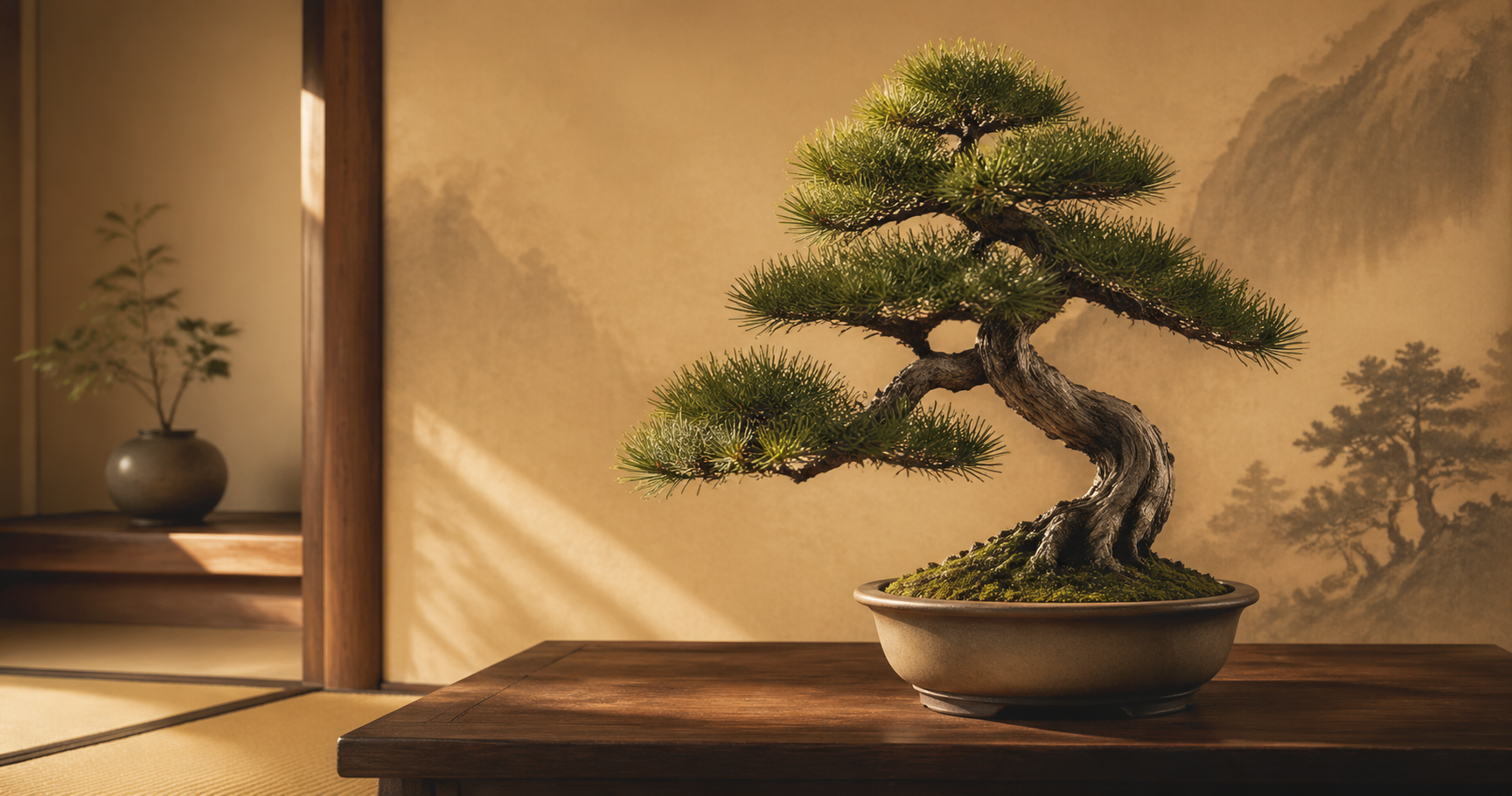
盆栽は浅い鉢に樹木を植え、剪定・針金・植替えなどの技法で小さな姿に仕立て、長期間にわたって育成する日本の伝統芸術です。一鉢の中に山水や老樹の風格を凝縮し、「小宇宙」を表現する芸術と[されています]{:said to be}。
Bonsai is the Japanese traditional art of planting trees in shallow pots and shaping them into miniature forms over long periods using techniques like pruning, wiring, and repotting. It is generally said to be an art that condenses the dignity of mountain-water landscapes or aged trees into a single pot, expressing a "small universe."
歴史 — 中国から日本へ
盆栽の起源は中国の「盆景」に遡るとされ、唐代には既に皇族や文人の間で親しまれていたと言われています。日本には鎌倉時代(12〜14世紀)に禅僧を通じて伝来し、当初は「盆山」と呼ばれていました。江戸時代には武士・町人にも広まり、明治・大正を経て現代の「盆栽」という呼称と体系が確立されたと[されています]{:said to be}。
Bonsai's origins trace back to Chinese "penjing," and by the Tang dynasty it was already enjoyed among imperial family and literati. It was transmitted to Japan during the Kamakura era (12th-14th centuries) via Zen monks, and was initially called "bonsan." During the Edo era it spread to samurai and townspeople, and through the Meiji and Taisho periods the modern designation "bonsai" and its system are said to have become established.
樹種 — 大きく四つに分類
盆栽に用いられる樹種は多岐にわたりますが、一般には四つの[グループ]{:groups}に分類されると[されています]{:said to be}。一年を通じて葉を保つ「松柏類」、四季の変化を楽しむ「雑木類」、花を観賞する「花物」、実を観賞する「実物」です。
The species used in bonsai are highly diverse, but they are generally classified into four groups: "shouhakurui" (conifers, which keep leaves year-round); "zoukirui" (deciduous broadleaf, which let you enjoy seasonal change); "hanamono" (flowering type, appreciated for blossoms); and "mimono" (fruit type, appreciated for fruit).
樹形 — 古典的な四スタイル
盆栽には幹の形に[よって]{:based on}多数の「樹形」が定義されており、古典的には直幹・模様木・懸崖・文人木の四スタイルが基本とされています。自然界の厳しい環境に育つ老樹の姿を模倣することが原型と考えられています。
Bonsai defines many "tree forms" based on trunk shape, with four classical styles considered basic: chokkan, moyougi, kengai, and bunjingi. Imitating the form of aged trees that grow in harsh natural environments is generally thought to be the archetype.
道具と針金かけ
盆栽の育成には専用の道具が欠かせません。基本道具は剪定鋏・又枝切り([branch cutter]{:branch cutter})・針金・[ヤットコ]{:wire pliers}・熊手などで、特に「針金かけ」([wiring]{:wiring})は盆栽を特徴づける最も重要な技法の一つと[されています]{:said to be}。銅や[アルミニウム]{:aluminum}の針金を幹・枝に巻き付け、時間をかけて望む形に誘導します。
Specialized tools are essential for cultivating bonsai. Basic tools include pruning shears, branch cutters, wire, wire pliers, and rakes — and especially "wiring" is generally said to be one of the most important techniques characterizing bonsai. Copper or aluminum wire is wrapped around the trunk and branches to gradually guide them into the desired form over time.
大宮盆栽村 — 世界の聖地
埼玉県さいたま市北区にある「大宮盆栽村」は、盆栽愛好家にとって世界の聖地と呼ばれる地域です。大正末期(1925年)の関東大震災を機に東京の盆栽業者が移住したことで形成されたとされ、現在も複数の盆栽園が集積しています。2010年には「さいたま市大宮盆栽美術館」が開館し、海外からの来訪者も多数訪れていると言われています。
The "Omiya Bonsai Village" in Kita Ward, Saitama City, Saitama Prefecture is an area called the world's spiritual home for bonsai enthusiasts. It is said to have been formed when Tokyo's bonsai professionals migrated here following the 1925 Great Kanto Earthquake at the end of the Taisho era, and multiple bonsai gardens are still concentrated here today. In 2010 the "Omiya Bonsai Art Museum, Saitama" opened, and many visitors from abroad are reportedly visiting as well.
世界盆栽大会と海外人気
1989年に第1回「世界盆栽大会」が大宮で開催されて以降、盆栽は国際的な広がりを見せています。4年に一度世界各地で開催される同大会には数十カ国から愛好家が集まり、[「BONSAI」]{:BONSAI}は今や国際語と[なっています]{:has become}。米国・欧州を中心に[ブーム]{:boom}が続き、名品には一鉢数百万円〜数千万円の値が[つくこと]{:can be priced}も珍しくないと言われています。
Since the first "World Bonsai Convention" was held in Omiya in 1989, bonsai has shown international expansion. Held once every four years in various world locations, this convention gathers enthusiasts from dozens of countries, and "BONSAI" has now become an international word. The boom continues centered on the USA and Europe, and it is generally said that masterpiece specimens being priced at several million to tens of millions of yen per pot is not uncommon.
育成期間 — 世代を超える時間
盆栽の最大の特徴は、完成までに数十年〜数百年を要する「時間の芸術」である点と[されています]{:said to be}。名品と呼ばれるものの多くは江戸時代や明治時代から受け継がれてきたもので、一つの盆栽が親から子、子から孫へと何世代にも渡って手入れされ続けると言われています。
The greatest characteristic of bonsai is generally said to be that it is "an art of time" requiring decades to hundreds of years to complete. Many of those called masterpieces have been passed down from the Edo and Meiji eras, and a single bonsai is reportedly cared for continuously across multiple generations from parent to child to grandchild.
現代における盆栽
現代の盆栽界は高齢化と海外人気という対照的な状況に直面していると言われています。国内の愛好家は減少傾向にある一方、海外では若年層を含めた新規愛好家が拡大しています。最近では小型の[「ミニ盆栽]{:mini bonsai}」や卓上盆栽など、現代の住環境に適合した新しい[スタイル]{:styles}も登場していると[されています]{:said to be}。
The modern bonsai world is reportedly facing the contrasting situations of aging and overseas popularity. While domestic enthusiasts are on a declining trend, abroad new enthusiasts including younger generations are expanding. Recently, new styles adapted to modern living environments — such as small "mini bonsai" and tabletop bonsai — are generally said to have appeared as well.