日本茶の種類と淹れ方 — 煎茶・玉露・抹茶の違い
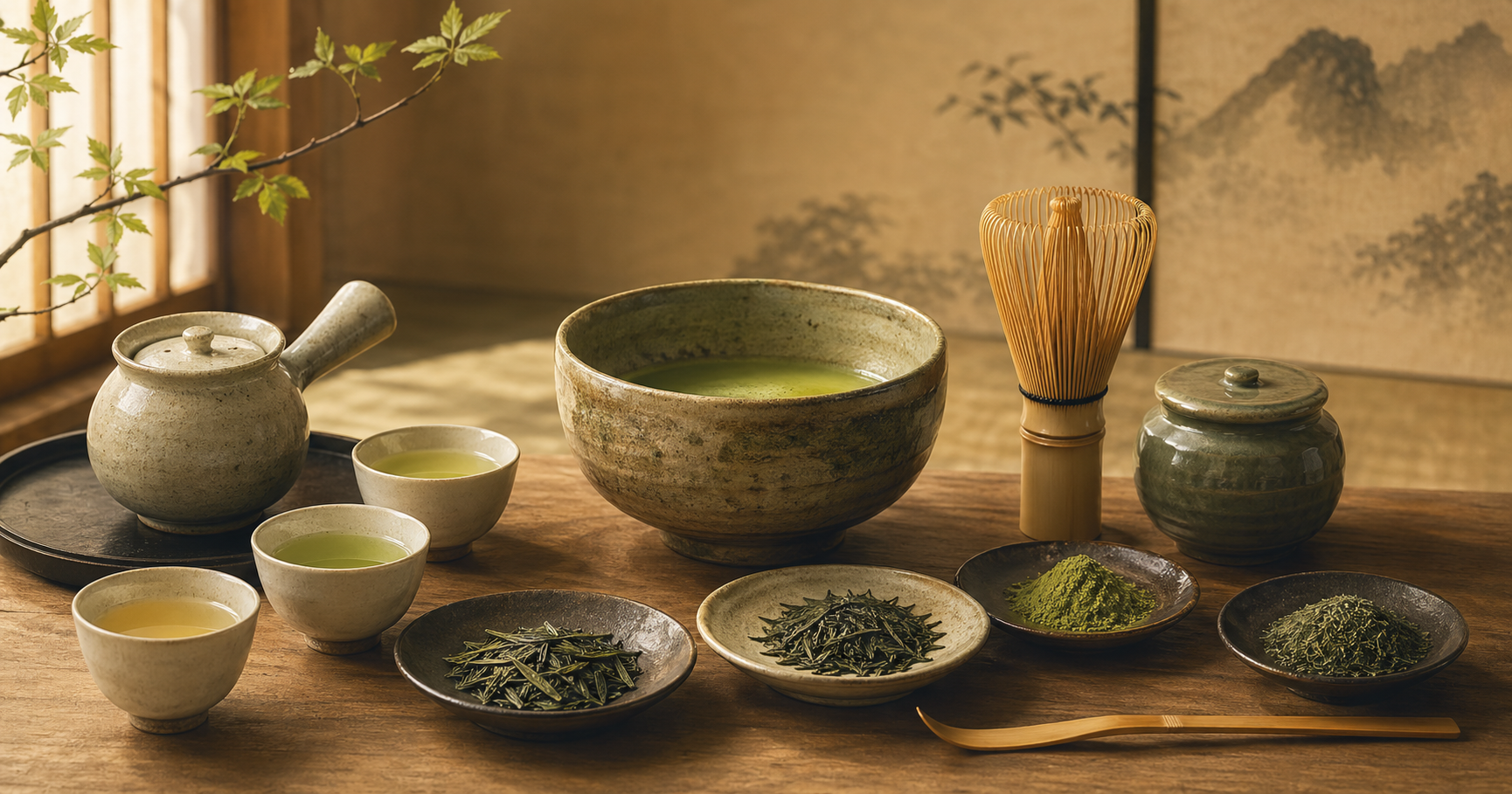
日本人にとってお茶は、毎日の食卓や来客の際に欠かせない飲み物です。「お茶」と一言で言っても、実は製法や栽培方法の違いによって多彩な種類があり、味・香り・淹れ方も大きく異なります。この記事では代表的な緑茶の種類と、その正しい淹れ方を紹介します。
For Japanese people, tea is an indispensable drink at the daily dining table and whenever guests come to visit. Although we say "tea" in a single word, in fact there are many varieties depending on production and cultivation methods, and the taste, aroma, and proper brewing method differ significantly. This article introduces the major types of Japanese green tea and how to brew them correctly.
緑茶の基本 — 発酵しないお茶
紅茶やウーロン茶と違い、緑茶は摘んだ茶葉をすぐに蒸して酸化を止めます。これが緑の色と爽やかな風味を保つ秘訣です。同じ茶樹(学名カメリア・シネンシス)から作られていても、加工方法でまったく別の飲み物になるのです。
Unlike black tea or oolong, green tea is steamed immediately after picking to halt oxidation. This is the secret to preserving its green color and refreshing flavor. Even though all teas come from the same plant (Camellia sinensis), the processing method turns them into completely different beverages.
煎茶 — 日本茶の王道
煎茶は日本で消費される緑茶の七割以上を占める、最も一般的なお茶です。太陽を十分に浴びて育った茶葉を蒸し、揉んで乾燥させます。渋みと甘み、爽やかな香りのバランスが特徴で、家庭でも職場でも広く親しまれています。
Sencha accounts for over 70% of green tea consumed in Japan and is by far the most common type. Tea leaves grown under full sun are steamed, rolled, and dried. Its hallmark is a balance of astringency, sweetness, and a refreshing aroma — enjoyed widely in homes and workplaces alike.
玉露 — 覆下栽培が生む最高級茶
玉露は日本茶の中でも最高級とされる贅沢なお茶です。新芽が出る時期に茶畑を葦簀や黒い寒冷紗で二十日ほど覆い、日光を遮ります。これを覆下栽培と呼びます。光合成が抑えられることで、渋みの元となるカテキンが減り、旨みの元となるアミノ酸(特にテアニン)が豊富に蓄えられます。
Gyokuro is considered the highest-grade Japanese tea — a luxurious cup. When the new buds appear, the tea fields are covered with reed screens or black shade cloth for about 20 days to block sunlight. This is called "shade cultivation" (oishita-saibai). By suppressing photosynthesis, catechins (the source of astringency) decrease, while amino acids (especially theanine, the source of umami) accumulate in abundance.
抹茶 — 碾茶を石臼で挽いた粉末茶
抹茶は茶葉そのものを粉にして飲む唯一の緑茶です。原料は玉露と同様に覆下栽培した茶葉ですが、揉まずに蒸して乾燥させた「碾茶」を使います。この碾茶を石臼でゆっくりと挽き、鮮やかな緑色の微粉末にしたものが抹茶です。一時間でわずか四十グラムしか挽けないため高価になります。
Matcha is the only green tea drunk by consuming the leaf itself in powdered form. Like gyokuro, the raw material is shade-grown leaves, but they are steamed and dried without being rolled — this product is called "tencha." The tencha is then slowly milled in a stone mill into a vivid green fine powder: matcha. Because only about 40 grams can be milled per hour, it is expensive.
抹茶は茶道で使われるほか、近年は海外でのブームが著しく、「マッチャ・ラテ」「抹茶アイス」「抹茶スイーツ」が世界中のカフェで定番メニューとなっています。需要の急増により、日本からの抹茶輸出は年々拡大し、国内の一部産地では供給が追いつかない状況も生まれています。
Matcha is used in the tea ceremony, but in recent years its overseas boom has been remarkable: matcha lattes, matcha ice cream, and matcha sweets have become standard menu items in cafés worldwide. With the surge in demand, matcha exports from Japan have expanded year by year, and in some producing regions supply can no longer keep up.
番茶・ほうじ茶・玄米茶 — 日常の親しみ深いお茶たち
番茶は煎茶よりも硬く育った葉や茎を使う低価格のお茶で、渋みは強いもののカフェインが少なく、子供や高齢者にも安心して飲ませられます。熱湯(九十五度前後)でさっと淹れるのが基本です。
Bancha uses harder, more mature leaves and stems than sencha. It is a low-price tea — strong in astringency but low in caffeine, so it can be safely served to children and the elderly. The basic method is to brew it quickly with boiling water (around 95°C).
ほうじ茶は番茶や煎茶を強火で焙煎したもので、香ばしい香りと茶色の水色が特徴です。焙煎の過程でカフェインが飛ぶため、夜や食事中に最適とされています。京都の料亭では食後にほうじ茶を出すのが定番です。
Hōjicha is bancha or sencha roasted over high heat, distinguished by a fragrant roasty aroma and a brown-colored liquor. Caffeine is largely driven off in the roasting process, making it ideal for evenings or during meals. At Kyoto's traditional ryōtei restaurants, serving hōjicha after a meal is the standard.
玄米茶は煎茶や番茶に炒った玄米を混ぜたお茶です。米の香ばしい香りと緑茶の爽やかさが融合し、腹持ちも良いため戦後の食糧難の時代に広く親しまれました。現在でも手頃な家庭の味として根強い人気があります。
Genmaicha is sencha or bancha mixed with roasted brown rice. The roasty aroma of the rice fuses with the freshness of the green tea, and because it is also filling, it was widely enjoyed during the postwar food-shortage era. Even today it remains firmly popular as an affordable, homely flavor.
産地 — 静岡・鹿児島・三重・宇治
日本の茶生産量の約四割を占めるのが静岡県です。富士山の麓や牧之原台地には広大な茶畑が広がり、新幹線の車窓からも緑の絨毯のような風景が見られます。次いで鹿児島県が約三割を生産し、温暖な気候を活かして早摘みの新茶を全国に出荷しています。
Shizuoka prefecture accounts for about 40% of Japan's tea production. Vast tea fields stretch across the foot of Mt. Fuji and the Makinohara plateau, and you can see this carpet of green even from the bullet train window. Kagoshima prefecture comes next at about 30%, leveraging its warm climate to ship early-picked new tea throughout the country.
三重県は伊勢を中心に煎茶とかぶせ茶(簡易な覆下栽培)の産地として知られ、第三位の生産量を誇ります。そして京都府の宇治は生産量こそ少ないものの、玉露と抹茶の最高級産地として圧倒的なブランド力を持っています。「宇治抹茶」の名は国内外で品質の象徴となっています。
Mie prefecture, centered on Ise, is known as a producer of sencha and kabusecha (a simpler form of shade cultivation) and boasts the third-largest production volume. And although Kyoto prefecture's Uji has a small production volume, it commands an overwhelming brand presence as the highest-grade producer of gyokuro and matcha. The name "Uji matcha" has become a symbol of quality both at home and abroad.
茶器 — 急須と湯呑みの役割
日本茶を淹れる基本の道具が急須です。側面に取っ手が付いた小さな陶器のポットで、内側には茶葉を漉すための網が組み込まれています。三重県の四日市で作られる「萬古焼」の紫泥急須は特に有名で、使い込むほどお茶の味がまろやかになるとされています。
The basic tool for brewing Japanese tea is the kyūsu — a small ceramic pot with a handle on the side, with a built-in mesh strainer to filter the leaves. The shidei (purple-clay) kyūsu of Banko ware, made in Yokkaichi in Mie prefecture, is especially famous; the more you use it, the mellower the tea is said to become.
湯呑みは煎茶や番茶を飲むための筒形の器で、家庭用は大ぶり、来客用は小ぶりと使い分けるのが一般的です。一方、玉露にはわずか四十ミリリットルほどの極小の湯呑みを使い、凝縮された旨みを少しずつ味わいます。
The yunomi is a cylindrical vessel for drinking sencha or bancha. It is common to use larger ones at home and smaller ones for guests. Gyokuro, on the other hand, is served in tiny cups of just about 40 milliliters, so the concentrated umami can be savored little by little.
海外でのブームと飲料市場の変化
日本の緑茶輸出は二〇一〇年代後半から急速に拡大し、特に抹茶がアメリカやヨーロッパ、東南アジアで健康志向の消費者に支持されています。抗酸化作用やテアニンのリラックス効果が科学的に注目され、「スーパーフード」として扱われることも増えました。
Japanese green tea exports have expanded rapidly since the late 2010s, with matcha in particular winning support from health-conscious consumers in America, Europe, and Southeast Asia. Its antioxidant action and the relaxing effects of theanine have drawn scientific attention, and matcha is increasingly treated as a "superfood."
おわりに
一杯のお茶にも、栽培・製法・産地・淹れ方という幾重もの工夫と歴史が重なっています。煎茶の爽やかさも、玉露の濃厚な旨みも、抹茶の鮮やかな緑も、ほうじ茶の香ばしさも、それぞれにシーンと気分があります。正しい温度と時間で淹れるだけで、同じ茶葉が驚くほど違った表情を見せてくれるはずです。次にお茶を淹れる時は、ぜひ湯の温度に気を配ってみてください。
Even a single cup of tea contains layers of ingenuity and history — cultivation, production method, region, and brewing technique. The freshness of sencha, the rich umami of gyokuro, the vivid green of matcha, the roasty fragrance of hōjicha — each has its own scene and mood. Simply by brewing at the correct temperature and time, the same leaves will show you a strikingly different face. The next time you brew tea, please pay attention to the water temperature.