居酒屋文化と乾杯のマナー — お通しから締めまで
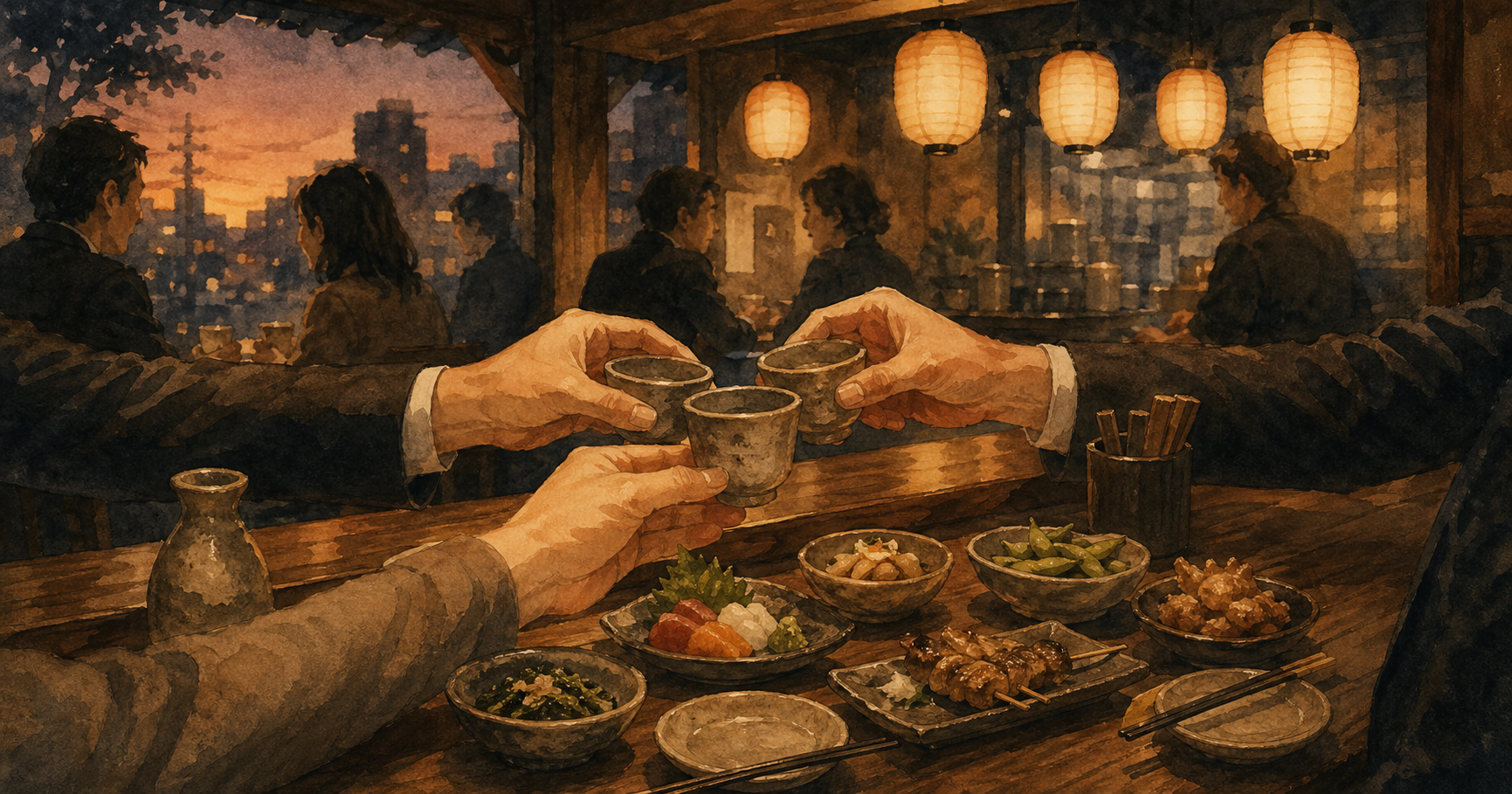
居酒屋は、日本のビジネスと人間関係を語る上で欠かせない場所です。居+酒屋という漢字が示す通り、元々は酒屋の店先で酒を立ち飲みする文化から発展したと言われています。今日では安価なチェーン店から隠れ家的な専門店まで幅広く存在し、同僚との飲み会(飲みニケーション)の舞台としてなくてはならない空間です。
The izakaya is an essential setting for understanding Japanese business and interpersonal relations. As the characters "i" (stay) + "sakaya" (liquor shop) suggest, it's said to have developed from the culture of standing and drinking sake in front of a liquor shop. Today, izakayas range from cheap chains to hidden specialty shops, and they are an indispensable stage for nomikai — drinking parties with colleagues, also playfully called "nominication."
お通し — 日本独自の制度
居酒屋に入って席についてビールを頼むと、まず最初に小皿に盛られた料理が出てきます。これが「お通し」で、頼んでいないのに出される小さな前菜です。多くは煮物や酢の物、豆類など。これは実質的に「席料」「テーブルチャージ」の役割を果たしていて、一人300〜500円程度が一般的です。
When you take your seat at an izakaya and order a beer, the first thing to arrive is a small dish on a little plate. This is the "otōshi" — a small appetizer served whether you ordered it or not, often a simmered dish, a vinegared dish, or beans. In effect, it functions as a seat charge or table charge, generally costing 300–500 yen per person.
乾杯 — 全員に飲み物が揃ってから
飲み会の最初は必ず全員での乾杯から始まります。重要なのは、全員の手元に飲み物が揃うまで待つこと。一人でもまだ飲み物が来ていない状態で飲み始めるのはマナー違反です。特にビジネスの場では、最年長・最上位の人が乾杯の音頭を取り、挨拶を述べてから「それでは、乾杯!」と音頭を出します。
Drinking parties always begin with a kanpai by everyone present. The key is to wait until every person has their drink in hand. Starting to drink while even one person still doesn't have a drink is a breach of etiquette. Especially in business settings, the eldest or most senior person takes the lead, gives a brief greeting, and then calls "Sore dewa, kanpai!" — the cue for everyone to drink.
乾杯の際、グラスを合わせる時には、目上の人のグラスより自分のグラスの縁を少し低くするのが礼儀です。これは相手を立てるという日本的な気遣いの表れ。飲み会でのこうした細かな作法は、新入社員が最初に学ぶビジネススキルの一つでもあります。
When clinking glasses, etiquette is to hold the rim of your own glass slightly below that of a senior person — a Japanese expression of respect. These fine manners at drinking parties are among the first business skills a new employee learns.
お酌の文化
日本の飲み会では「自分で自分に注ぐ」のは基本的に避けるべきとされます。隣や向かいの人のグラスが空いていれば注いであげる、自分のグラスが空けば誰かが注いでくれる—これが「お酌」の文化です。特に後輩は先輩や上司のグラスに気を配り、空にならないよう気を配るのが暗黙のルールです。
At Japanese drinking parties, you generally avoid pouring for yourself. If the glass of the person next to or across from you is empty, you pour for them; when your own glass empties, someone will pour for you — this is the culture of "oshaku." Junior staff especially watch the glasses of seniors and bosses, attentively keeping them full as a tacit rule.
ビールを注ぐ時は瓶を両手で持ち、ラベルを上に向けて相手に見せるのが作法。注がれる側もグラスを両手で少し持ち上げて受けると丁寧です。ただし最近の若者や気軽な集まりではこうした作法は緩やかになっており、特に海外からの同僚がいる場では強要されることはありません。
When pouring beer, etiquette is to hold the bottle in both hands with the label facing up to show your partner. The receiver politely lifts their glass slightly with both hands. That said, among younger people and at casual gatherings these manners have loosened, and they're never enforced — especially when foreign colleagues are present.
一次会 → 二次会 → 締め
日本の飲み会は多段階制で進むことが多いです。最初の居酒屋が「一次会」、飲み足りない人たちで次の店に移動するのが「二次会」、さらに続く時は「三次会」です。二次会はバーやカラオケが定番で、一次会より少人数になり、本音が出やすい場所とも言われます。
Japanese drinking parties often proceed in multiple stages. The first izakaya is the "ichi-ji-kai" (first round); those who haven't had enough move to the next shop for the "ni-ji-kai" (second round); if it continues further, the "san-ji-kai" (third round). Karaoke and bars are standard for the second round, where the group shrinks and is said to be a setting where true feelings come out more easily.
飲み会の最後を飾るのが「締め」です。締めは炭水化物を食べて締めくくるという意味で、ラーメンが定番。「締めのラーメン」と言って、酔いが醒めた体に流し込みます。お茶漬けやおにぎり、うどんも定番の締めメニューです。
Adorning the end of the drinking party is the "shime." Shime means closing the night with a carbohydrate, and ramen is the standard. "Shime no rāmen" — closing-out ramen — gets washed down into a now-sobered body. Ochazuke, onigiri, and udon are also standard shime menu items.
割り勘と支払い
支払いは基本「割り勘」が多いです。大人数の飲み会では「一人5,000円」など均等に割るのが一般的。ただし上司・先輩が多めに出して後輩の負担を減らす「傾斜割り勘」もよくあります。完全な割り勘にすると年齢や役職に関わらず同額になり、新入社員の負担が重くなるためです。
Payment is usually "warikan" — split equally. For large parties, splitting evenly with phrases like "5,000 yen each" is general. However, "graduated warikan" — where bosses and seniors pay more to reduce the burden on juniors — is also common. A perfectly even split would charge the same amount regardless of age or position, which would weigh too heavily on new employees.
接待の場合はホスト側が全額支払い、ゲストは財布を出す必要もありません。支払いの際は、相手に気付かれないようこっそりと支払うのがスマートな接待とされ、トイレに立つフリをして会計を済ませることもあります。
For business entertainment, the host pays the full amount, and guests don't even take out their wallets. Smart entertainment means paying without the other party noticing — sometimes the host pretends to step out for the bathroom and quietly settles the check.
禁煙の広がり
長らく居酒屋は喫煙者と非喫煙者が同じ空間を共有する場でした。しかし2020年4月に改正健康増進法が施行され、飲食店は原則屋内禁煙になりました。今は多くの居酒屋が完全禁煙か、喫煙専用ルームを設ける形に移行しています。海外からの訪日観光客が増えたことも、この変化を後押ししました。
For a long time, izakayas were spaces where smokers and non-smokers shared the same air. But in April 2020, the revised Health Promotion Act came into force, and restaurants became no-smoking indoors as a rule. Today most izakayas have transitioned to either complete no-smoking or to providing dedicated smoking rooms. The growing number of inbound tourists also helped push this change.
おわりに
居酒屋はただ酒を飲む場所ではなく、日本の人間関係とビジネス文化が凝縮された空間です。乾杯の作法、お酌の気遣い、締めのラーメンまで、一つ一つに意味と歴史があります。これから日本で働く方は、この文化を少し知っておくと、同僚との距離がぐっと縮まるはずです。
The izakaya is not merely a place to drink — it is a space where Japanese human relations and business culture are concentrated. From kanpai etiquette to the consideration shown in oshaku to the closing bowl of ramen, every detail carries meaning and history. For those about to work in Japan, knowing a little of this culture should bring you noticeably closer to your colleagues.