神社と寺の違い、参拝マナー
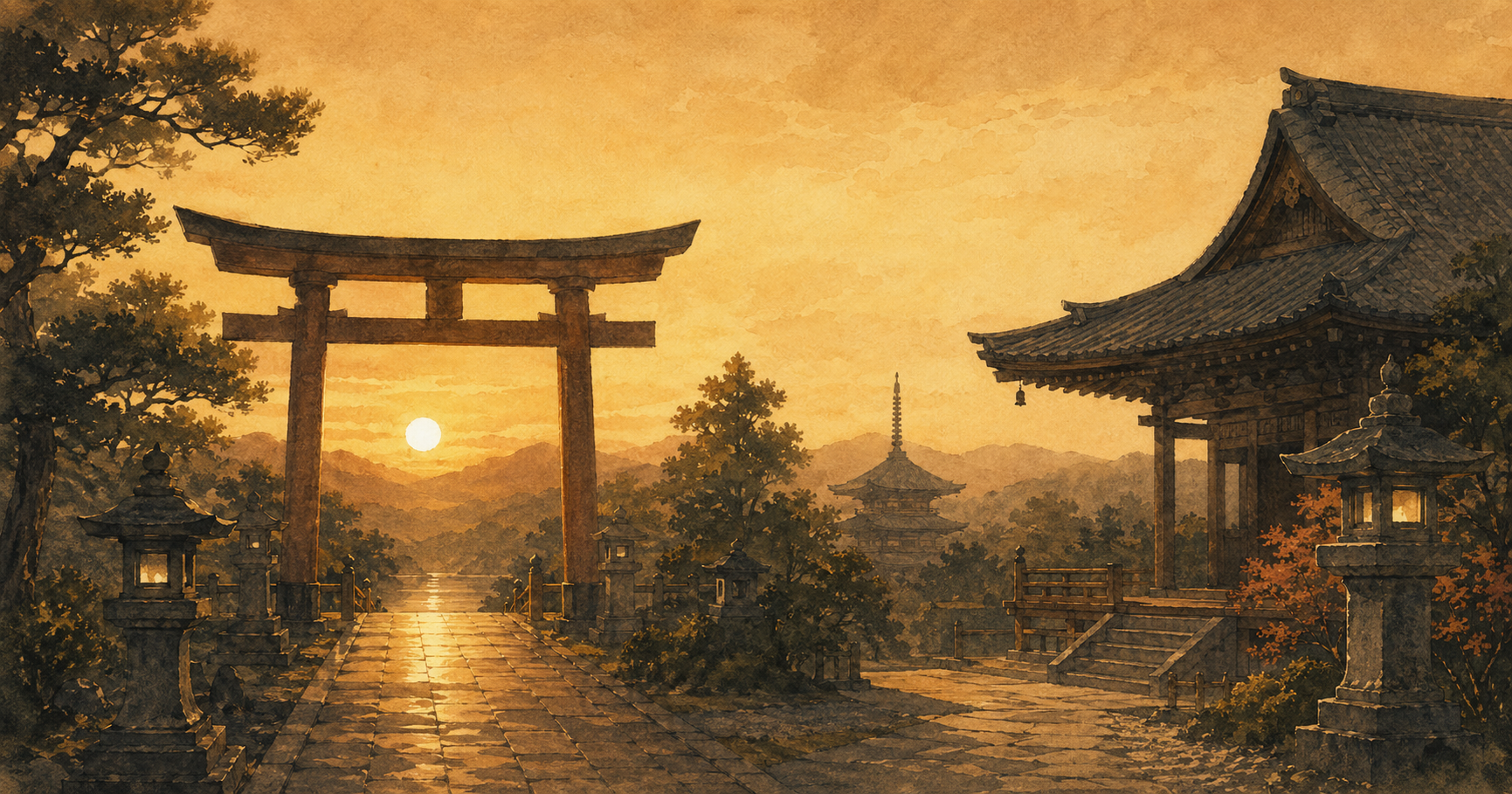
日本を訪れると、街のあちこちに神社と寺があります。両者は一見似た宗教施設に見えますが、実は全く異なる宗教に属し、参拝の作法も違います。神社は日本古来の神道、寺はインド発祥で中国を経て伝わった仏教の施設です。
When you visit Japan, you'll find shrines and temples scattered throughout every town. At first glance the two look like similar religious buildings, but they actually belong to entirely different religions, and the manners of worship differ as well. Shrines belong to Shintō, Japan's native religion, while temples are facilities of Buddhism — which originated in India and arrived via China.
見た目での見分け方
最も分かりやすい違いは入口にあります。神社には必ず「鳥居」があります。二本の柱と上部の横木からなる赤い(または木や石の)門で、ここから先は神様の領域という境界を示します。一方、寺には「山門」という屋根のついた大きな門があり、両側に仁王像が立つことも多いです。
The clearest difference is at the entrance. Shrines always have a "torii" — a red (or wood or stone) gate made of two pillars and an upper crossbeam, marking the boundary beyond which lies the gods' domain. Temples, on the other hand, have a "sanmon" — a large gate with a roof, often flanked by Niō guardian statues.
境内に入った後も見分けるポイントがあります。神社にはご神体を祀る「本殿」と参拝者が拝む「拝殿」があり、本殿は一般人は入れません。寺には仏像を祀る「本堂」、供養のための「墓地」が境内にあることも多いです。墓地は神社にはない—これも重要な違いです。
There are also points of distinction once you're inside the precincts. Shrines have a "honden" (main sanctuary) where the deity resides and a "haiden" (worship hall) where worshippers pray; the honden cannot be entered by ordinary people. Temples have a "hondō" (main hall) housing Buddhist statues, and often a cemetery within the precincts. Cemeteries do not exist at shrines — this is another important distinction.
神社の参拝作法 — 二礼二拍手一礼
神社に参拝する時は、まず鳥居の前で一礼します。参道の中央は神様が通る「正中」とされ、端を歩くのが礼儀です。次に「手水舎」で手と口を清めます。柄杓で水をすくい、左手→右手→口(左手に水を受けて)→左手再度→柄を流す、という順番です。
When visiting a shrine, first bow once before the torii. The center of the approach path is the "seichū" (center line), said to be the path of the gods, so etiquette calls for walking along the edge. Next, purify your hands and mouth at the "chōzuya" (purification basin). Use the ladle to scoop water, then proceed: left hand → right hand → mouth (with water received in the left hand) → left hand again → rinse the handle.
拝殿の前に来たら、賽銭を賽銭箱に入れ、鈴があれば鳴らします。そして「二礼・二拍手・一礼」が基本です。深く二回お辞儀し、両手を胸の前で二回手を打ち(右手を少し下にずらして)、心の中で祈りを捧げ、最後にもう一度深くお辞儀します。
At the worship hall, place an offering in the saisen-bako, ring the bell if there is one, and follow the standard "two bows, two claps, one bow." Bow deeply twice, clap twice in front of your chest (with the right hand slightly lower than the left), offer your prayer in your heart, and finish with one more deep bow.
寺の参拝作法 — 合掌で静かに
寺での参拝は神社と似ているところもありますが、決定的な違いがあります。拍手はしません。山門で一礼し、手水があれば手と口を清めて、本堂の前で賽銭を入れ、両手を胸の前で合わせる「合掌」をして静かに祈りを捧げます。最後に一礼して終わりです。
Worship at a temple has parts similar to a shrine, but with one decisive difference: you do not clap. Bow once at the sanmon, purify hands and mouth at any chōzu basin, place an offering in front of the hondō, then bring both hands together in front of your chest in "gasshō" and quietly offer your prayer. Finish with one bow.
寺では線香やろうそくを供えることもあります。葬儀や法事など特別な場では「焼香」という作法があり、抹香を指でつまみ、額の高さまで捧げてから香炉に落とし、合掌します。宗派によって焼香の回数(1回・2回・3回)が異なります。
At temples, you may also offer incense sticks or candles. At special occasions like funerals or memorial services, there is a procedure called "shōkō" — taking powdered incense between your fingers, raising it to forehead level, dropping it into the incense burner, and pressing your hands together. The number of times (one, two, or three) varies by Buddhist sect.
神宮という特別な神社
神社の中で特別に格式の高いものを「神宮」と呼びます。代表格は三重県の「伊勢神宮」で、正式名称はただ「神宮」のみ。皇室の祖先とされる天照大御神を祀っていて、全国約8万社の神社の頂点に立つとされます。他には明治神宮、平安神宮など、皇室と縁の深い神社が多いです。
Among shrines, those of especially high rank are called "jingū." The most representative is "Ise Jingū" in Mie Prefecture, whose official name is simply "Jingū." It enshrines Amaterasu Ōmikami, said to be the ancestor of the Imperial Family, and is considered the apex of all roughly 80,000 shrines nationwide. Others include Meiji Jingū and Heian Jingū — many are shrines deeply connected to the Imperial Family.
寺にも宗派や山号があり、「浅草寺」(東京)、「清水寺」(京都)、「東大寺」(奈良)など全国に名刹があります。宗派は禅・浄土・真言・日蓮など多岐にわたり、作法や本尊が異なります。
Temples too have sects and "san-gō" (mountain names), and famous temples like Sensō-ji (Tokyo), Kiyomizu-dera (Kyoto), and Tōdai-ji (Nara) exist throughout the country. Sects branch widely into Zen, Pure Land, Shingon, Nichiren, and others, with different procedures and principal images.
人生の節目 — どちらに行く?
日本人は人生の節目で神社と寺を使い分けています。「初詣」(新年の最初の参拝)は神社に行くのが一般的ですが、実は寺でもOKです。七五三(子供の成長を祝う11月の行事)は神社、結婚式は神社(神前式)か教会が多いです。
Japanese people use shrines and temples differently at the milestones of life. "Hatsumōde" (the first worship visit of the New Year) is generally to a shrine, though temples are also fine. Shichi-go-san (the November event celebrating children's growth) is at a shrine; wedding ceremonies are usually at a shrine ("shinzen-shiki") or at a Christian-style chapel.
一方、葬儀やお墓参りは寺(または霊園)で行います。日本の葬儀は圧倒的に仏教式が多く、戒名をいただく・四十九日や一周忌の法要を行うなど、死と祖先に関わることは寺が担当します。「生まれた時は神社、結婚は教会、死んだら寺」と言われるのは、こうした使い分けをユーモアを込めて表現した言葉です。
On the other hand, funerals and grave visits take place at temples (or cemetery parks). Japanese funerals are overwhelmingly Buddhist in style — receiving a kaimyō (posthumous name), holding the 49th-day and first-anniversary memorials — and matters related to death and ancestors are handled by temples. The saying "shrine when you're born, church when you marry, temple when you die" humorously expresses this differentiation.
御朱印と現代の人気
近年、神社も寺も共通に人気なのが「御朱印」集めです。参拝した証として、墨と朱印で書いてもらえるものです。専用の「御朱印帳」を持って各地を巡る「御朱印巡り」は若い女性にも人気で、一つ300〜500円程度が相場です。
In recent years, "goshuin" collecting has become popular at both shrines and temples. As proof of your worship visit, you receive a stamp written in ink with a red seal. Touring various sites with a dedicated "goshuin-chō" book is popular even with young women, and the standard price is about 300–500 yen each.
おわりに
神社と寺の違いを知ると、街を歩く時の景色がまったく違って見えます。鳥居を見つけたら「ここは神様の領域」、山門を見たら「ここは仏の世界」と感じられるようになります。正しい作法で参拝すれば、神様や仏様に失礼にあたることもなく、心も落ち着きます。日本に来た際には、ぜひ両方を訪れて、その違いを肌で感じてみてください。
Once you know the difference between shrines and temples, the scenery of any town you walk through looks entirely different. Spot a torii and you'll feel "this is the gods' domain"; see a sanmon and you'll feel "this is the world of the Buddha." Worshipping with the proper procedure means you won't be rude to the gods or the Buddha, and your heart will be settled. When you come to Japan, please visit both and feel the difference yourself.