歌舞伎・能・文楽 — 日本三大伝統演劇の世界
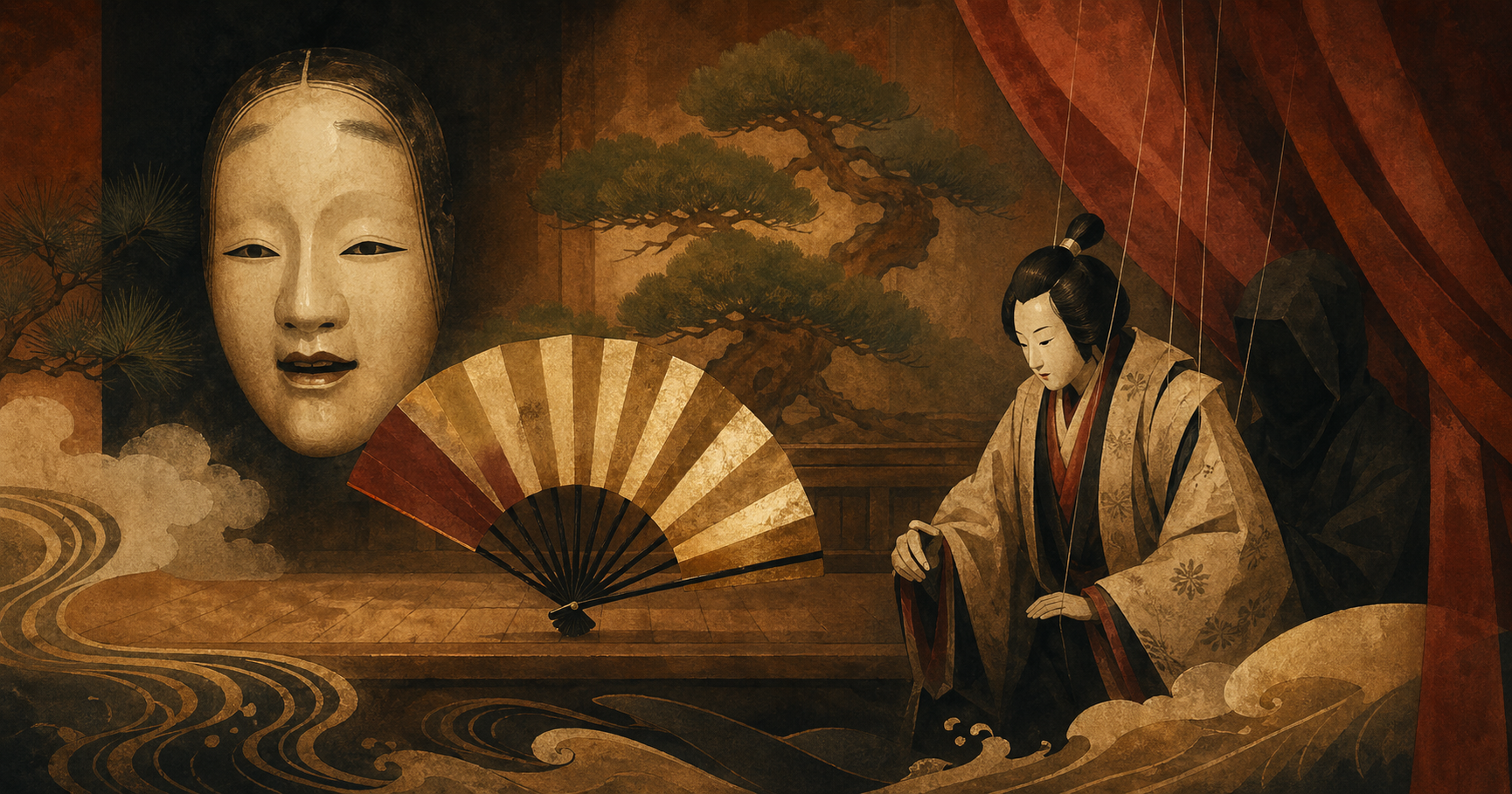
歌舞伎、能、文楽の三つは、日本を代表する伝統演劇であり、いずれもユネスコの無形文化遺産に登録されています。同じ国で育まれたにもかかわらず、歌舞伎は華やかで庶民的、能は静謐で抽象的、文楽は人形を使った語り物の芸術と、まったく異なる個性を持っています。
Kabuki, Noh, and Bunraku are the three traditional performing arts that represent Japan, and all three are inscribed on UNESCO's list of Intangible Cultural Heritage. Although they grew up in the same country, each has a completely different character: Kabuki is gorgeous and populist, Noh is serene and abstract, and Bunraku is a narrative art performed with puppets.
歌舞伎 — 江戸の町人が愛した華やかな舞台
歌舞伎の起源は一六〇三年、出雲の阿国という女性が京都の四条河原で踊った「かぶき踊り」だと言われています。「かぶく」とは当時「常識を外れた派手な行動」を指す言葉で、斬新な出で立ちと大胆な振付が人々を熱狂させました。
Kabuki traces its origins to 1603, when a woman known as Izumo no Okuni performed a "kabuki dance" on the Shijō riverbank in Kyoto. At the time the word "kabuku" referred to flashy, unconventional behavior, and Okuni's novel costumes and bold choreography sent the public into a frenzy.
ところが江戸幕府は風紀を乱すとして女性と少年の出演を次々と禁止し、最終的に成人男性のみが演じる「野郎歌舞伎」に落ち着きました。これが現在まで続く「男性のみの歌舞伎」の原点であり、女性役を専門に演じる役者を女形と呼びます。女形はただ女装するのではなく、女性よりも女性らしい理想の姿を体現する高度な専門職です。
The Edo shogunate, however, banned women and then young men from the stage on grounds of public morality, until kabuki settled into the form known as "yarō kabuki," performed only by adult men. This is the starting point of the all-male kabuki that continues to this day, and male actors who specialize in female roles are called onnagata. An onnagata is not simply a man in women's clothing — he is a highly trained specialist who embodies an ideal of femininity more refined than any real woman.
歌舞伎の舞台には花道という客席を貫く長い通路があり、役者はここを歩いて登場・退場します。花道を通る役者に向かって、舞台の上方や後方から「成田屋!」「音羽屋!」と屋号を叫ぶ常連のファンを大向と呼びます。絶妙なタイミングでの掛け声は公演を一層盛り上げる、江戸以来の粋な文化です。
Kabuki stages have a hanamichi — a long runway that cuts through the audience — along which actors enter and exit. The seasoned fans who shout out the actor's family stage name ("Naritaya!" "Otowaya!") from the upper rear of the auditorium as he passes are called ōmukō. Their exquisitely timed calls heighten the performance, and the practice itself is a chic Edo-era tradition.
現在、本格的な歌舞伎を毎月上演している劇場が、東京・銀座の歌舞伎座と、半蔵門の国立劇場です。歌舞伎座は一八八九年創建、二〇一三年に現在の第五期建物が完成し、伝統と現代が融合したランドマークとなっています。
Today, the venues that perform full-scale kabuki every month are the Kabuki-za in Tokyo's Ginza district and the National Theatre in Hanzōmon. The Kabuki-za was founded in 1889; its current fifth-generation building was completed in 2013 and stands as a landmark blending tradition and modernity.
能 — 武家が愛した幽玄の世界
能の源流は平安時代の猿楽という大衆芸能にありますが、十四世紀に観阿弥・世阿弥の親子が現在の形に完成させました。特に世阿弥は『風姿花伝』などの著作で「幽玄」という美意識を打ち立て、能は室町幕府の将軍・足利義満の庇護を受けて武家の式楽としての地位を確立しました。
Noh's source lies in sarugaku, a popular performing art of the Heian period, but it was perfected in its current form in the fourteenth century by the father-and-son pair Kan'ami and Zeami. Zeami in particular established the aesthetic ideal of yūgen — "profound mystery" — through writings such as the Fūshikaden, and Noh secured its position as the ceremonial theatre of the warrior class under the patronage of the Muromachi shogun Ashikaga Yoshimitsu.
能を最も特徴づけるのは能面です。主役である「シテ」は多くの場合面を着け、その小さな木彫りの表情に喜怒哀楽を込めます。代表的な面には若い女性の小面、嫉妬に狂った女の般若、老人の尉などがあり、役者が少し顔を傾けるだけで同じ面が微笑んだり泣いたりしているように見えると言われます。
What most defines Noh is the Noh mask. The lead role, the shite, usually wears a mask, and the small carved wooden expression carries the full range of human emotion. Famous masks include the koomote of a young woman, the hannya of a woman driven mad by jealousy, and the jō of an old man — and it is said that the same mask can appear to smile or weep when the actor merely tilts his head.
能を構成する要素には、演技そのものに加え、舞台の脇に座って物語を歌い上げる「謡」、役者が扇子や小道具を使って舞う「仕舞」などがあります。現在、東京・千駄ヶ谷の国立能楽堂が最大の拠点で、毎月定例公演が行われています。
Beyond the acting itself, Noh is composed of elements such as the utai chant — sung from the side of the stage — and the shimai dance, performed with a folding fan or small props. Today, the National Noh Theatre in Tokyo's Sendagaya district is the largest hub, with regular monthly performances.
文楽 — 人形が語る人間ドラマ
文楽は正式には人形浄瑠璃と呼ばれ、十七世紀の大阪で完成した人形劇です。江戸が歌舞伎の町なら、大阪は文楽の町—町人文化が花開いた商業都市で、心中や義理と人情の葛藤を描いた名作が次々と生まれました。近松門左衛門の『曽根崎心中』はその代表作です。
Bunraku — formally known as ningyō jōruri, "puppet narrative theatre" — is a puppet art perfected in seventeenth-century Osaka. If Edo was the town of kabuki, Osaka was the town of bunraku, a commercial city where townsperson culture blossomed and where masterpieces depicting the conflict between duty and human feeling, including double suicides, were born one after another. Chikamatsu Monzaemon's "Sonezaki Shinjū" is the representative work.
文楽の最大の特徴は、主要な人形一体を三人で操る「三人遣い」です。頭と右手を動かす「主遣い」、左手を動かす「左遣い」、両足を動かす「足遣い」の三名が呼吸を一つにして一体の人形に命を吹き込みます。完璧な三人遣いを習得するには最低でも三十年かかると言われ、まさに一生を賭けた修練です。
Bunraku's defining feature is the "three-person operation" by which a single principal puppet is manipulated by three people. The omozukai handles the head and right hand, the hidarizukai handles the left hand, and the ashizukai handles both feet — and the three breathe as one to bring a single puppet to life. Mastering perfect three-person operation is said to take at least thirty years — a discipline pursued over a lifetime.
文楽の本拠地は今も大阪・日本橋にある国立文楽劇場です。東京でも国立劇場で年に数回公演があり、海外ツアーでも高い評価を受けています。
Bunraku's headquarters remains the National Bunraku Theatre in Osaka's Nipponbashi district. Tokyo's National Theatre also stages several performances a year, and the company is highly regarded on its overseas tours.
三大演劇に共通する考え方
歌舞伎・能・文楽に共通するのが「型」と「家元制度」という考え方です。型とは先人が長い年月をかけて磨き上げた所作や表現の定型で、役者は若い頃から徹底的にこれを体に叩き込みます。個性は型を完全に体得した後に初めて滲み出す—これが日本伝統芸能に共通する美学です。
What kabuki, Noh, and bunraku all share is the concept of "kata" (fixed forms) and the iemoto (grand-master) system. Kata are the patterns of movement and expression refined by predecessors over centuries, and performers drill them thoroughly into their bodies from a young age. Individuality is allowed to seep out only after the kata has been completely mastered — this is the aesthetic shared by all of Japan's traditional performing arts.
家元制度は、各流派の頂点に家元と呼ばれる宗家がいて、弟子に免状を授与し、流派全体の芸の統一を守る仕組みです。歌舞伎では市川、尾上、中村などの名跡が親子代々受け継がれ、幼少期から舞台に立つ「世襲」が当然とされています。
The iemoto system places at the top of each school a "grand master" — the head of the family — who confers certificates on disciples and preserves the unity of the school's art. In kabuki, hereditary stage names such as Ichikawa, Onoe, and Nakamura are passed from parent to child across generations, and stepping onto the stage from early childhood as part of this hereditary succession is taken for granted.
現代の観客にとっての楽しみ方
古典芸能と聞くと「難しそう」「言葉が分からない」と尻込みする人も多いでしょう。しかし現在、各劇場ではイヤホンガイドという同時解説サービスが用意されており、日本語と英語の両方で、物語の筋や衣装・音楽の意味をリアルタイムで聞くことができます。英語版は海外からの観光客にも大人気です。
Many people who hear "classical performing arts" hesitate, fearing they will be too difficult or hard to understand linguistically. But each theatre now offers a simultaneous commentary service called the "earphone guide," available in both Japanese and English, that explains the plot and the meaning of costumes and music in real time. The English version is hugely popular with foreign tourists.
おわりに
歌舞伎・能・文楽は、同じ日本という土壌に根差しながら、まったく異なる花を咲かせてきました。庶民の熱気に応えた歌舞伎、武家の精神を映した能、町人の涙を誘った文楽—それぞれが四百年以上にわたって受け継がれ、今も生きた舞台として私たちの前に立ち現れます。一度本物を体験すれば、日本という国の豊かさを、まったく新しい角度から見つめ直すことができるはずです。
Kabuki, Noh, and Bunraku are flowers of completely different colors that bloomed from the same Japanese soil. Kabuki answered the heat of the common people, Noh reflected the spirit of the warrior class, and Bunraku drew tears from the townspeople — each has been passed down for over four hundred years and still appears before us as a living stage. Once you experience the real thing, you will be able to see the richness of Japan from an entirely new angle.