日本の祭り — 季節と地域の象徴
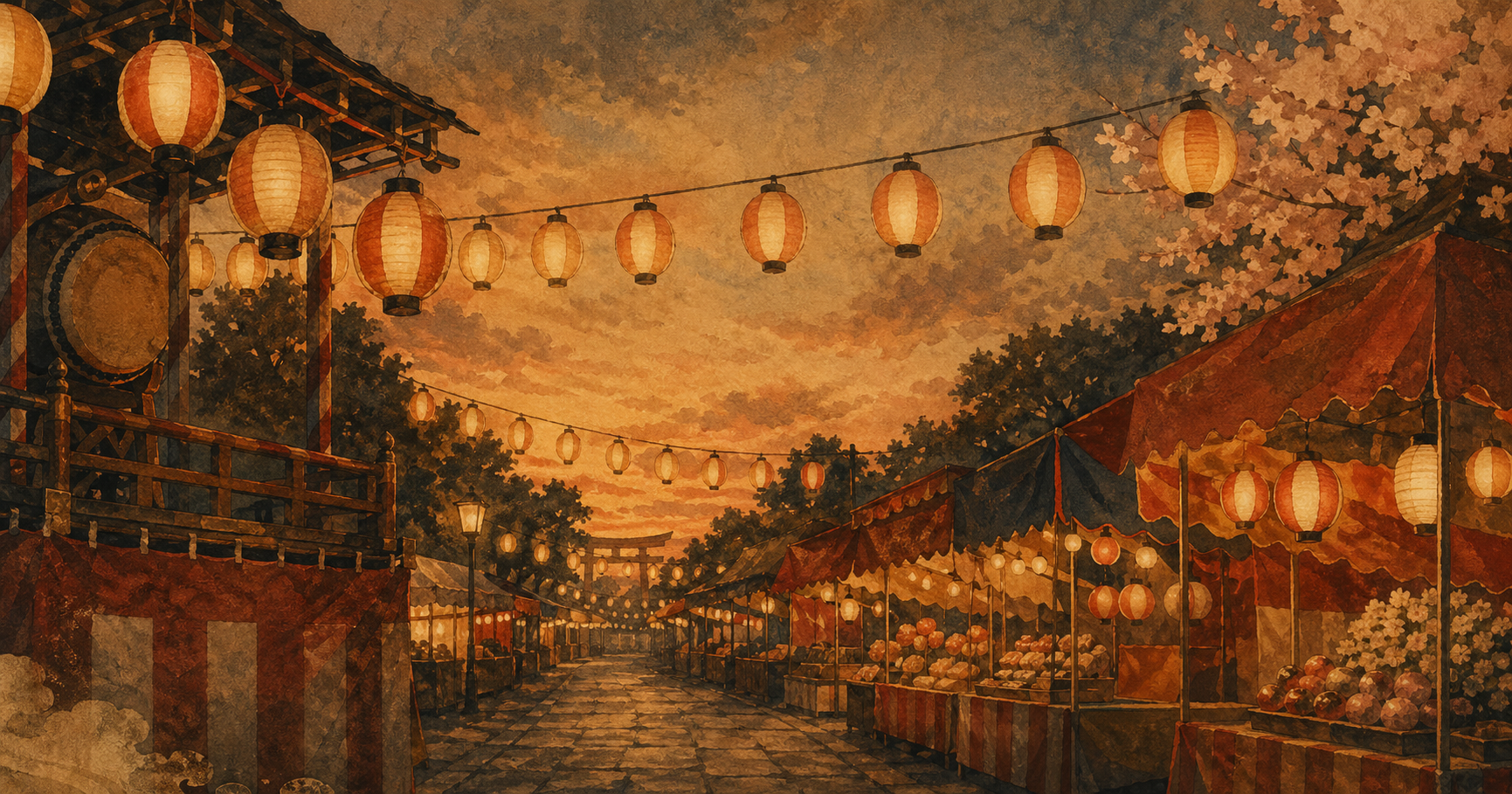
日本の祭りは古代より神道と結びつき、四季の移ろいと地域の共同体を象徴する役割を果たしてきました。春は豊作を祈る祈年祭、夏は疫病や厄を祓う祇園系の祭礼、秋は収穫に感謝する新嘗祭、冬は新年を迎える祭りと、年中を通じて神と人が交わる行事が各地で営まれています。
Japanese matsuri have been tied to Shinto since ancient times and have fulfilled the role of symbolizing the transition of the four seasons and regional communities. Spring brings the harvest-prayer Toshigoi-no-Matsuri, summer brings Gion-style festivals to purify plagues and misfortune, autumn brings the harvest-thanksgiving Niiname-sai, and winter brings new year festivals — events where gods and people interact are held throughout the year in every region.
春の節句
春の代表的な行事は3月3日の雛祭り(桃の節句)です。女子の健やかな成長を願って雛人形を飾り、菱餅、ちらし寿司、白酒などを供えます。最上段に内裏雛(男雛・女雛)、次に三人官女、五人囃子と並び、最大で七段にもなる豪華な飾りです。
A representative spring event is the Hina Matsuri (Peach Festival) on March 3rd. Wishing for the healthy growth of girls, families display Hina dolls and offer hishimochi (diamond rice cake), chirashi sushi, and shirozake (white sake). Arranged from the top tier with imperial dolls (male and female), then three court ladies, and five musicians, it can become a luxurious seven-tier display at largest.
5月5日は端午の節句(こどもの日)で、男子の成長を祝います。家々では兜や五月人形を飾り、庭やベランダには鯉のぼりを揚げます。鯉が滝を登って龍になるという中国の故事「登竜門」に由来し、子の出世を願う象徴です。柏餅とちまきを食べる習慣もあります。
May 5th is Tango no Sekku (Children's Day), celebrating the growth of boys. Households display helmets and May dolls, and raise carp streamers on gardens and verandas. Originating from the Chinese legend "Dragon Gate" — in which a carp climbs a waterfall to become a dragon — the streamers symbolize the wish for a child's success in life. There is also a custom of eating kashiwa mochi and chimaki.
夏の七夕と盆
7月7日の七夕は、織姫と彦星が年に一度天の川で逢瀬を果たすという中国由来の伝説に基づきます。人々は短冊に願い事を書き、竹笹に吊るします。仙台七夕まつりは最大級の七夕祭りで、駅前商店街に巨大な吹き流しが揺れる風景が毎年全国ニュースになります。
Tanabata on July 7th is based on a Chinese-origin legend in which Orihime and Hikoboshi fulfill their tryst across the Milky Way once a year. People write wishes on tanzaku strips and hang them on bamboo grass. The Sendai Tanabata Festival is the largest-scale Tanabata festival, and the scenery of huge streamers swaying in the shopping street in front of the station becomes nationwide news every year.
8月には祖先の霊を迎える盆があります。13日に迎え火を焚いて霊を迎え、16日に送り火で再びあの世に送ります。京都の五山送り火は山の斜面に巨大な「大」「妙法」文字や鳥居・船の形を燃やす幻想的な光景で知られ、盆踊りは各地の町内会で盛大に行われます。徳島県の阿波踊りは全国最大級の盆踊りで、4日間で100万人を超える観客を集めます。
August brings Obon, when ancestral spirits are welcomed. On the 13th, welcoming fires are burned to welcome the spirits, and on the 16th, sending-off fires send them back to the other world. Kyoto's Gozan Okuribi is known for the fantastical sight of huge "Dai" and "Myoho" characters, torii, and boat shapes burning on mountain slopes; Bon dances are held grandly by neighborhood associations everywhere. Tokushima Prefecture's Awa Odori is the largest-scale Bon dance nationally, gathering over 1 million spectators over four days.
花火大会
夏の夜空を彩る花火大会は、江戸時代の両国の川開きに起源を持つ伝統行事です。現在、全国「三大花火大会」と呼ばれるのは隅田川花火大会(東京)、長岡まつり大花火大会(新潟)、大曲の花火(秋田)です。長岡は戦災復興と慰霊の意味を込めた正三尺玉など超大型の花火で有名、大曲は花火師の全国競技会としての側面を持っています。
Fireworks displays that color the summer night sky are a traditional event whose origin lies in the Edo-period river opening at Ryogoku. Currently, the nationally recognized "three great fireworks displays" are the Sumida River Fireworks Display (Tokyo), the Nagaoka Festival Grand Fireworks Display (Niigata), and the Omagari Fireworks (Akita). Nagaoka is famous for super-large fireworks like the proper three-shaku shell, with the meaning of war reconstruction and memorial; Omagari has the aspect of being a national competition for fireworks masters.
日本三大祭り
日本を代表する「三大祭」は、京都の祇園祭、大阪の天神祭、東京の神田祭です。祇園祭は7月1日から31日まで1か月にわたって行われ、特に17日と24日の「山鉾巡行」では豪華な山鉾が京都市内を練り歩きます。これらの山鉾は国の重要有形民俗文化財・ユネスコ無形文化遺産に指定されています。
Japan's representative "three great festivals" are Kyoto's Gion Matsuri, Osaka's Tenjin Matsuri, and Tokyo's Kanda Matsuri. The Gion Matsuri is held over a full month from July 1st to 31st, and especially on the 17th and 24th, the "Yamahoko Junko" procession parades luxurious yamahoko floats through the city of Kyoto. These floats are designated as Important Tangible Folk Cultural Properties of Japan and as UNESCO Intangible Cultural Heritage.
天神祭は大阪天満宮の祭礼で、7月24日・25日に行われます。最大の見所は25日夜の「船渡御」で、大川を百隻を超える船団が行き交い、奉納花火が空を彩ります。神田祭は江戸総鎮守の神田明神で2年に一度(本祭)開催され、東京最大の氏子祭礼として、大手町・丸の内のオフィス街を神輿が練り歩く姿が名物です。
The Tenjin Matsuri is the festival of Osaka Tenmangu Shrine, held on July 24th and 25th. The greatest highlight is the "Funatogyo" boat procession on the night of the 25th, in which a fleet of over a hundred vessels crosses the Okawa River while dedicatory fireworks color the sky. The Kanda Matsuri is held biennially (the main festival year) at Kanda Myojin, the tutelary shrine of Edo, and as Tokyo's largest parishioner festival, the sight of mikoshi parading through the office districts of Otemachi and Marunouchi is its specialty.
地方の個性的な祭り
全国各地には、その土地ならではの個性を放つ祭りが多数あります。青森ねぶた祭は8月2日から7日まで行われ、巨大な武者人形の灯籠「ねぶた」が市内を練り歩き、「ラッセラー」の掛け声と跳人の踊りが街を包みます。岸和田だんじり祭(大阪)は地車を全力で走らせる「やりまわし」で知られ、毎年死傷者が出るほどの激しさが特徴です。
Across the country there are many festivals that emit individuality unique to their land. The Aomori Nebuta Matsuri is held from August 2nd to 7th, with huge warrior-doll lanterns ("nebuta") parading through the city, and the chant "Rasseraa" and the dance of jumpers ("haneto") envelop the town. Kishiwada's Danjiri Matsuri (Osaka) is known for the "yarimawashi" cornering at speed, in which danjiri floats run at full force, and is characterized by such intensity that casualties occur every year.
現代の渋谷ハロウィン現象
伝統的な祭りとは別に、2010年代から渋谷スクランブル交差点周辺で「ハロウィン」が自然発生的に開催される現象が起こりました。仮装した若者が数十万人規模で集まり、SNS映えを狙う現象として海外メディアにも取り上げられました。一方で痴漢・器物損壊・ゴミ問題が深刻化し、2023年には渋谷区が「ハロウィン期間は渋谷に来ないで」と公式に呼びかけ、路上飲酒を禁止する条例も制定されました。
Apart from traditional festivals, from the 2010s a phenomenon emerged in which "Halloween" was spontaneously held around Shibuya's scramble intersection. Costumed young people gathered on a scale of hundreds of thousands, and the phenomenon — driven by aims for SNS-worthy moments — was even taken up by overseas media. On the other hand, problems of groping, property destruction, and trash became serious, and in 2023 Shibuya Ward officially called out "do not come to Shibuya during the Halloween period," and an ordinance prohibiting street drinking was enacted.