日本庭園の世界 — 池泉・枯山水・露地の様式
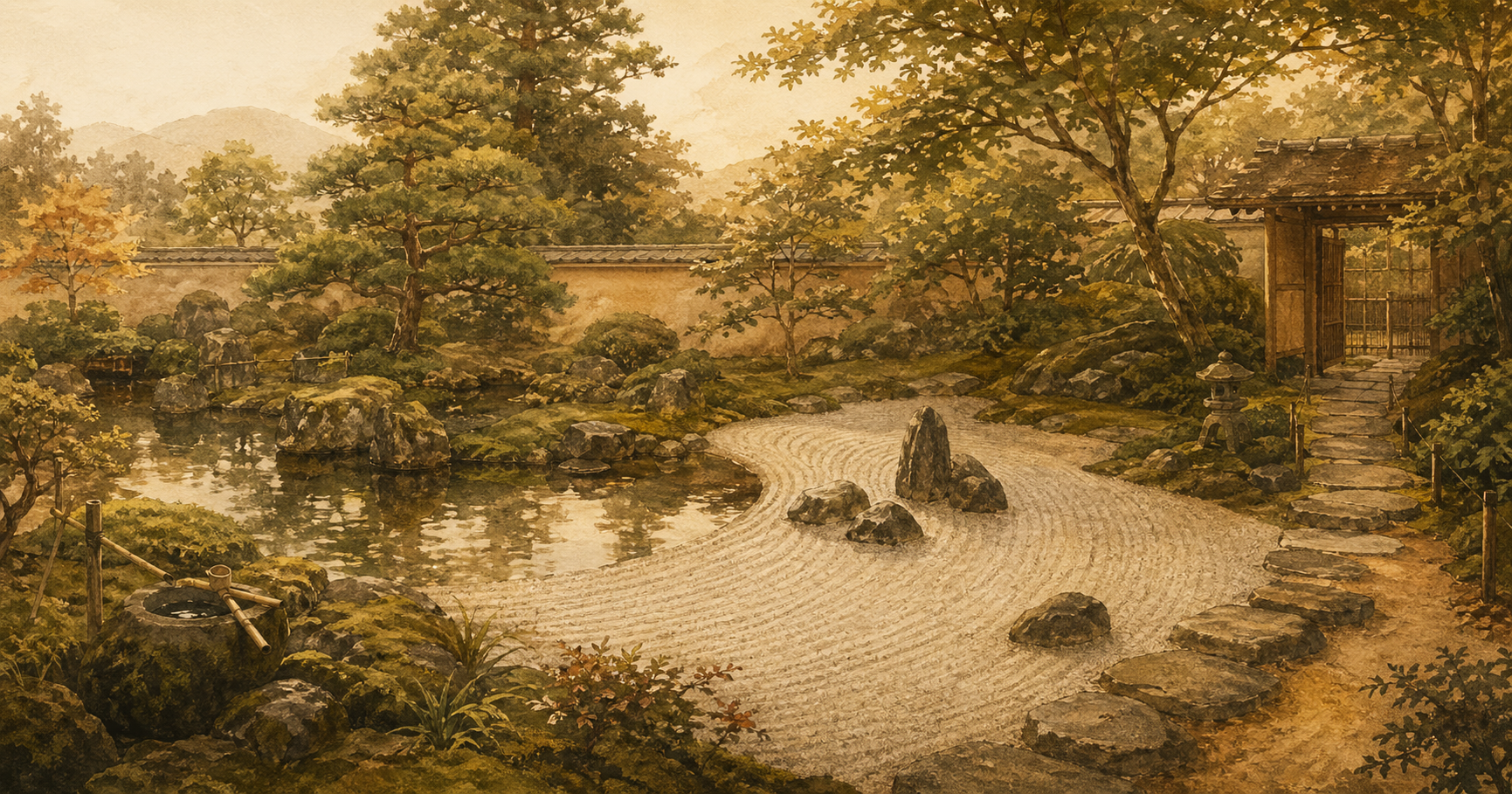
日本庭園は、自然の風景を小さな空間の中に凝縮し、四季の移ろいを味わうために作られた芸術です。西洋の幾何学的な庭とは異なり、非対称で曲線を多用し、山・川・海といった自然の要素を象徴的に表現します。代表的な様式は大きく三つに分けられます。
A Japanese garden is an art form designed to condense the scenery of nature into a small space and to let viewers savor the changing of the four seasons. Unlike geometric Western gardens, it is asymmetric, makes heavy use of curves, and represents elements of nature — mountains, rivers, the sea — in a symbolic way. There are three principal styles.
池泉回遊式庭園 — 大名の名園
池を中心に配置し、その周りを歩いて回ることで景色の変化を楽しむのが池泉回遊式です。江戸時代に各地の大名が競って造営し、広大な敷地に築山・橋・茶屋などを配して、歩くたびに異なる眺めが現れるように設計されました。
The chisen-kaiyū style is built around a central pond, with paths inviting visitors to stroll its perimeter and enjoy the shifting scenery. During the Edo period, feudal lords across the country competed to build them, laying out artificial hills, bridges, and teahouses across vast grounds so that a different vista would appear with every step.
枯山水 — 水を使わずに海を描く
枯山水は、水を一切使わずに、白砂と石だけで山水の風景を表現する極めて抽象的な庭です。砂に箒で描かれる波紋は海や川の流れを、配置された石は山や島を象徴します。室町時代に禅宗の寺院で発達し、座禅や瞑想の対象として作られました。
Karesansui — the dry landscape garden — is an extremely abstract style that depicts mountain and water scenery using nothing but white sand and stones, with no actual water at all. Ripples drawn into the sand with a broom symbolize the sea or the flow of a river, and carefully placed stones represent mountains or islands. The form developed at Zen temples in the Muromachi period as an object for zazen meditation.
最も有名な枯山水は、京都の龍安寺方丈庭園でしょう。長方形の白砂の中に十五の石が五群に分けて配置されていますが、どの角度から見ても必ず一つは他の石に隠れて十四しか見えないという謎があります。同じく京都の大徳寺も多くの名枯山水を擁する禅刹として知られています。
The most famous karesansui of all is surely the garden of the abbot's quarters at Ryōan-ji in Kyoto. Fifteen stones are arranged in five groups within a rectangle of white sand, but from any vantage point one stone is always hidden behind the others — only fourteen can ever be seen at once. Also in Kyoto, Daitoku-ji is known as a Zen temple complex possessing many celebrated dry landscape gardens.
露地 — 茶室への小さな宇宙
露地とは、茶室へ向かう通路として作られた庭で、「茶庭」とも呼ばれます。千利休が体系化したと言われ、飛石・蹲踞・石灯籠・腰掛などが配置されます。客は露地を歩くことで俗世から心を切り離し、蹲踞で手と口を清めてから茶室に入るという一連の流れが出来上がります。
The roji is a garden created as a passageway leading to a tea room, and is also called a chatei (tea garden). Said to have been systematized by Sen no Rikyū, it is laid out with stepping stones, a stone water basin (tsukubai), a stone lantern, and a waiting bench. By walking through the roji, guests detach their hearts from the secular world and, after purifying their hands and mouth at the tsukubai, enter the tea room — completing a single ritual flow.
借景 — 風景を借りる手法
借景とは、庭園の外にある山や森を、あたかも庭の一部であるかのように構図に取り込む手法です。庭の境界を視覚的に消し、実際の広さよりもはるかに雄大な景観を作り出します。京都の円通寺が比叡山を借景とする例が最も有名で、杉の木立の向こうに山の稜線が浮かび上がる構図は圧巻です。
Shakkei is the technique of incorporating mountains or forests outside the garden into its composition as if they were part of it. By visually erasing the garden's boundary, it creates a landscape that feels far grander than the actual grounds. The most famous example is Entsū-ji in Kyoto, which borrows Mount Hiei: the ridgeline of the mountain rising beyond a grove of cedars makes for a breathtaking composition.
四季の見頃
日本庭園の最大の魅力は、同じ庭が季節ごとに全く違う表情を見せることです。春は桜が池の水面に花筏を作り、初夏には新緑と杜若が映え、秋は紅葉が燃えるように庭を染め、冬は雪化粧が墨絵のような静寂の世界を作り上げます。兼六園の雪吊りは冬の風物詩として特に名高いです。
The greatest charm of a Japanese garden is that the same place wears a completely different face each season. In spring, cherry petals form a "blossom raft" on the surface of the pond; in early summer, fresh green and rabbit-ear iris glow side by side; in autumn, fiery red leaves dye the garden; and in winter, a blanket of snow turns the scene into the silent world of an ink painting. The yukitsuri ("snow ropes") at Kenroku-en are especially famous as a winter sight.
必見の名園
三大名園に次いで訪れたいのが、京都の皇室関連庭園である桂離宮と修学院離宮です。桂離宮は江戸時代初期に造営された池泉回遊式の最高傑作と言われ、ドイツの建築家ブルーノ・タウトが「泣きたくなるほど美しい」と絶賛したことで世界に知られました。見学には宮内庁への事前申し込みが必要です。
Beyond the three great gardens, the next must-visits are the imperial villas of Kyoto: Katsura Rikyū and Shugakuin Rikyū. Katsura, built in the early Edo period, is considered the supreme masterpiece of the chisen-kaiyū style, and became known worldwide after the German architect Bruno Taut praised it as "beautiful enough to make you weep." Visits require advance application to the Imperial Household Agency.
四国の高松にある栗林公園も屈指の大名庭園で、紫雲山を借景とした広大な景観が広がります。ミシュラン・グリーンガイドで最高評価の三つ星を獲得しています。
Ritsurin Park in Takamatsu on Shikoku is another leading daimyō garden, with a vast landscape unfolding against the borrowed scenery of Mount Shiun. It holds the top three-star rating in the Michelin Green Guide.
おわりに
日本庭園は、ただ眺めるものではなく、歩き、座り、季節を感じ、時には心を整えるための空間です。池泉・枯山水・露地という三つの様式は、それぞれ異なる美意識と精神世界を体現しています。次に日本を訪れる際には、ぜひ一度本物の名園で時間を過ごし、借景に込められた先人の感性を味わってみてください。
A Japanese garden is not something merely to be looked at — it is a space for walking, for sitting, for feeling the seasons, and at times for setting one's heart in order. The three styles — pond, dry landscape, and tea garden — each embody a different aesthetic and a different spiritual world. Next time you visit Japan, do spend some time at one of these celebrated gardens and savor the sensibility our ancestors poured into the borrowed scenery.