温泉文化と入浴マナー — 名湯巡りの楽しみ方
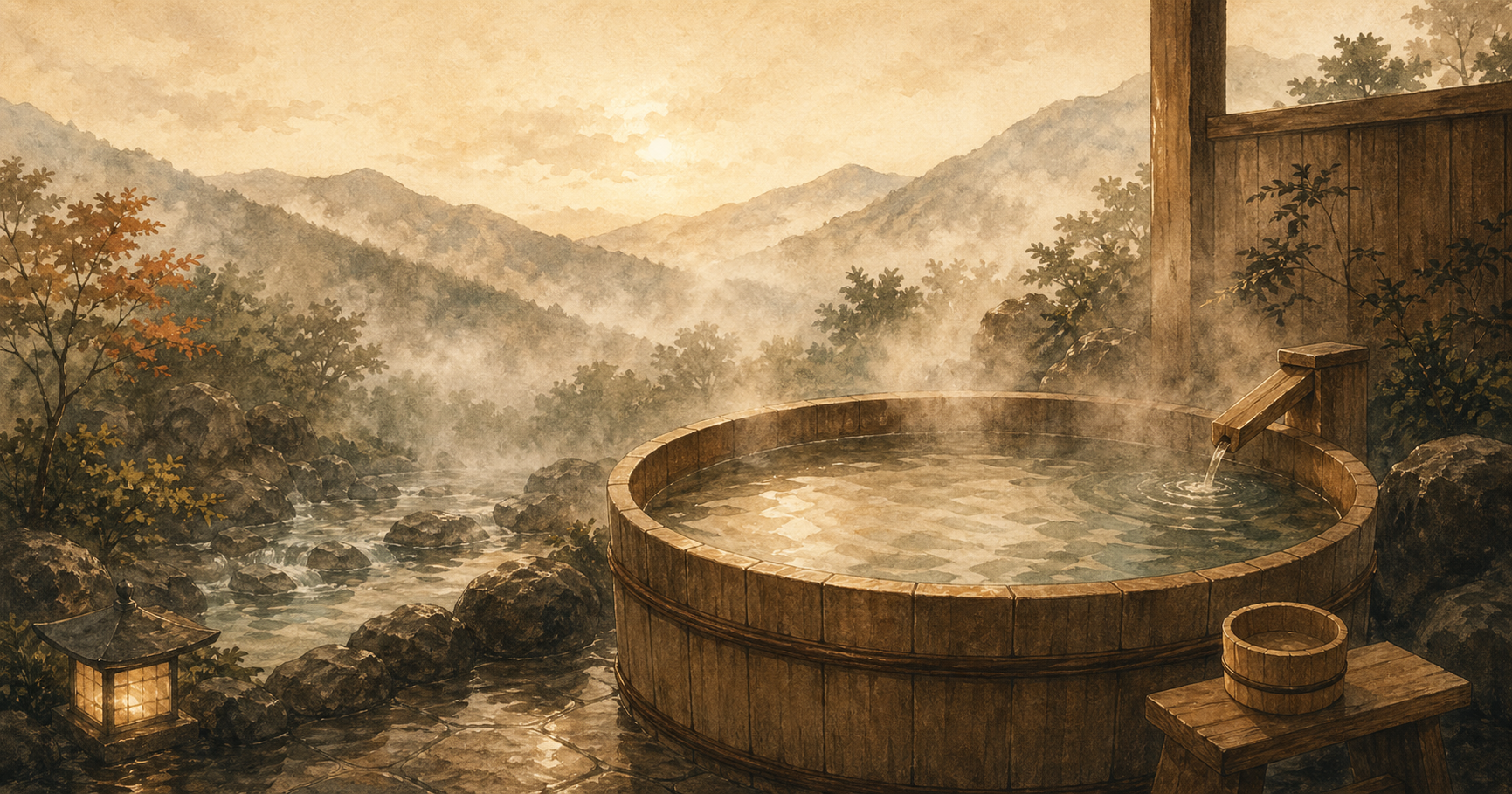
日本は世界でも屈指の火山国であり、全国に約3,000か所の温泉地と約27,000の源泉を擁する温泉大国です。古来より人々は湯に浸かることで体を癒し、心を整え、時には長期の湯治で病の治療にも役立ててきました。
Japan is one of the world's foremost volcanic countries, an onsen superpower with around 3,000 hot spring towns and around 27,000 source springs nationwide. Since ancient times, people have used hot water immersion to heal the body, calm the mind, and even treat illness through long-term hot spring cures (toji).
温泉法による定義
日本における温泉は、1948年制定の温泉法によって厳密に定義されています。法律上の温泉とは「地中から湧出する温水・鉱水・水蒸気・その他のガス(炭化水素を主成分とする天然ガスを除く)」で、源泉温度が25℃以上であるか、一定の成分(炭酸、硫黄、鉄など)を含有するものを指します。つまり25℃未満でも、特定の成分が基準値を超えていれば温泉と認められます。
Onsen in Japan are strictly defined by the 1948 Onsen Law. Legally, onsen refers to "warm water, mineral water, steam, or other gas (excluding natural gas mainly composed of hydrocarbons) that gushes forth from underground" with a source temperature of 25°C or more, or that contains specified components (carbonates, sulfur, iron, etc.). In other words, even water below 25°C can be recognized as onsen if specific components exceed the standard values.
泉質の種類
泉質は含有される成分によって10種類に分類されます。代表的なものとして、硫黄泉(卵が腐ったような匂いが特徴、殺菌・皮膚病に効能)、単純泉(成分が少なく肌に優しい、初心者向き)、ナトリウム-塩化物泉(塩分が多く「熱の湯」と呼ばれ、保温効果が高い)、炭酸水素塩泉(肌をツルツルにする「美人の湯」)などがあります。
Spring quality is classified into 10 types based on contained components. Representative ones include: sulfur springs (characterized by a rotten-egg smell, effective for sterilization and skin diseases), simple springs (few components, gentle on skin, suited for beginners), sodium-chloride springs (high salt content, called "hot water" for high heat retention), and bicarbonate springs (called "beauty water" for making skin smooth).
全国の名湯
日本を代表する温泉地は各地に点在しています。群馬県の草津温泉は強酸性の湯と湯畑で有名、「湯もみ」の実演も観光の名物です。大分県の別府温泉は湧出量・源泉数共に全国1位を誇り、市内に「地獄めぐり」の観光スポットが多数あります。愛媛県の道後温泉は3,000年の歴史を持つ最古級の温泉で、夏目漱石の小説『坊っちゃん』にも登場します。
Japan's representative onsen towns are scattered across the country. Kusatsu Onsen in Gunma Prefecture is famous for its strongly acidic water and the "yubatake" hot water field, with the "yumomi" water-stirring demonstration as a tourist specialty. Beppu Onsen in Oita Prefecture boasts the nation's number-one ranking in both gushing volume and source count, with many "hell tour" sightseeing spots within the city. Dogo Onsen in Ehime Prefecture is one of the oldest onsen with 3,000 years of history, appearing in Natsume Soseki's novel "Botchan."
熊本県の黒川温泉は、里山の風情を活かした統一感ある街並みと「入湯手形」(3つの宿を湯巡りできるパス)で人気を集めています。北海道の登別温泉は地獄谷と呼ばれる噴気地帯を源泉に持ち、9種類もの泉質を一つの温泉地で体験できる稀な場所です。
Kurokawa Onsen in Kumamoto Prefecture has gained popularity for its unified streetscape that takes advantage of the village-mountain atmosphere and its "nyutou tegata" (a pass that lets you bath-hop through three inns). Noboribetsu Onsen in Hokkaido has the steam-vent zone called Hell Valley as its source and is a rare place where you can experience nine types of spring quality in a single onsen town.
入浴マナーの基本
温泉を楽しむには、共同空間としての厳格なマナーを守る必要があります。第一に、浴槽に入る前に必ず体を洗い、掛け湯で体を湯に慣らします。心臓から遠い手足から湯を掛け、徐々に体を温めるのが正しい手順です。第二に、水着を着用しての入浴は禁止—原則として完全に裸になります。第三に、タオルを湯に浸けることは禁止され、頭に載せるか浴槽の縁に置きます。
To enjoy onsen, you must observe strict etiquette as a communal space. First, you must wash your body and acclimate it to the water with a "kakeyu" pre-rinse before entering the bath. The correct procedure is to pour hot water over the hands and feet — far from the heart — first, gradually warming the body. Second, wearing a swimsuit is prohibited; in principle you go fully naked. Third, soaking your towel in the bath water is prohibited — you place it on your head or on the edge of the tub.
入れ墨・タトゥーの扱い
歴史的に入れ墨は暴力団との結びつきから多くの温泉施設で入浴が禁止されてきました。現在は訪日外国人の増加に対応し、施設によっては小型タトゥーシール(ペッタンコ)で隠せば入浴可能としたり、完全に許容するタトゥーフレンドリーな宿も増えています。事前に公式サイトや電話で確認するのが安全です。
Historically, due to associations with organized crime, many onsen facilities have prohibited bathing for those with tattoos. Currently, in response to the increase in foreign visitors to Japan, the number of facilities that allow bathing if small tattoos are hidden with adhesive covers, or that fully permit tattoos as "tattoo-friendly" inns, is increasing. It is safe to check in advance via the official website or by phone.
旅館文化との融合
温泉は多くの場合、旅館という宿泊施設と一体になって体験されます。旅館に到着するとまず浴衣と帯・羽織が配られ、館内や温泉街を浴衣姿で歩くのが定番の楽しみ方です。夕食には会席料理が提供され、地元食材を活かした懐石の品々が順番に運ばれます。食後には再び湯に入り、就寝前に露天風呂で星空を眺める—これが日本旅館の醍醐味です。
Onsen are in many cases experienced as integrated with the accommodation facility called a ryokan. When you arrive at a ryokan, you are first given a yukata, sash, and haori jacket, and a standard way to enjoy yourself is to walk around the inn and onsen town in yukata. Dinner offers kaiseki cuisine, with multi-course items making use of local ingredients served in order. After the meal you bathe again, and gaze at the starry sky from an open-air bath before bed — this is the true pleasure of a Japanese ryokan.