ラーメン地域ごとの違い — 札幌・博多・喜多方
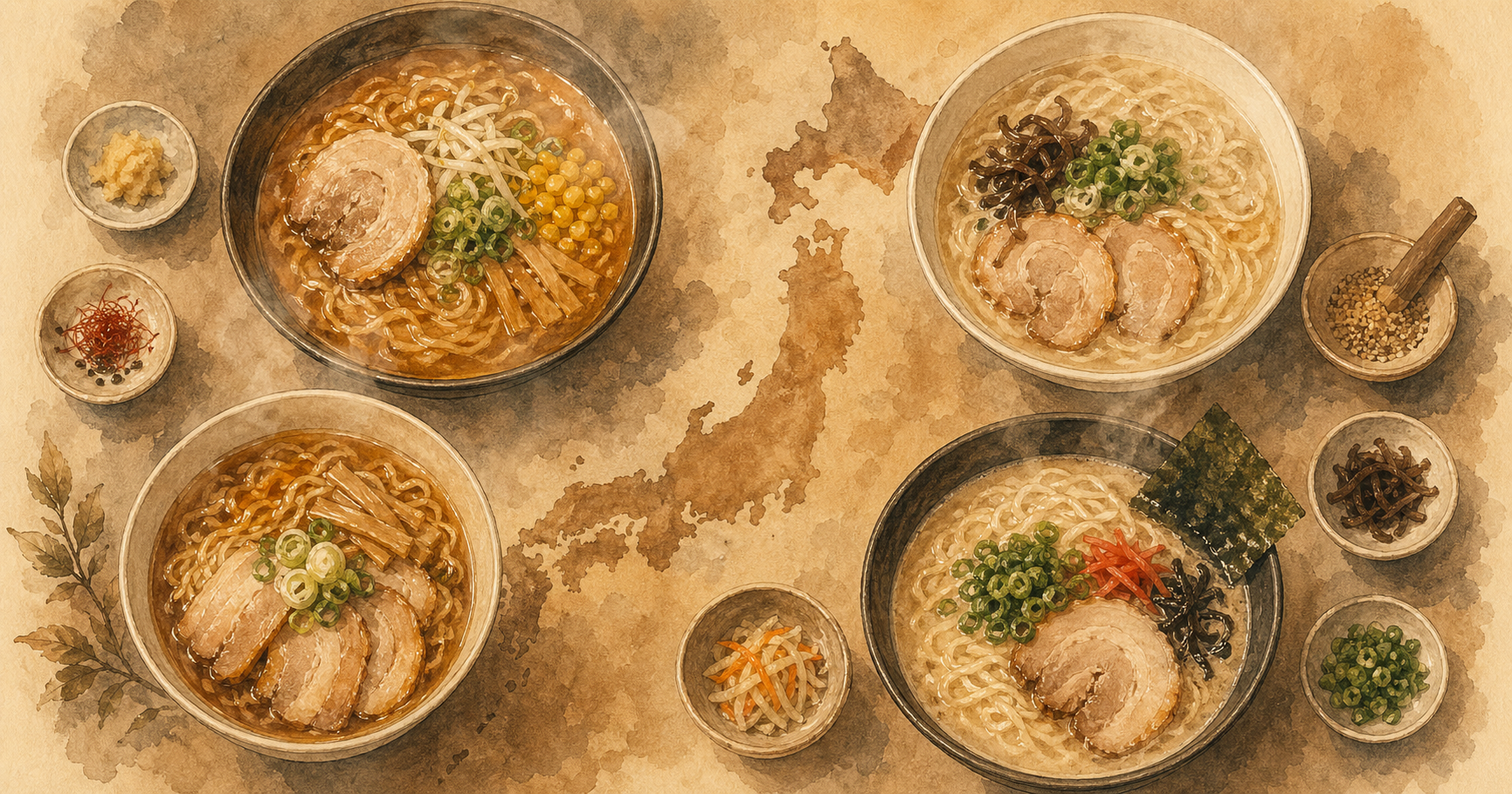
ラーメンは戦後の日本を象徴する料理と言ってよいでしょう。元は中華そばと呼ばれた中国由来の料理でしたが、各地の気候・食材・嗜好に合わせて独自の進化を遂げ、今や何百ものご当地ラーメンが存在しています。国民のソウルフードとして、日本人は年間平均40杯以上食べていると言われます。
Ramen may be the dish that best symbolizes postwar Japan. Originally a Chinese-derived dish called "chūka soba," it took on its own evolution adapted to the climate, ingredients, and tastes of each region — and today there are hundreds of local ramens. As a national soul food, the average Japanese person is said to eat over 40 bowls a year.
札幌ラーメン — 味噌と北国の寒さ
北海道札幌を代表する味噌ラーメンは、1955年頃に大宮守人という料理人が考案したと言われます。寒い冬を乗り切るため、豚の脂と味噌のコクで体を芯から温めるスープが特徴。麺はコシの強い黄色い中太縮れ麺で、味噌スープによく絡みます。
Sapporo's signature miso ramen is said to have been devised around 1955 by a cook named Ōmiya Morihito. To get through the cold winters, the soup uses pork fat and the depth of miso to warm the body from its core. The noodles are firm, yellow, medium-thick wavy noodles that cling well to the miso broth.
具にはもやし・コーン・バター・挽肉が載るのが定番で、特に「バターコーン味噌ラーメン」は北海道の酪農・農業が育んだ組み合わせです。札幌には味噌専門店が集まる「ラーメン横丁」があり、観光スポットにもなっています。
Standard toppings are bean sprouts, corn, butter, and ground meat. The "butter-corn miso ramen" especially is a combination cultivated by Hokkaidō's dairy and agricultural traditions. Sapporo has a "Ramen Yokochō" (Ramen Alley) where miso specialty shops gather, and it has become a tourist spot.
博多ラーメン — 豚骨と替え玉文化
福岡市博多を代表するのが豚骨ラーメンです。豚の骨を長時間強火で煮込んだ白濁スープが特徴で、クリーミーで濃厚な味が病みつきになります。麺は極細のストレート麺で、硬さを「バリカタ」「カタ」「普通」「やわ」などから注文できます。
Hakata in Fukuoka City is the home of tonkotsu ramen. The cloudy white soup, made by simmering pork bones at high heat for many hours, is its hallmark — creamy and rich, it's famously addictive. The noodles are extremely thin and straight, and you can order their firmness from "barikata" (very firm), "kata," "normal," or "yawa" (soft).
喜多方ラーメン — 朝ラーの街
福島県喜多方市は人口約4万人の小さな街ですが、ラーメン店が百軒以上あるという全国屈指のラーメン激戦区です。喜多方ラーメンの特徴は平打ちの太い縮れ麺と、醤油ベースのあっさりした豚骨スープです。コクはあるのにしつこくない、毎日食べても飽きない味と評されます。
Kitakata City in Fukushima Prefecture is a small town of about 40,000 people, yet it has over a hundred ramen shops — making it one of Japan's leading ramen battlegrounds. Kitakata ramen's hallmarks are flat, thick wavy noodles and a light soy-based pork-bone broth. Deep but not heavy, it's said to be a flavor you don't tire of even eating every day.
そして喜多方最大の特色が「朝ラー」文化です。早朝7時頃から開店し、朝食としてラーメンを食べる習慣があります。これは元々蔵造りの街として早起きの商人が多く、朝から手軽に食べられる料理として根付いたとされ、今でも観光客が朝ラー巡りを楽しんでいます。
And Kitakata's greatest special feature is its "asa-rā" (morning ramen) culture. Shops open from around 7 a.m., and there's a custom of eating ramen for breakfast. This is said to have taken root because the town — known for its traditional kura warehouse architecture — had many early-rising merchants who needed something easy to eat in the morning. To this day, tourists enjoy "morning ramen tours."
家系・徳島・旭川 — その他の名物
横浜発祥の「家系」ラーメンは、豚骨醤油スープに太いストレート麺、ほうれん草と海苔三枚が基本のトッピングです。1974年創業の「吉村家」を元祖とし、暖簾分けした店が「○○家」と名乗ることから家系と呼ばれます。味・麺の硬さ・脂の量を細かく注文できる「味の濃さ」文化も特徴です。
Yokohama-born "iekei" ramen pairs a tonkotsu-soy broth with thick straight noodles, with spinach and three sheets of nori as standard toppings. Tracing back to "Yoshimura-ya," founded in 1974, branch shops took on names ending in "-ya," giving rise to the name iekei. A signature feature is the customization culture — you can finely adjust flavor strength, noodle firmness, and amount of oil.
徳島ラーメンは豚骨醤油の甘辛いスープに豚バラ肉の煮物と生卵を落とすのが特徴。ご飯と一緒に食べるのが地元スタイルで、「ご飯におかずラーメン」と評されることもあります。旭川ラーメンは北海道内陸部の寒冷地で発達し、豚骨と魚介のWスープに低加水のちぢれ細麺、スープが冷めないようラードで蓋をする工夫が特徴です。
Tokushima ramen pairs a sweet-savory pork-soy broth with simmered pork belly and a raw egg dropped on top. Locals eat it together with rice — it's sometimes characterized as "ramen as a side dish for rice." Asahikawa ramen developed in inland Hokkaidō's cold region: a double soup of pork bone and seafood with low-hydration wavy thin noodles, sealed with a lid of lard to keep the soup from cooling.
つけ麺と現代のトレンド
つけ麺は麺とスープが別々に出され、麺を濃厚なつけ汁につけて食べるスタイル。東京大勝軒が発祥とされ、山岸一雄が「特製もりそば」として考案しました。麺は冷水で締めてあり、コシが強く、最後に「スープ割り」(出汁でスープを薄める)で飲み干すのが定番です。
Tsukemen serves the noodles and the soup separately — you dip the noodles into the rich broth. Tokyo's Taishōken is considered the origin, where Yamagishi Kazuo devised it as "tokusei mori-soba." The noodles are firmed in cold water for extra bite, and the standard finish is "sūpu-wari" — diluting the dipping broth with dashi and drinking it up.
最近のトレンドとしては「二郎系」と「鶏白湯」が挙げられます。二郎系は極太麺に大量のもやし・キャベツ・豚・ニンニクを載せた「マシマシ」文化が特徴で、若い男性を中心に熱狂的なファンを持ちます。鶏白湯は鶏の骨を煮込んで白濁させたクリーミーなスープで、豚骨よりあっさりしているため女性にも人気があり、新世代のラーメンとして専門店が急増しています。
Recent trends include "Jirō-style" and "tori-paitan." Jirō-style is known for extremely thick noodles topped with mountains of bean sprouts, cabbage, pork, and garlic — its "mashi-mashi" (extra extra) culture has fanatical fans, mostly young men. Tori-paitan is a creamy, cloudy-white broth made by simmering chicken bones; lighter than tonkotsu, it's also popular with women, and new-generation specialty shops are rapidly multiplying.
おわりに
ラーメンは一つの料理でありながら、地域・食材・歴史・気候が融合した小さな文化の結晶です。新幹線や車で各地を巡って、ご当地ラーメンを食べ歩く「ラーメン巡礼」を楽しむ人も多く、一杯のラーメンが旅行の目的になることさえあります。あなたの一番好きなラーメンは、どの地域のものでしょうか?
Ramen is a single dish, yet it is a small crystallization of culture in which region, ingredients, history, and climate all fuse. Many people enjoy "ramen pilgrimages" — touring the country by bullet train or car to eat their way through local styles — and a single bowl of ramen can even become the purpose of a trip. What's your favorite ramen, and from which region?