茶道入門 — 千利休と侘び寂びの精神
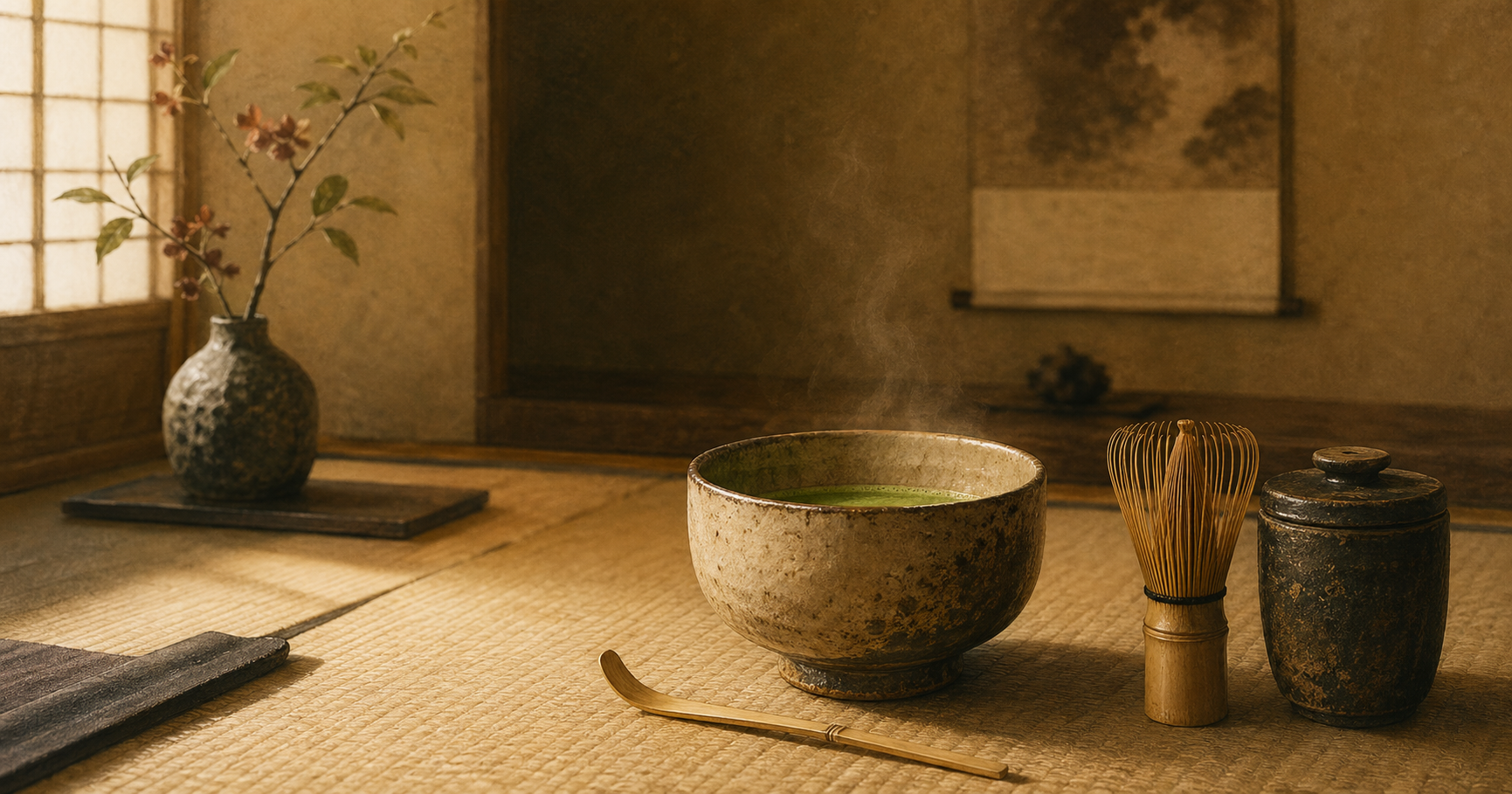
茶道とは、お茶を点てて客に振る舞うという行為を通して、精神修養と美意識を追求する日本の伝統文化です。単にお茶を飲むだけではなく、その一杯に込められた亭主の心遣いと、客との一期一会の時間を味わうことに本質があります。
Sadō — the way of tea — is a traditional Japanese cultural practice in which the act of whisking and serving tea to a guest becomes a vehicle for spiritual cultivation and the pursuit of an aesthetic ideal. Its essence lies not merely in drinking tea, but in savoring the host's thoughtfulness poured into a single bowl, and the once-in-a-lifetime time shared with the guest.
起源 — 室町時代から安土桃山時代へ
お茶そのものは平安時代に中国から伝わり、僧侶の薬用として使われていました。現在の抹茶を使う形式が整い始めたのは室町時代で、村田珠光が簡素で内省的な「侘び茶」の考え方を提唱しました。
Tea itself was transmitted from China during the Heian period and was first used by Buddhist monks for medicinal purposes. The form using powdered matcha — close to today's practice — began to take shape in the Muromachi period, when Murata Jukō advocated a simple and introspective way of tea known as wabi-cha.
そして安土桃山時代、千利休がこの侘び茶を完成させました。利休は豊臣秀吉の茶頭として仕え、華やかな書院造の広間ではなく、四畳半という極めて小さな空間で、質素な道具を用い、精神性を極限まで突き詰めました。
Then, in the Azuchi-Momoyama period, Sen no Rikyū perfected this wabi-style tea. Serving as tea master to Toyotomi Hideyoshi, Rikyū rejected the gorgeous halls of shoin-style architecture in favor of an extremely small four-and-a-half-tatami room. Using austere implements, he pursued spirituality to its very limit.
三千家 — 流派の誕生
利休の死後、その孫・千宗旦の子孫たちが三つの流派を立て、これを三千家と呼びます。表千家、裏千家、武者小路千家の三家です。それぞれ宗家を継ぐ「家元」がいて、弟子に免状を出す「家元制度」を今も守っています。
After Rikyū's death, descendants of his grandson Sen Sōtan founded three lineages, collectively known as the Sansenke: Omotesenke, Urasenke, and Mushakōji-senke. Each is led by a grand master (iemoto) who issues certificates of mastery to disciples — a system still in place today.
三家とも根本精神は共通していますが、作法の細部が異なります。例えば、裏千家は泡立ての多い「たっぷりとした薄茶」を点て、表千家は泡を控えめにする傾向があります。海外での普及や学校茶道の導入に最も積極的なのは裏千家で、国内最大の流派とも言われます。
While the three houses share the same foundational spirit, the fine details of their manners differ. Urasenke, for example, prepares a foamy, plentiful bowl of thin tea, while Omotesenke tends to keep the foam restrained. Urasenke has been the most active in spreading sadō overseas and into school clubs, and is often said to be the largest school within Japan.
茶室と道具の世界
本格的な茶室は四畳半を基本とし、客は小さな「躙口」から身を屈めて入ります。これは身分の差を捨てて平等に座るという象徴です。正面には床の間があり、掛軸と季節の花(茶花)が飾られ、その日のテーマを静かに語ります。
A proper tea room is based on four-and-a-half tatami mats, and guests enter by stooping through a small "nijiriguchi" crawl-in entrance — a symbolic gesture of casting aside social rank to sit as equals. Facing the entrance is the tokonoma alcove, where a hanging scroll and seasonal flowers (chabana) quietly tell the theme of the day.
主要な道具には、お茶を飲む「茶碗」、抹茶をすくう「茶杓」、抹茶を入れる「棗」、お湯を沸かす「釜」、お湯を汲む「柄杓」、抹茶を泡立てる「茶筅」などがあります。特に茶碗は歪みや釉薬の景色を愛で、完璧でないものに宿る美を味わう—これが侘び寂びの感性です。
Among the principal implements are: the chawan (tea bowl) for drinking; the chashaku (tea scoop) for measuring matcha; the natsume (tea caddy) for storing matcha; the kama (kettle) for boiling water; the hishaku (bamboo ladle) for ladling water; and the chasen (bamboo whisk) for whisking the tea into foam. Tea bowls especially are admired for their warps and the "scenery" of their glaze — a love of beauty that dwells in things that are not perfect. This is the sensibility of wabi-sabi.
一期一会という考え方
茶道を語る上で欠かせない言葉が一期一会です。たとえ同じ相手と何度も茶会を開いたとしても、その瞬間・その組み合わせは一生に一度しかない、だからこそ全力で向き合うべきだ、という思想です。
A word indispensable to any discussion of sadō is ichigo ichie. Even if you hold a tea gathering with the same person many times, that moment and that combination of people will occur only once in a lifetime — and so you should face it with everything you have. This is the philosophy.
現代の茶道
戦国武将たちの嗜みとして男性中心に発展した茶道ですが、明治以降、女子教育の一環として広まり、今では圧倒的に女性の実践者が多い文化になっています。結婚前の花嫁修業として習う時代は過ぎ去り、現在は純粋な趣味や精神修養として幅広い年齢層が親しんでいます。
Although sadō developed mainly among men as an accomplishment of warring-states commanders, from the Meiji era onward it spread as part of girls' education, and today the overwhelming majority of practitioners are women. The era of learning tea as bridal training before marriage has passed; today people of a wide range of ages enjoy it as a pure hobby or as spiritual cultivation.
多くの中学・高校・大学には「茶道部」があり、週に一回和室に集まって練習します。学校文化祭でのお茶会は定番の出し物で、来場者に抹茶と和菓子を振る舞います。就職活動でも「茶道部に所属していました」と語ると、礼儀作法が身に付いている印象を与えます。
Many junior highs, high schools, and universities have a "sadō-bu" (tea ceremony club) that meets once a week in a tatami room to practice. Tea gatherings at school cultural festivals are a standard offering, where matcha and Japanese sweets are served to visitors. Even in job-hunting activities, mentioning that one belonged to a tea club leaves the impression that one has acquired proper etiquette.
おわりに
茶道は単なる古い作法の体系ではなく、四百年以上にわたって受け継がれてきた生き方そのものです。一杯のお茶を点てるという小さな行為に、相手を思いやる心と、今この瞬間を大切にする感性が凝縮されています。侘び寂びの精神は、忙しい現代を生きる私たちにこそ、新鮮な気付きを与えてくれるかもしれません。
Sadō is not merely an old system of manners — it is a way of living that has been passed down for over four hundred years. Concentrated into the small act of whisking a single bowl of tea are a heart that considers the other person and a sensibility that cherishes this very moment. The spirit of wabi-sabi may, in fact, offer the freshest of insights to those of us living in busy modern times.