日本酒と焼酎入門 — 製法・産地・飲み方の基礎
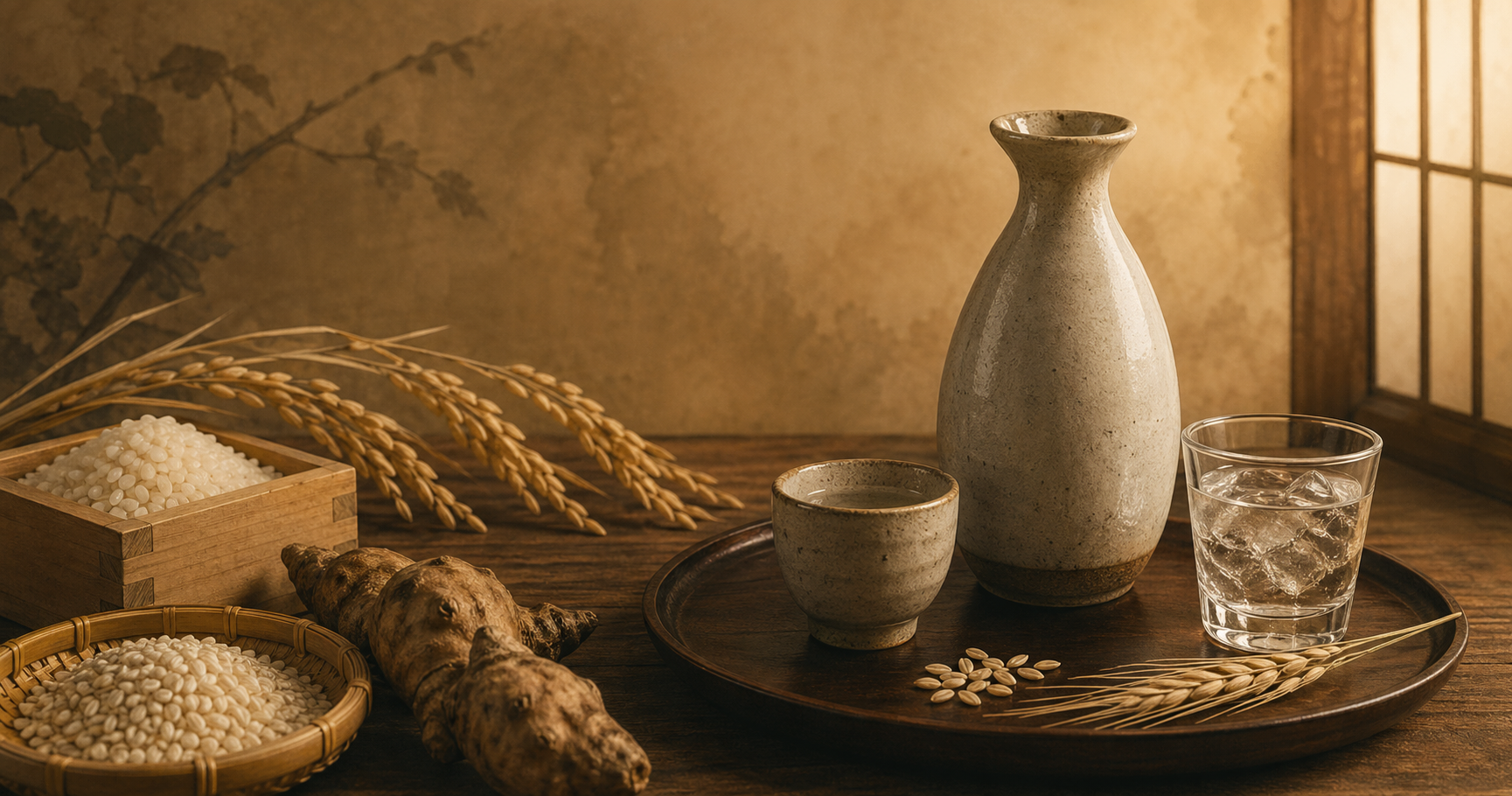
日本を代表する酒といえば、醸造酒の日本酒と、蒸留酒の焼酎の二つが挙げられます。両者とも米や麹を使うという共通点を持ちながら、製法も飲み方も全く異なる飲み物です。本記事では、製法・等級・産地・飲み方の四つの視点から、その基礎を整理します。
When speaking of representative Japanese alcoholic drinks, two stand out: sake — a brewed beverage — and shochu — a distilled spirit. Although both share the use of rice and kōji, their production methods and drinking customs differ entirely. This article organizes the basics from four perspectives: production, grade, region, and how to drink.
醸造酒 と 蒸留酒 — 製法の根本的な違い
日本酒は米・米麹・水を原料とする醸造酒で、酵母による発酵でアルコールを生み出します。ビールやワインと同じ仲間で、アルコール度数は一般的に15〜16度前後です。一方、焼酎は醸造したもろみを加熱し、蒸気を冷やして液体に戻す「蒸留」を加えるため、度数が高くなります。
Sake is a brewed beverage made from rice, rice kōji, and water — alcohol is produced through fermentation by yeast. It belongs to the same family as beer and wine, with an ABV typically around 15–16%. Shochu, on the other hand, takes a brewed mash and heats it, cooling the vapor back into liquid — this distillation step pushes the ABV considerably higher.
精米歩合 と 日本酒の等級
日本酒の等級を決める最も重要な指標が「精米歩合」です。これは、玄米を削った後に残る米の割合を示します。例えば精米歩合50%とは、玄米の外側を50%削り、中心の50%だけを使うという意味です。米の外側にはたんぱく質や脂質が多く、これらが雑味の原因になるため、削るほど澄んだ味わいになります。
The most important indicator determining the grade of sake is the "seimai-buai" — the rice-polishing ratio. This shows the percentage of rice remaining after the outer layers of brown rice are milled away. A seimai-buai of 50%, for example, means 50% of the outer brown rice has been removed and only the inner 50% is used. The outer layers contain protein and fat, which cause off-flavors, so the more rice is polished away, the cleaner the resulting taste.
日本酒の四大産地
日本酒の味わいは水質と気候に大きく左右されるため、古くから特定の地域に銘醸地が集中しました。兵庫県の灘はミネラル豊富な宮水と酒米「山田錦」の産地で、力強い「男酒」と呼ばれます。京都府の伏見は軟水を使い、まろやかな「女酒」として知られています。
Because sake's flavor is greatly influenced by water and climate, famous brewing districts have long been concentrated in specific regions. Nada in Hyōgo Prefecture, with its mineral-rich Miyamizu well water and the sake rice variety Yamada Nishiki, produces a powerful "otokozake" (masculine sake). Fushimi in Kyoto Prefecture uses soft water to make a mellow "onnazake" (feminine sake).
新潟県は豪雪地帯の雪解け水と寒冷な気候を活かし、「淡麗辛口」と呼ばれるすっきりした酒を多く生み出しています。秋田県も同じく寒冷地で、長期低温発酵による華やかな吟醸酒が評価されています。
Niigata Prefecture, in a heavy-snow region, makes use of snowmelt water and a cold climate to produce many of what are called "tanrei karakuchi" — clean, light, dry sakes. Akita Prefecture is similarly cold, and is highly regarded for its fragrant ginjō sakes produced through long, low-temperature fermentation.
焼酎の二つの分類 — 乙類 と 甲類
焼酎は酒税法上、蒸留方式によって二つに分けられています。「乙類」は単式蒸留で作られ、原料の香りや個性が強く残ります。アルコール度数は原則45度以下で、一般的には25度が標準です。「本格焼酎」とも呼ばれ、産地や原料の個性を楽しむものです。
Under the Liquor Tax Law, shochu is divided into two classes by distillation method. "Otsurui" is made by single-stage (pot-still) distillation, and the aroma and character of the raw material remain strongly. ABV is in principle 45% or less, with 25% being the typical standard. Also called "honkaku-shōchū" (authentic shochu), it is meant to be enjoyed for the individuality of its region and raw material.
一方、「甲類」は連続蒸留機で作られ、何度も蒸留を繰り返すため非常にピュアでクセのない味わいになります。アルコール度数は36度未満ですが、原酒はしばしば35度以上に達します。チューハイやサワーのベースとして広く使われ、業務用・家庭用の両方で需要が大きいのが特徴です。
"Kōrui," on the other hand, is made by continuous distillation apparatus, and because distillation is repeated many times, the result is extremely pure with no character. ABV is under 36%, although the undiluted base often reaches 35% or above. It is widely used as the base for chūhai and sour cocktails, with large demand in both commercial and household markets.
産地 と 原料 — 本格焼酎の地図
本格焼酎は南九州を中心に発展し、産地ごとに主原料が異なります。鹿児島県と宮崎県の一部では芋(サツマイモ)を使う「芋焼酎」が圧倒的で、甘みと力強い香りが特徴です。大分県は麦を原料とした「麦焼酎」の本場で、香ばしく飲みやすい味わいが人気です。
Honkaku-shōchū developed mainly in southern Kyushu, with each producing region using a different main ingredient. In Kagoshima Prefecture and parts of Miyazaki Prefecture, "imo-shōchū" — using sweet potatoes — is overwhelmingly dominant, characterized by sweetness and powerful aromas. Ōita Prefecture is the home of "mugi-shōchū," made from barley, popular for its toasty, easy-drinking flavor.
熊本県の球磨地方は米を原料とする「米焼酎」の産地で、日本酒に似た穏やかな風味を持ちます。鹿児島県の奄美群島でのみ製造が認められている「黒糖焼酎」は、サトウキビから作る黒糖を使い、ほのかな甘い香りが漂う独特な酒です。なお、沖縄の泡盛も本格焼酎の一種類に分類され、タイ米と黒麹を使う点が特徴です。
The Kuma region of Kumamoto Prefecture is the producing area for "kome-shōchū," made from rice, with a gentle flavor resembling sake. "Kokutō-shōchū" — produced only in the Amami archipelago of Kagoshima Prefecture — uses brown sugar made from sugarcane and is a distinctive drink with a subtle sweet aroma. Incidentally, Okinawa's awamori is also classified as a type of honkaku-shōchū, distinguished by its use of Thai rice and black kōji.
日本酒の飲み方 — 温度別の呼び名
日本酒は温度によって味わいが大きく変わる酒で、温度帯ごとに専用の呼び名があります。冷蔵庫で冷やした状態を「冷や」あるいは「冷酒」、室温を「常温」または「冷や」(古い呼び方)、温めたものを総称して「燗」と呼びます。華やかな吟醸酒は冷やして香りを楽しみ、米の旨味が強い純米酒は燗にすると真価を発揮するなど、酒の個性と温度を合わせるのが基本です。
Sake is a drink whose flavor changes greatly with temperature, and each temperature band has its own name. Refrigerator-chilled is called "hiya" or "reishu" (cold sake). Room temperature is called "jōon" — or, in older usage, also "hiya." Warmed sake is collectively called "kan." Fragrant ginjō sakes are best chilled to enjoy the aroma, while richer junmai-shu with strong rice umami truly comes alive when warmed — matching the sake's character to the temperature is the basic principle.
焼酎の飲み方
焼酎はアルコール度数が高いため、割って飲むことが多いのが特徴です。氷を入れてそのまま飲む「ロック」、冷たい水で割る「水割り」、お湯で割る「お湯割り」が三大定番です。特に芋焼酎はお湯割りにすると香りが一気に広がるため、南九州では最も親しまれる飲み方です。
Because shochu has a high ABV, it is often drunk diluted. The three standard styles are "rokku" (on the rocks with ice), "mizuwari" (cut with cold water), and "oyuwari" (cut with hot water). Imo-shōchū in particular releases its aroma all at once when made into oyuwari, making it the most beloved drinking style in southern Kyushu.
お湯割りを作る時は、先にお湯を注ぎ、後から焼酎を注ぐのが正式な作法とされます。これは対流を利用して自然に混ざるようにする工夫です。割合は焼酎6・お湯4の「ロクヨン」が基本で、飲み手の好みに応じて調整します。
When making oyuwari, the proper method is to pour the hot water first and the shochu after — a technique that uses convection to let them mix naturally. The basic ratio is "rokuyon" (6:4 — six parts shochu to four parts hot water), adjusted to the drinker's preference.
ユネスコ登録に向けた動き
2024年12月、日本の「伝統的酒づくり」がユネスコの無形文化遺産に登録されました。対象は日本酒・焼酎・泡盛・本格みりんなど、麹を用いる日本独自の伝統製法全般です。個別の飲み物ではなく、杜氏の技術や地域文化を含む「酒づくりの文化」として評価された点が、和食登録と共通しています。
In December 2024, Japan's "traditional sake-making" was inscribed on UNESCO's Intangible Cultural Heritage list. The scope covers Japan's distinctive kōji-using traditional production methods as a whole — sake, shochu, awamori, authentic mirin, and more. As with the washoku inscription, what was honored was not individual drinks but the entire "culture of alcohol-making," including the techniques of the tōji (master brewer) and the surrounding regional culture.
おわりに
日本酒と焼酎は、製法(醸造 vs 蒸留)、等級(精米歩合 vs 単式/連続)、産地(新潟・兵庫・京都 vs 鹿児島・大分・熊本)、飲み方(温度 vs 割り方)のいずれの視点から見ても、対照的で豊かな文化を持つ二つの酒です。ビジネスの場でも同僚との食事でも、これらの基礎を知っておくと、相手との会話や銘柄選びがぐっと豊かになるはずです。
Whether viewed through the lens of production (brewing vs distillation), grade (rice-polishing ratio vs single/continuous distillation), region (Niigata, Hyōgo, Kyoto vs Kagoshima, Ōita, Kumamoto), or how to drink (temperature vs dilution style), sake and shochu are two beverages with contrasting and rich cultures. Whether in a business setting or at a meal with colleagues, knowing these basics will make conversation with your counterpart and the choice of brand considerably richer.