茶華書三道 — 日本の精神を体現する三つの道
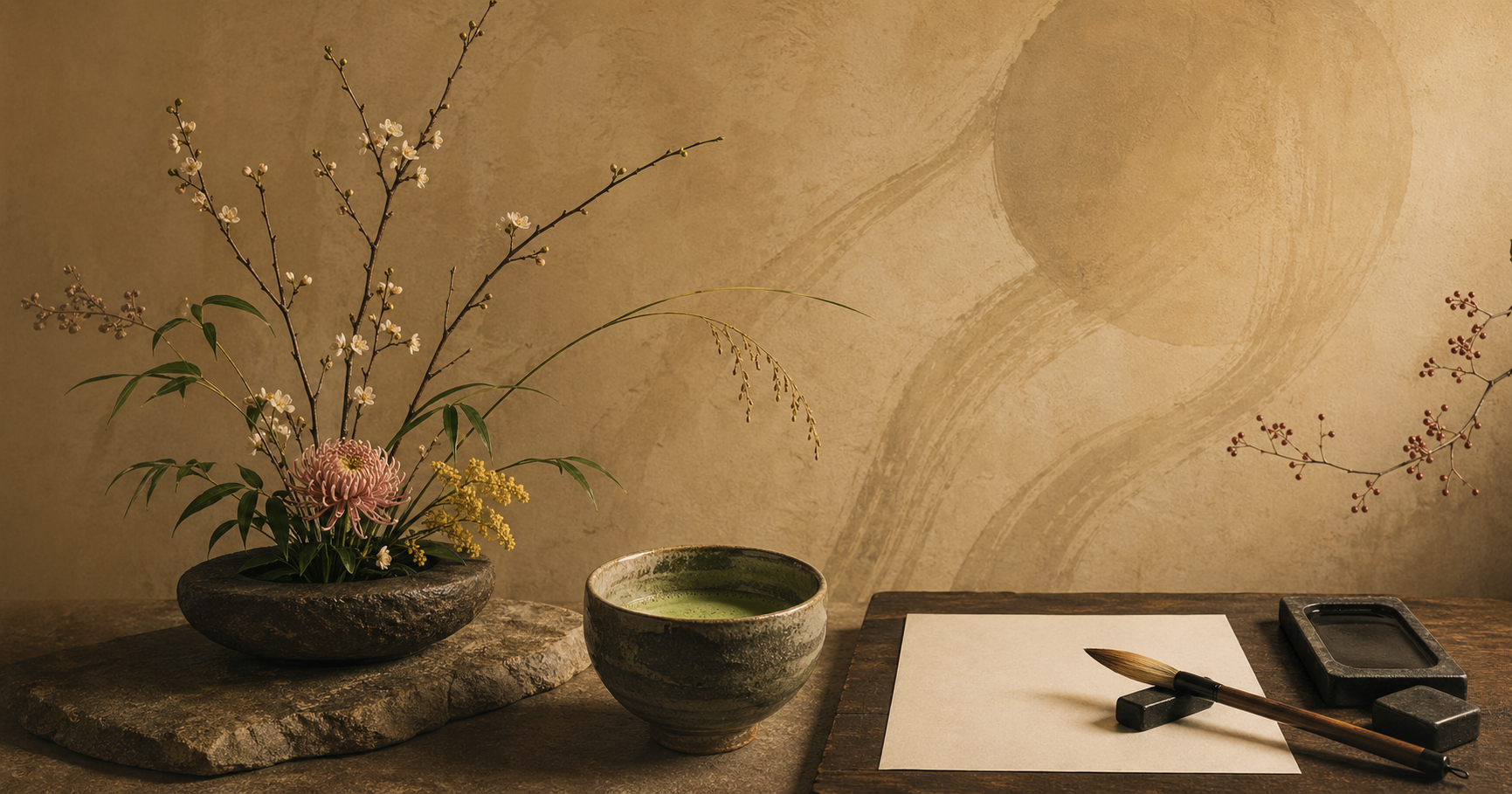
「道」という考え方
日本の伝統文化には「道」と名付けられた修練の体系が多数存在します。剣道・柔道・弓道など武道に加え、芸道の代表格とされるのが茶道・華道・書道の三道です。「道」は単なる技術習得ではなく、反復を通じた精神修養を本質とする考え方です。
Japanese traditional culture has many disciplined-practice systems named "michi" (way). Alongside martial arts like kendou, juudou, and kyuudou, the representative artistic ways are sadou (tea), kadou (flowers), and shodou (calligraphy) — the three "Ways." A "michi" is not mere skill acquisition; its essence is spiritual cultivation through repetition.
本記事では華道と書道を中心に三道の特徴を紹介します。茶道については別記事で詳しく扱いますので、ここでは三道全体に共通する「家元制度」や精神性に触れます。
This article focuses on kadou and shodou. Tea is covered in detail in a separate article, so here we touch on the iemoto system and spirituality common to all three Ways.
華道 — 植物に宇宙を映す
華道(生け花・いけばな)は植物を花器に配置し、空間と植物の調和を表現する芸術です。起源は6世紀に仏教とともに伝来した仏前供花に遡るとされ、特に京都・六角堂の僧侶が整えた供花が華道発祥とされ、流派「池坊」の起源にもなったと伝えられています。
Kadou (ikebana) is the art of arranging plants in a vessel to express harmony between space and the plants themselves. Its origin traces back to Buddhist altar offerings transmitted in the 6th century alongside Buddhism, and it is said that altar flowers arranged by the monks of Kyoto's Rokkakudou marked the origin of kadou and gave rise to the school called "Ikenobou."
華道の三大様式
華道は時代とともに様式が発展し、現代では主に三つの様式が並立していると[されています]{:said to be}。最古の「立花」、簡略化した「生花」、西洋花も取り入れる「自由花」です。
Kadou's style developed over the eras, and three main styles are generally said to coexist today: the oldest rikka, the simplified shouka, and jiyuuka — which incorporates Western flowers as well.
書道 — 一筆に心を込める
書道は筆と墨を用い文字を書く芸術で、実用・芸術・精神修養の三側面を併せ持つとされます。起源は漢字とともに中国から伝来し、平安時代に「三筆」(空海・嵯峨天皇・橘逸勢)と呼ばれる名手が現れ、日本独自の書風が発展しました。
Shodou is the art of writing characters with brush and ink stick — said to combine three aspects: the practical, the artistic, and spiritual cultivation. Its origin came from China together with kanji, and during the Heian era masters known as the "three brushes" (Kuukai, Emperor Saga, Tachibana no Hayanari) emerged, developing a uniquely Japanese calligraphic style.
書道の四宝 — 筆・墨・硯・紙
書道には「文房四宝」と呼ばれる四種の基本道具があります。筆は羊毛・馬毛・狸毛など毛質で書き味が変わり、墨は松煙墨・油煙墨に大別されます。硯で墨を磨る時間は精神統一の重要な時間と[されており]{:considered to be}、紙は和紙(半紙・画仙紙)が用いられます。
Shodou has four basic tools called "four treasures of the study." Brushes are made from sheep wool, horse hair, tanuki fur, etc., with hair quality changing the writing feel; ink sticks are broadly divided into pine-soot and oil-soot. The time spent grinding ink on the inkstone is considered an important time of mental focus, and paper is washi (hanshi practice paper or gasenshi).
家元制度 — 三道共通の組織形態
三道の[いずれ]{:any}にも共通するのが「家元制度」です。家元は流派の最高位で、流派の「型」を継承し免状発行の権限を持つとされます。華道では池坊の家元が45代を超える最も長い歴史を持ち、茶道では千利休の流れを汲む三千家(表千家・裏千家・武者小路千家)が並立しています。
The "iemoto system" is common to all three Ways. The iemoto is the highest position in a school, said to inherit the school's "kata" (form) and hold authority to issue licenses. In kadou, Ikenobou's iemoto holds the longest history at over 45 generations, and in tea three Sen families descended from Sen no Rikyuu (Omotesenke, Urasenke, Mushakouji-senke) coexist.
精神性 — 道が目指すもの
三道が共通して目指すのは「技術を超えた精神性」と[されています]{:said to be}。茶道の「和敬清寂」、華道の「天地人調和」、書道の「心正しければ筆も正し」など、[いずれ]{:any}も内面を整えることを最終目的としています。反復と継続による「型」の体得が、結果的に精神を磨くという逆説的な構造を持つと考えられています。
The shared aim of the three Ways is generally said to be "spirituality beyond technique." Tea's "wakei seijaku" (harmony, respect, purity, tranquility), kadou's "harmony of heaven-earth-human," and shodou's "if the heart is upright, the brush is upright too" — all set inner cultivation as the ultimate goal. They are generally considered to have a paradoxical structure where embodying "kata" through repetition and continuation polishes the spirit as a result.
現代における三道
現代でも三道は学校教育・文化教室・海外発信の場で受け継がれています。書道は小中学校の必修科目に含まれることが多く、華道・茶道は部活動や花嫁修業の一環として親しまれてきたと言われています。海外でも「日本文化」の象徴として人気が高く、各流派が海外支部を展開しています。
Even today, the three Ways are passed down in school education, culture classes, and overseas outreach. Shodou is often included as a required subject in elementary/junior high school, and kadou and sadou have been familiar as club activities or part of bridal training. Overseas, they are popular as symbols of Japanese culture, and each school operates overseas branches.