季節の行事 — 正月から年末まで日本の年中行事
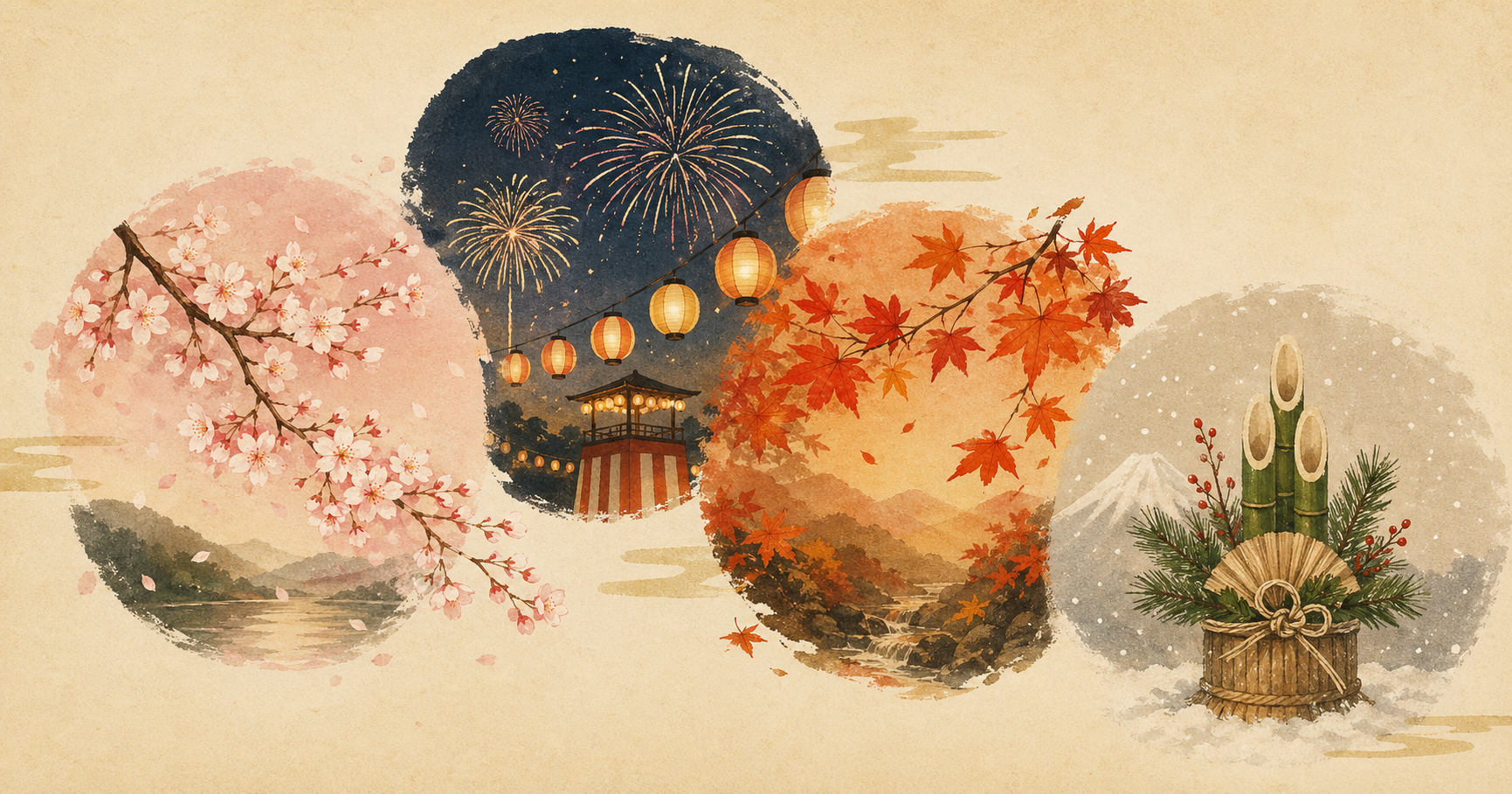
日本の年中行事は、古代の宮中行事・神道・仏教・中国由来の暦法が長い年月をかけて融合し、各家庭・地域の暮らしに根付いた文化です。正月から大晦日まで、四季の移ろいと共に繰り返される行事は、日本人の時間感覚そのものを形成してきました。
Japan's annual events are a culture in which ancient imperial court events, Shinto, Buddhism, and Chinese-origin calendrical practices have fused over long years to take root in the daily life of every household and region. From Shogatsu (New Year) to Omisoka (New Year's Eve), the events repeated together with the transition of the four seasons have shaped the very time-sensibility of the Japanese people.
正月 — 一年で最も重要な行事
正月は日本の年中行事の頂点に位置します。12月末までに家々は大掃除を終え、門松・しめ縄・鏡餅を飾って、年神様を迎える準備を整えます。元旦には家族でおせち料理を囲み、屠蘇と雑煮を味わいます。おせち料理の各品には縁起の意味が込められており、黒豆は「まめに働く」、数の子は「子孫繁栄」、昆布は「よろこんぶ」と、一品ごとに願いが込められています。
Shogatsu is positioned at the peak of Japanese annual events. By the end of December, households finish their big cleaning, decorate with kadomatsu gate pine, shimenawa sacred rope, and kagamimochi mirror mochi, and complete preparations to welcome the year god. On New Year's Day morning, families gather around osechi cuisine and savor toso New Year's sake and zoni soup. Each osechi item carries a meaning of luck — black beans for "working diligently" (a pun on "mame"), herring roe for "descendant prosperity," and kombu for "joy" (a pun on "yorokobu") — each one embedded with a wish.
元旦や正月の三が日には多くの人が神社や寺に初詣に出かけます。明治神宮(東京)、成田山新勝寺(千葉)、川崎大師(神奈川)、伏見稲荷大社(京都)などには毎年数百万人の参拝者が訪れ、一年の無病息災・家内安全・商売繁盛を祈ります。1月7日には七草粥を食べ、正月のご馳走で疲れた胃を休めます。
On New Year's Day or during the first three days of the New Year, many people go out for "hatsumode" — the first shrine or temple visit of the year. Meiji Shrine (Tokyo), Naritasan Shinshoji Temple (Chiba), Kawasaki Daishi (Kanagawa), and Fushimi Inari Taisha (Kyoto) are visited by millions of worshippers each year, who pray for a year of good health, household safety, and business prosperity. On January 7th, people eat seven-herb rice porridge to rest stomachs tired from the New Year feasts.
節分 — 鬼は外、福は内
2月3日(年によっては2日)の節分は、暦の上での立春の前日に当たり、冬から春への季節の変わり目を意味します。家では「鬼は外、福は内」と掛け声を上げながら豆(炒り大豆)を撒き、厄を追い払います。自分の年齢+1個の豆を食べると1年間健康に過ごせると言われます。近年は関西発祥とされる「恵方巻き」が全国に広まり、その年の恵方を向いて太巻きを無言で一本食べきる風習が定着しました。
Setsubun on February 3rd (sometimes the 2nd) falls on the day before "Risshun" (the calendrical start of spring) and means the seasonal transition from winter to spring. At home, people scatter beans (roasted soybeans) while chanting "Demons out, luck in" to drive away misfortune. It is said that eating one bean for each year of your age plus one allows you to spend the year in good health. In recent years, the Kansai-origin "eho maki" custom has spread nationwide, and the practice of eating one entire thick sushi roll in silence while facing the year's lucky direction has become established.
春の節句
3月3日のひな祭りは女子の健やかな成長を祈る節句で、雛人形を飾り、ちらし寿司・蛤のお吸い物・菱餅・ひなあられを供えます。5月5日の端午の節句は男子のための節句で、兜・鯉のぼりを飾り、柏餅やちまきを食べます。端午の節句は戦後「こどもの日」として国民の祝日にも制定されました。
The Doll Festival on March 3rd is a sekku praying for the healthy growth of girls; families display Hina dolls and offer chirashi sushi, clear clam soup, hishimochi diamond rice cake, and hina arare. Tango no Sekku on May 5th is the sekku for boys; families display helmets and carp streamers and eat kashiwa mochi or chimaki. After the war, Tango no Sekku was also enacted as the national holiday "Children's Day."
七夕とお盆
7月7日の七夕は、織姫と彦星の年に一度の逢瀬に由来し、短冊に願い事を書いて竹笹に吊るす風習があります。幼稚園や小学校での年中行事としても親しまれています。8月(地域によっては7月)のお盆には、祖先の霊が家に戻ってくると考えられており、盆提灯を灯し、迎え火と送り火を焚き、墓参りに出かけます。全国で帰省ラッシュが起き、多くの企業が「盆休み」を設定します。
Tanabata on July 7th originates from the once-yearly tryst of Orihime and Hikoboshi, and there is a custom of writing wishes on tanzaku strips and hanging them on bamboo grass. It is also familiar as an annual event at kindergartens and elementary schools. During Obon in August (or July depending on the region), ancestral spirits are believed to return home; people light Obon lanterns, burn welcoming and sending-off fires, and visit graves. A return-home rush occurs nationwide, and many companies set an "Obon holiday."
月見と秋の行事
旧暦8月15日(新暦9月中旬〜10月初旬)の「十五夜」には月見が行われます。「中秋の名月」とも呼ばれ、月見団子・ススキ・里芋を縁側に供え、満月を眺めながら秋の収穫に感謝します。9月第三月曜日は「敬老の日」、9月23日頃は「秋分の日」と、国民の祝日が続きます。
On the "fifteenth night" of the 8th month of the old calendar (mid-September to early October on the new calendar), tsukimi (moon viewing) is held. Also called the "harvest moon," people offer tsukimi dango, susuki grass, and taro on the veranda, gazing at the full moon and giving thanks for the autumn harvest. The third Monday of September is "Respect for the Aged Day," and around September 23rd is "Autumn Equinox Day" — national holidays continue.
七五三
11月15日の七五三は、3歳・5歳・7歳の子供の成長を祝う行事です。男子は3歳と5歳、女子は3歳と7歳に着物を着て神社に参拝し、これまでの健康な成長に感謝し、今後も健やかに育つよう祈ります。長寿を象徴する「千歳飴」を手にした子供たちが境内に並ぶ姿は、初冬の風物詩となっています。
Shichi-Go-San on November 15th is an event celebrating the growth of children at ages 3, 5, and 7. Boys at ages 3 and 5 and girls at ages 3 and 7 wear kimono and worship at Shinto shrines, giving thanks for their healthy growth thus far and praying that they continue to grow healthily. The sight of children with thousand-year candy — symbolizing longevity — lined up on shrine grounds is a seasonal feature of early winter.
大晦日 — 一年の締めくくり
12月31日の大晦日は、一年の最後を締めくくる行事が凝縮されています。家庭では年越しそばを食べ、細く長いそばに「長寿」と「厄を切る」の意味を込めます。夜11時頃から全国の寺で「除夜の鐘」が撞かれ、108回の鐘の音は人の煩悩を象徴し、新年に向けて心を清めると言われます。テレビでは紅白歌合戦(NHK)が長年にわたって国民的番組として親しまれており、家族揃って歌合戦を見ながら年を越すのが多くの家庭の定番です。
December 31st, Omisoka, has concentrated within it events that conclude the year. At home, families eat year-crossing soba, embedding meanings of "longevity" and "cutting away misfortune" into the long, thin noodles. Around 11 PM, "New Year's Eve bells" are rung at temples nationwide; the sound of 108 bell strikes is said to symbolize human earthly desires and to purify the heart for the new year. On TV, NHK's Kohaku Uta Gassen has long been loved as a national program, and many households have made it standard to cross over the year as a family while watching the singing battle.
国民の祝日
国民の祝日は祝日法(1948年制定)に基づき、現在年間16日が定められています。元日(1/1)、成人の日(1月第二月曜日)、建国記念の日(2/11)、天皇誕生日(2/23)、春分の日(3月下旬)、昭和の日(4/29)、憲法記念日(5/3)、みどりの日(5/4)、こどもの日(5/5)、海の日(7月第三月曜日)、山の日(8/11)、敬老の日、秋分の日、スポーツの日(10月第二月曜日)、文化の日(11/3)、勤労感謝の日(11/23)です。
National holidays are set by the National Holidays Law (enacted 1948), and currently 16 days are designated annually. They include New Year's Day (1/1), Coming-of-Age Day (second Monday of January), National Foundation Day (2/11), Emperor's Birthday (2/23), Vernal Equinox Day (late March), Showa Day (4/29), Constitution Day (5/3), Greenery Day (5/4), Children's Day (5/5), Marine Day (third Monday of July), Mountain Day (8/11), Respect for the Aged Day, Autumn Equinox Day, Sports Day (second Monday of October), Culture Day (11/3), and Labor Thanksgiving Day (11/23).