七五三 — 子供の成長を祝う伝統行事
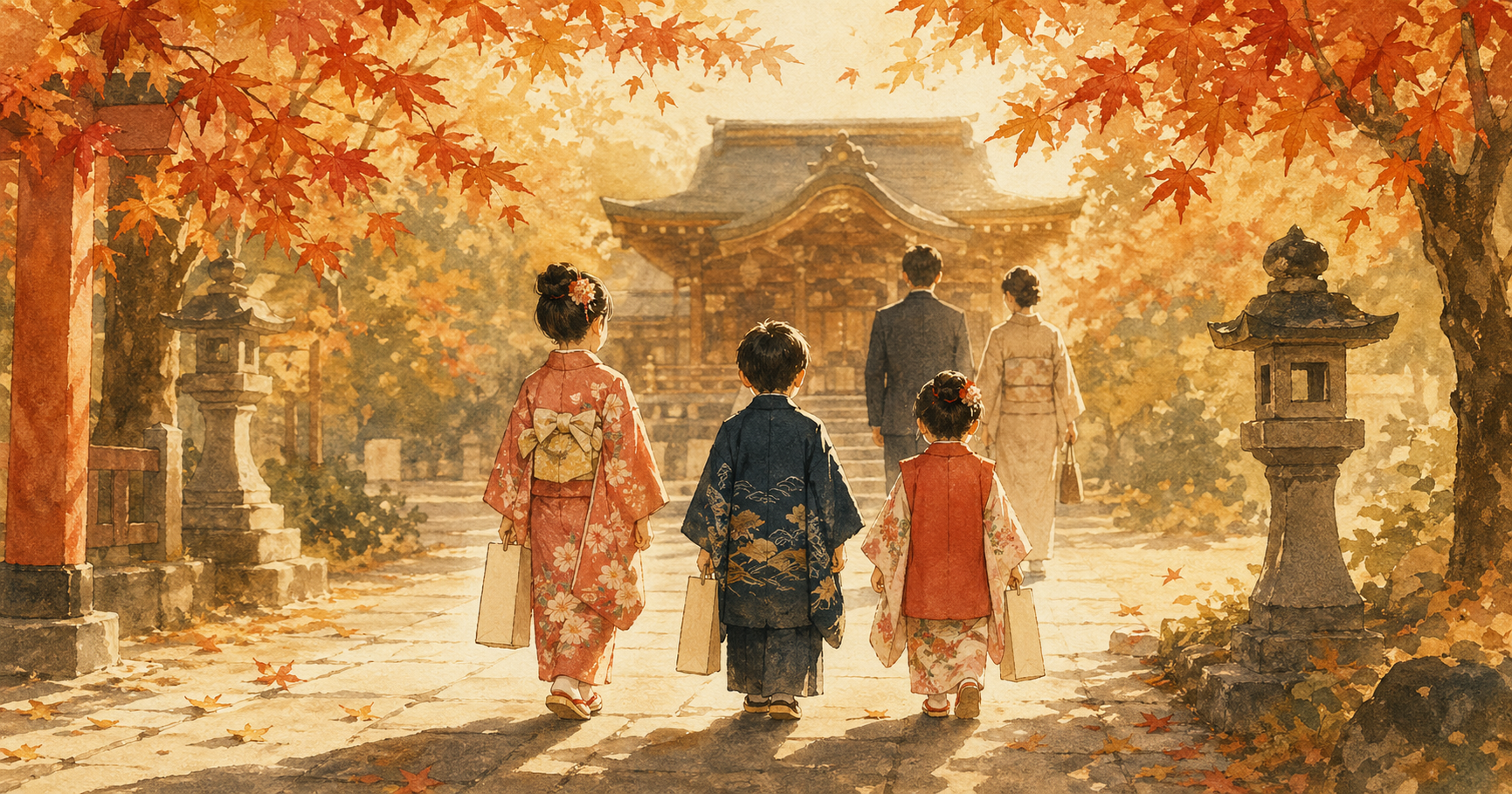
七五三は、3歳・5歳・7歳の節目を迎えた子供たちが着物や袴を身にまとい、家族と共に神社に参拝する伝統行事です。毎年11月15日を正式な日とし、これまでの健康な成長に感謝し、今後の健やかな成育を祈願します。江戸時代に宮中・武家の儀式が整理されて現在の形が成立したと言われ、現代では商業化が著しく進み、写真スタジオ・着物レンタル・出張カメラマンといった周辺産業が一大市場を形成しています。
Shichi-Go-San is a traditional event in which children reaching the milestones of ages 3, 5, and 7 wear kimono or hakama and visit Shinto shrines together with their families. With November 15th as its official date each year, families give thanks for their child's healthy growth thus far and pray for healthy rearing from now on. It is said the current form was established when imperial-court and samurai-household ceremonies were consolidated in the Edo period, and in modern times commercialization has advanced remarkably, with peripheral industries such as photo studios, kimono rentals, and on-location photographers forming a major market.
年齢と性別の組み合わせ
七五三の特徴は、年齢ごとに祝う対象の性別が異なる点にあります。3歳は男女共に、5歳は男児のみ、7歳は女児のみが対象です。これは江戸時代に整理された三つの儀式に由来します。3歳の「髪置」は男女共通で、それまで剃っていた髪を伸ばし始める儀式でした。5歳の「袴着」は男児が初めて袴を着用する儀式で、7歳の「帯解」は女児が幼児の紐付き着物を卒業し、大人と同じ帯結びの着物に移行する儀式でした。
A characteristic of Shichi-Go-San is that the gender of celebrants differs by age. Age 3 includes both boys and girls; age 5 is for boys only; age 7 is for girls only. This originates from three ceremonies consolidated in the Edo period. The age-3 "kamioki" was common to boys and girls — a ceremony to begin growing out hair that had been shaved until then. The age-5 "hakamagi" was the ceremony in which a boy wore hakama for the first time, and the age-7 "obitoki" was the ceremony in which a girl graduated from the infant kimono with attached strings and transitioned to an adult-style sash-tied kimono.
11月15日という日付の由来
11月15日が正式な七五三の日と定められた由来には諸説ありますが、最も広く知られているのは徳川五代将軍・綱吉が長男・徳松の健康祈願を執り行った日とする説です。当時、病弱であった徳松の無事な成長を祈ってこの日に儀式が行われ、その後武家・庶民に広まったと伝えられています。また旧暦11月15日は二十八宿の鬼宿日にあたり、婚礼以外は万事に吉とされる最良の日であったことも背景にあります。
There are various theories on why November 15th was set as the official Shichi-Go-San date, but the most widely known is that it was the day on which the fifth Tokugawa shogun Tsunayoshi conducted a prayer for the health of his eldest son, Tokumatsu. At that time, the ceremony is said to have been held this day praying for the safe growth of the sickly Tokumatsu, and to have subsequently spread to samurai households and the common people. Additionally, November 15th of the old calendar fell on "kishukunichi" — one of the twenty-eight lunar mansions considered the best, auspicious for all matters except weddings — which also forms the background.
神社参拝と千歳飴
当日、家族は氏神の神社や著名な神社に出向き、正装した子供と共に祈祷を受けます。神職が祝詞を奏上し、初穂料(相場は5,000円〜10,000円程度)を納め、御札・御守り・お菓子などの授与品を受け取ります。参拝を終えた子供たちは「千歳飴」と呼ばれる紅白の長い飴を手にします。千歳という名は「千年も長く健康に生きてほしい」という親の願いを象徴し、細長く折れにくい飴そのものが長寿の縁起物とされています。袋には鶴・亀・松竹梅といった縁起の良い絵柄が描かれています。
On the day, the family heads to their tutelary or a famous shrine and receives a prayer ritual together with the formally dressed child. A Shinto priest recites a Shinto prayer; families offer an offering fee (the going rate is roughly 5,000–10,000 yen) and receive bestowed items such as a talisman, amulet, and sweets. After finishing the worship visit, children receive "chitose-ame" — long red-and-white candy. The name "thousand years" symbolizes the parents' wish that the child "live healthily and long for a thousand years," and the long, thin, hard-to-break candy itself is considered a lucky charm of longevity. The bag is decorated with auspicious patterns such as cranes, turtles, and pine-bamboo-plum.
着物・袴の着付け
七五三の衣装は年齢と性別に応じて異なります。3歳の男女は着物の上に袖なしの被布を羽織るのが一般的で、帯を締めないため幼児にも負担が少ない装いです。5歳の男児は紋付羽織・袴姿が正式で、腰に小刀を差すこともあります。7歳の女児は大人と同じく帯を結ぶ「四つ身」着物に、志古貴や筥迫といった小物を合わせます。着付けとヘアセットは専門店で行うことが多く、当日は早朝から準備に追われる家庭も少なくありません。
The attire for Shichi-Go-San differs by age and gender. Boys and girls aged 3 generally wear a sleeveless "hifu" coat over a kimono — an attire that places little burden on the young child since no sash is tied. Boys aged 5 formally wear a family-crested haori and hakama, sometimes with a short sword at the waist. Girls aged 7 wear a "yotsumi" kimono with a sash tied like an adult's, combined with accessories such as shigoki and hakoseko. Dressing and hair styling are often done at specialist shops, and many households are rushed by early-morning preparations on the day.
数え年と満年齢の解釈
七五三の年齢をどちらで数えるかは現代の家庭が迷う論点の一つです。本来、儀式が整えられた江戸時代には年齢は全て「数え年」で計算されました。数え年とは生まれた時を1歳とし、元日を迎えるたびに1歳加算する数え方で、西洋式の誕生日基準の「満年齢」とは最大2歳の差が生じます。戦後、年齢の公的計算が満年齢に統一されたことに伴い、七五三も満年齢で祝う家庭が増え、現在は満年齢が主流となっています。ただし兄弟・姉妹と一緒に祝うため一方を数え年、もう一方を満年齢とする柔軟な運用も一般的で、厳密なルールはありません。
Which counting system to use for Shichi-Go-San ages is one point of debate that modern households hesitate over. Originally, in the Edo period when the ceremony was systematized, all ages were calculated by "kazoedoshi" (counted age). Counted age treats the time of birth as age 1 and adds one year each time New Year's Day arrives — generating a difference of up to two years from the Western birthday-based "mannenrei" (full age). After the war, with the official calculation of age unified to full age, more households began celebrating Shichi-Go-San by full age, and full age is currently mainstream. However, the flexible practice of using counted age for one sibling and full age for another in order to celebrate together is also general — there is no strict rule.
スタジオ写真と出張カメラマン市場
現代の七五三は、神社参拝と同等に写真撮影が行事の中核を占めています。スタジオアリス・スタジオマリオなどの大手写真スタジオチェーンは、着物レンタル・ヘアメイク・撮影・アルバム制作を一括で提供し、10月〜11月の繁忙期には予約が半年前から埋まることも珍しくありません。近年は実際の参拝当日に神社境内や近隣公園で自然な姿を撮影してくれる「出張カメラマン」サービスの需要が急増しており、ミツモア・OurPhoto・fotowaといったマッチングプラットフォームを通じて個人カメラマンを手軽に手配できる市場が形成されました。相場は1時間15,000円〜30,000円程度で、スタジオ撮影とは異なるロケーション撮影のニーズを満たしています。
For modern Shichi-Go-San, photo shooting occupies the core of the event equally with shrine worship. Major photo studio chains such as Studio Alice and Studio Mario provide bundled kimono rental, hair-and-makeup, shooting, and album production; during the busy season of October–November, it is not unusual for reservations to fill up half a year in advance. In recent years, demand for "dispatched-photographer" services — which shoot natural scenes on the day at shrine grounds or nearby parks — has rapidly increased, and a market has formed for easily arranging individual photographers through matching platforms such as Mitsumore, OurPhoto, and fotowa. The going rate is roughly 15,000–30,000 yen per hour, satisfying location-shooting needs distinct from studio shooting.
現代の七五三の姿
少子化が進む一方で、一人の子供にかける行事費用は増加傾向にあり、七五三は祖父母を含めた家族全体の一大イベントとして定着しています。共働き家庭の増加により、11月15日当日にこだわらず10月〜11月の週末に分散する傾向も強まり、神社側も長期間にわたって祈祷を受け付ける体制を整えています。参拝後は料亭やホテルでの食事会を開く家庭も多く、千歳飴の袋を手にした子供が祖父母と並ぶ姿は、初冬の日本の風物詩として今もなお受け継がれています。
While the declining birthrate advances, the per-child event budget tends to increase, and Shichi-Go-San has established itself as a major family-wide event including grandparents. With the rise of dual-income households, the trend of dispersing across October–November weekends rather than insisting on November 15th itself has strengthened, and shrines have arranged setups to accept prayer rituals over a long period. Many households also hold post-worship meal gatherings at high-end restaurants or hotels, and the scene of children holding chitose-ame bags lined up with their grandparents is still passed down today as an early-winter seasonal feature of Japan.