大相撲 — 番付と力士の生活
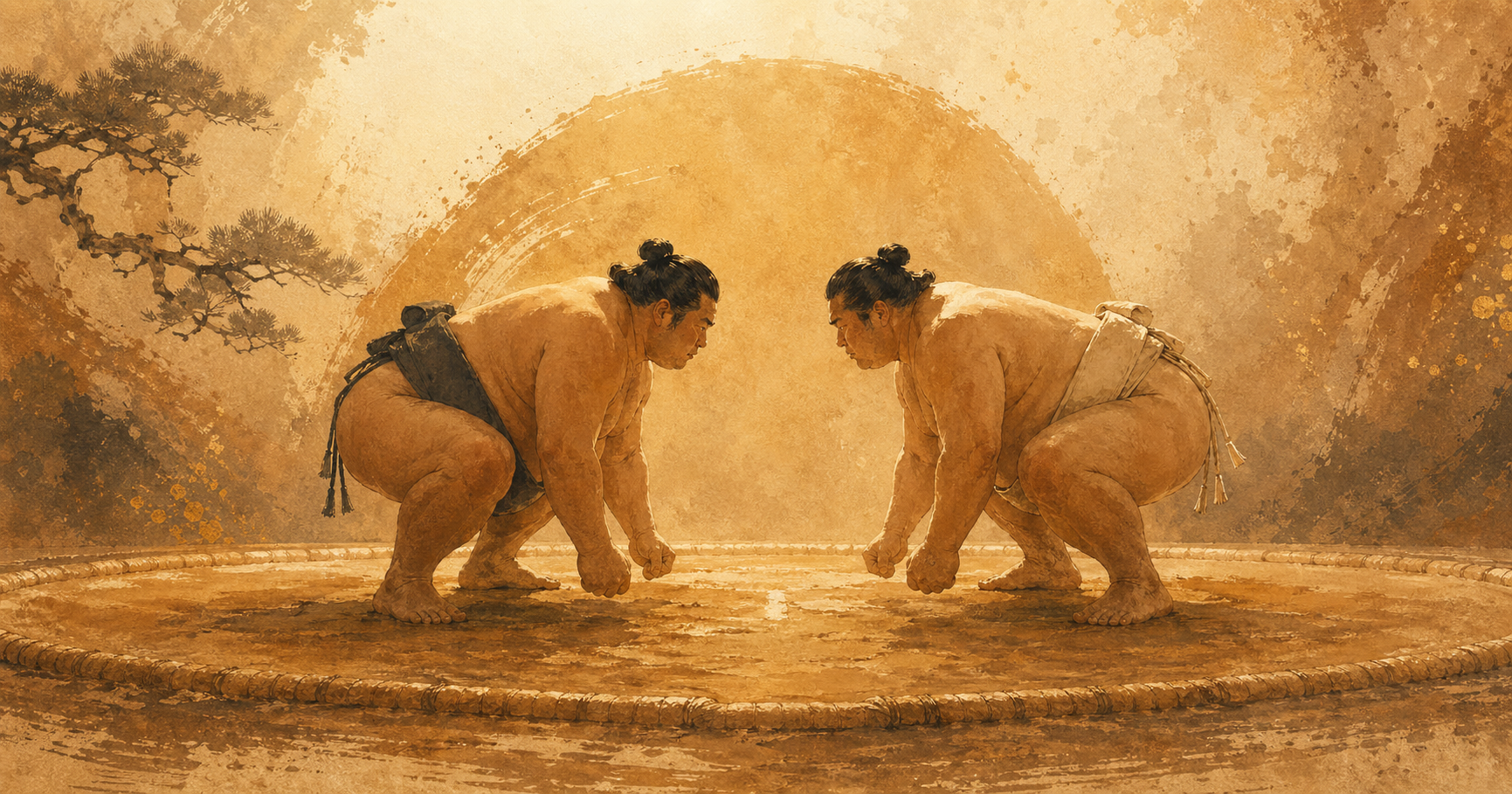
大相撲は、日本相撲協会が年に6回開催する本場所を中心に運営される国技です。1場所は15日間行われ、力士たちは毎日1番ずつ取り、勝ち越しや負け越しによって次の番付が決まります。
Grand sumo is Japan's national sport, run by the Japan Sumo Association around six honbasho main tournaments held each year. Each tournament runs for 15 days, with rikishi fighting one bout per day, and their next ranking is determined by whether they finish with a winning or losing record.
年6場所の開催地
現行の年間スケジュールは完全に固定されています。1月は初場所が両国国技館(東京)、3月は大阪春場所(エディオンアリーナ大阪)、5月は夏場所が再び両国、7月は名古屋場所(ドルフィンズアリーナ)、9月は秋場所が両国、そして11月は九州場所(福岡国際センター)で開かれます。
The current annual schedule is completely fixed. January is the Hatsu-basho at Ryogoku Kokugikan (Tokyo); March is the Osaka spring tournament at EDION Arena Osaka; May is the summer tournament again at Ryogoku; July is the Nagoya tournament at Dolphins Arena; September is the autumn tournament at Ryogoku; and November is the Kyushu tournament at Fukuoka Kokusai Center.
番付の階層
番付は厳密なピラミッド構造を持っています。最高位は横綱、次に大関、関脇、小結までを「三役」と呼び、その下に前頭が1枚目から17枚目前後まで並びます。ここまでが幕内と呼ばれるトップ力士の領域です。その下に十両、幕下、三段目、序二段、序ノ口と続きます。
The banzuke has a strict pyramid structure. The highest rank is yokozuna, followed by ozeki, sekiwake, and komusubi (collectively the "san'yaku"). Below them are maegashira from rank 1 down to about rank 17. This is the makuuchi top division. Below that come juryo, makushita, sandanme, jonidan, and jonokuchi.
力士の一日
力士の朝は早く、午前5時頃から朝稽古が始まります。空腹のまま激しい稽古を行い、終わってから遅い朝食兼昼食としてちゃんこ鍋を大量に食べます。食後は昼寝をするのが伝統で、これが体重を増やすための重要な習慣です。午後は個人練習や雑用、夕食を済ませて早めに就寝します。
A rikishi's morning starts early, with morning practice beginning around 5 AM. They train intensely on an empty stomach, then after practice eat large amounts of chanko nabe as a late breakfast/lunch combination. It is traditional to take a nap after eating, and this is an important habit for gaining weight. Afternoons are for individual practice and chores, and they finish dinner and go to bed early.
部屋制度
力士は必ずどこかの相撲部屋に所属し、そこで共同生活を送ります。現在協会には約40の部屋があり、親方(年寄)が師匠として弟子たちを指導します。親方になるには年寄株と呼ばれる名跡を継承する必要があり、その数は105株に限られています。部屋は地縁や一門と結びついており、出身地方や出羽海・二所ノ関・時津風などの一門に分かれます。
Every rikishi must belong to a sumo stable, where they live communally. The Sumo Association currently has about 40 stables, and stablemasters (toshiyori) instruct their disciples as masters. To become a stablemaster, one must inherit a hereditary "elder stock," and only 105 such stocks exist. Stables are tied to regional and lineage groups, divided into ichimon factions like Dewanoumi, Nishonoseki, and Tokitsukaze.
神事としての側面
大相撲は単なるスポーツではなく、古来より神事としての性格を持っています。土俵には屋根(釣り屋根)が据えられ、四方には四神を象徴する房が下がっています。力士が取組前に塩を撒くのは土俵を清めるためで、四股は大地の邪気を払う動作と言われます。横綱が締める白い綱は注連縄を模したもので、神に最も近い存在とされてきました。
Grand sumo is not merely a sport but has long had the character of a Shinto ritual. A roof is installed over the ring, and tassels representing the four guardian deities hang from the four directions. Rikishi scatter salt before bouts to purify the ring, and the shiko stomp is said to drive away evil spirits from the earth. The white rope worn by yokozuna is modeled after the sacred shimenawa rope, and yokozuna have been regarded as the existence closest to the gods.
外国人力士と国際化
1990年代後半から外国人力士の活躍が目立ち、ハワイ出身の曙や武蔵丸が相次いで横綱に昇進しました。2000年代に入ると今度はモンゴル勢の時代となり、朝青龍、白鵬、日馬富士、鶴竜と歴代横綱がほぼモンゴル出身で占められました。特に白鵬は歴代最多45回の幕内優勝を達成し、大相撲史上最強とも評されています。
From the late 1990s, the success of foreign rikishi became prominent, with Akebono and Musashimaru from Hawaii being successively promoted to yokozuna. Entering the 2000s came the era of Mongolian wrestlers, with Asashoryu, Hakuho, Harumafuji, and Kakuryu — successive yokozuna almost entirely from Mongolia. Hakuho in particular achieved an all-time record of 45 makuuchi championships and is considered by some the greatest in sumo history.
暴力問題と人気低迷
2007年の時津風部屋での弟子暴行死亡事件、2010年の野球賭博問題、2011年の八百長問題、そして2017年の日馬富士による暴行事件など、相次ぐ不祥事が協会の信頼を揺るがしました。特に八百長問題では本場所が戦後初中止され、力士多数が引退に追い込まれる事態となりました。
A series of scandals shook the Association's credibility: the 2007 disciple hazing death at Tokitsukaze stable, the 2010 baseball gambling scandal, the 2011 match-fixing scandal, and the 2017 assault incident by Harumafuji. The match-fixing scandal in particular forced the first cancellation of a honbasho since the war, and many rikishi were driven into retirement.
人気復活と新世代
低迷した人気は2010年代後半から徐々に回復しました。稀勢の里が2017年に日本人力士として19年ぶりに横綱に昇進し、国技館は連日満員御礼が続きました。現在は大の里、豊昇龍など若手力士の台頭が続き、女性ファン(相撲女子)の増加や海外での巡業人気も相まって、次の時代を模索しています。
The slumping popularity gradually recovered from the second half of the 2010s. When Kisenosato was promoted to yokozuna in 2017 — the first Japanese yokozuna in 19 years — the Kokugikan sold out day after day. Currently, with the rise of young rikishi like Onosato and Hoshoryu, combined with the growing female fanbase ("sumo joshi") and overseas tour popularity, sumo is searching for its next era.