寿司の歴史と種類 — なれずしから江戸前まで
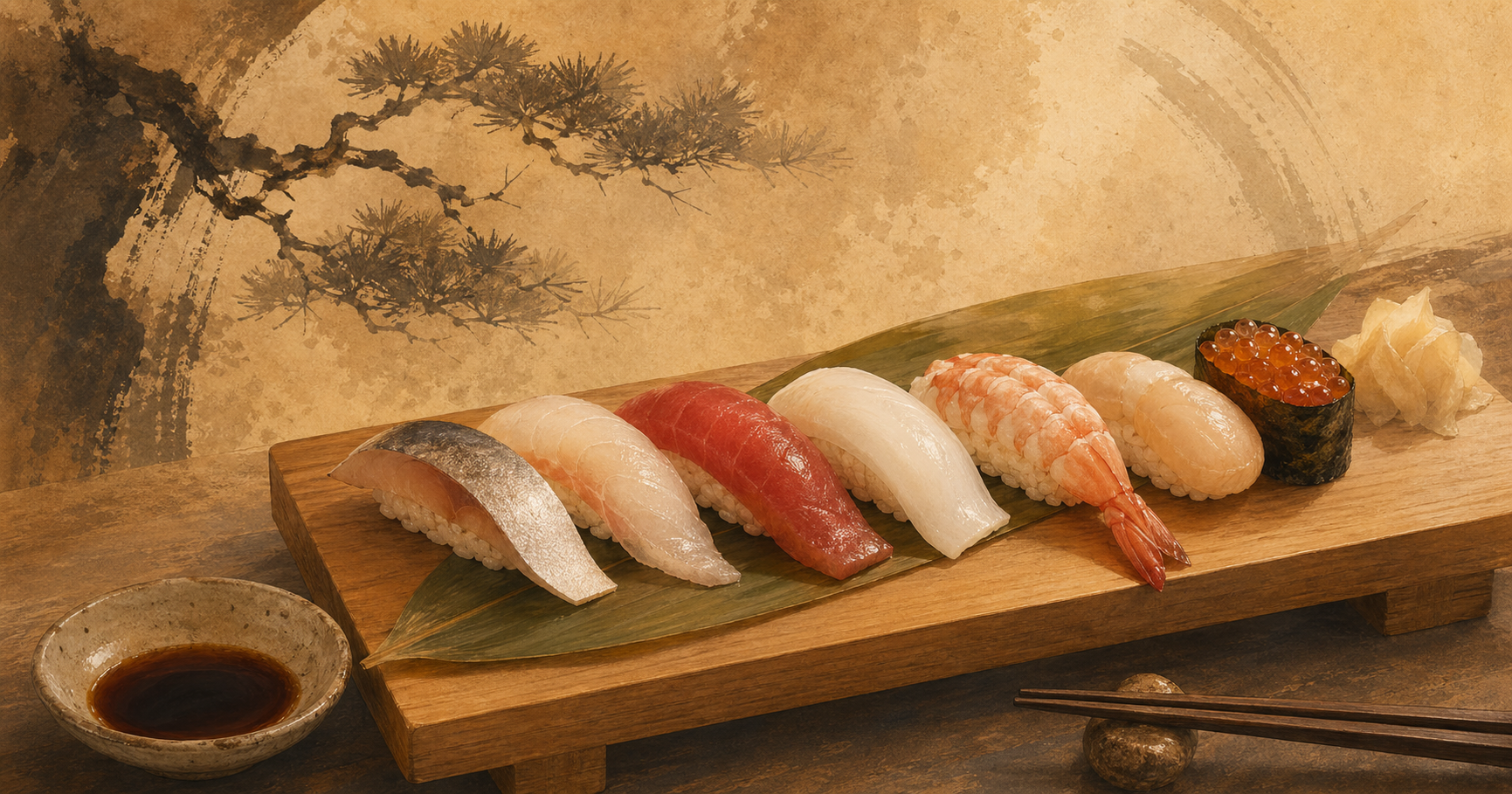
寿司は今や世界中で愛される日本を代表する料理ですが、現在の形—酢飯の上に新鮮な魚を乗せた「握り」—になったのは、実は江戸時代後期と比較的新しいものです。本来の寿司は魚を長期間保存するための発酵食品でした。
Sushi is now a Japanese dish loved around the world, but its current form — fresh fish placed on vinegared rice as "nigiri" — actually only appeared late in the Edo period and is comparatively new. Originally, sushi was a fermented food for preserving fish over long periods.
なれずし — 寿司の原点
寿司の最古の形態は「なれずし」です。奈良時代には既に文献に登場しており、塩漬けにした魚をご飯と一緒に長期間漬け込んで、乳酸発酵させたものです。ご飯は食べずに捨て、発酵した魚だけを食べるという食べ方でした。滋賀県の名産「鮒寿司」は、このなれずしの伝統を今に伝える貴重な料理です。
The oldest form of sushi is "narezushi." It already appears in Nara-period documents: salted fish was packed together with rice and pickled for a long period, undergoing lactic-acid fermentation. The rice was discarded — only the fermented fish was eaten. Shiga Prefecture's famed "funa-zushi" is a precious dish that still preserves this narezushi tradition today.
押し寿司と関西の文化
時代が下ると発酵期間が短くなり、酢を加えてご飯も一緒に食べる「早ずし」が生まれました。特に関西地方では、木の型に酢飯と魚を詰めて押す「押し寿司」が発達しました。大阪の「バッテラ」(鯖の押し寿司)や京都の「鯖寿司」が代表例です。
As eras passed, the fermentation period shortened, and "hayazushi" — sushi made by adding vinegar and eating the rice together — was born. Especially in the Kansai region, "oshizushi" developed: vinegared rice and fish are stuffed into wooden molds and pressed. Osaka's "battera" (pressed mackerel sushi) and Kyoto's "saba-zushi" are representative examples.
江戸前にぎりの誕生
現在のにぎり寿司を考案したのは、江戸時代後期の華屋与兵衛(1799〜1858)と言われています。当時の江戸は人口百万を超える大都市で、忙しい町人たちは屋台で手早く食べられる料理を求めていました。与兵衛は酢飯を手で握り、その上に江戸湾(現在の東京湾)で獲れた新鮮な魚を乗せて出しました。これが「江戸前」の名の由来です。
Today's nigiri sushi is said to have been devised by Hanaya Yohei (1799–1858) in the late Edo period. Edo at the time was a metropolis of over a million people, and busy townspeople wanted food they could eat quickly at street stalls. Yohei would form vinegared rice in his hand and place fresh fish caught in Edo Bay (today's Tokyo Bay) on top. This is the origin of the name "Edomae."
現代の寿司の種類
現在、寿司には多様な種類があります。「にぎり」は最も一般的な形で、酢飯にネタを乗せたもの。「巻き」は海苔で酢飯と具を巻いたもので、太巻き・細巻き・中巻きがあります。「ちらし」は酢飯の上に様々なネタを散りばめたもので、家庭でも作りやすい。
Today there are many types of sushi. "Nigiri" is the most common: vinegared rice topped with a fish slice. "Maki" wraps vinegared rice and fillings in nori seaweed, and comes in thick, thin, and medium varieties. "Chirashi" scatters various toppings over a bed of vinegared rice and is easy to make at home.
「軍艦」は酢飯の周りを海苔で囲み、いくらやウニなど流れやすいネタを乗せます。戦後に考案された比較的新しい形式です。「手巻き」は海苔に酢飯と具を円錐状に巻いたもので、家庭での手巻き寿司パーティーは今でも人気があります。
"Gunkan" wraps the rice with nori around its sides to hold loose toppings such as salmon roe or sea urchin. It's a relatively new form, devised in the postwar period. "Temaki" is a hand-rolled cone of nori filled with rice and ingredients, and home temaki-sushi parties are still popular today.
寿司屋と回転寿司
今日の寿司には大きく二つの世界があります。一つは本格的な寿司屋(江戸前・名店)で、カウンター越しに大将が一貫ずつ握るスタイル。ネタの産地や仕入れにこだわり、一人数万円する店も珍しくありません。ミシュラン星を持つ寿司屋も多く、海外からの観光客にも人気です。
Today's sushi splits broadly into two worlds. One is the authentic sushi restaurant — the Edomae or famed establishment — where the head chef forms each piece across the counter. They are particular about the origin and sourcing of their fish, and restaurants charging tens of thousands of yen per person are not unusual. Many sushi restaurants hold Michelin stars and are popular with overseas tourists.
もう一つは「回転寿司」です。1958年に大阪で誕生し、皿がベルトコンベアで運ばれてくる気軽なスタイル。一皿100円から食べられる手頃な価格が魅力で、家族連れに圧倒的に支持されています。最近はタッチパネル注文や新幹線型の配膳ロボットを導入する店も増え、技術の力でさらに進化しています。
The other is "kaiten-zushi" (conveyor-belt sushi). Born in Osaka in 1958, plates are delivered to customers on a conveyor belt — a casual style. Affordable prices starting from 100 yen per plate are its appeal, and it has overwhelming support from families. Recently, more shops have introduced touch-panel ordering and bullet-train-shaped serving robots, evolving further through the power of technology.
寿司の作法
本格的な寿司屋にはいくつかの作法があります。まず、添えられた「ガリ」(甘酢漬けの生姜)は寿司に乗せて食べるのではなく、ネタとネタの間に口をさっぱりさせるために食べるものです。お茶は「あがり」と呼び、食事の最後に出されるのが本来の意味でしたが、今は食事中でも飲みます。
There are several points of etiquette at an authentic sushi restaurant. First, the "gari" (pickled ginger) served alongside is not for placing on top of sushi — it's for refreshing your palate between pieces. The tea is called "agari," and originally was served at the end of the meal, though today it's drunk throughout.
醤油はネタの側に少しだけつけるのが正解で、シャリ(酢飯)にたっぷりつけるとシャリが崩れてしまい、味も醤油に支配されてしまいます。手で食べるか箸で食べるか—実はどちらも正しいとされ、江戸前の屋台時代は手で食べるのが普通でした。大将が出した直後、温度と形が最も良い状態で食べるのが何よりの作法です。
The correct way is to dip just a little soy sauce on the topping side. Dipping plenty into the rice causes it to crumble and lets the soy sauce dominate the flavor. As for hand vs chopsticks — both are actually considered correct, and during the Edomae street-stall era, eating with one's hand was normal. The most important etiquette of all is to eat the piece right after it leaves the chef's hand, when its temperature and shape are at their best.
おわりに
寿司は千年以上の歴史の中で、保存食からファストフード、そして世界の高級料理へと姿を変えてきました。一つの料理の歴史を追うと、日本人の食に対する執念と創意工夫が見えてきます。次に寿司を食べる時は、一貫に込められた長い歴史を少しだけ感じてみてはいかがでしょうか。
Across more than a thousand years of history, sushi has transformed from preserved food into fast food, and then into a global high-end cuisine. Following the history of a single dish reveals the dedication and ingenuity of the Japanese people toward food. Next time you eat sushi, why not feel — just a little — the long history packed into each piece?