和食 — ユネスコ無形文化遺産と一汁三菜
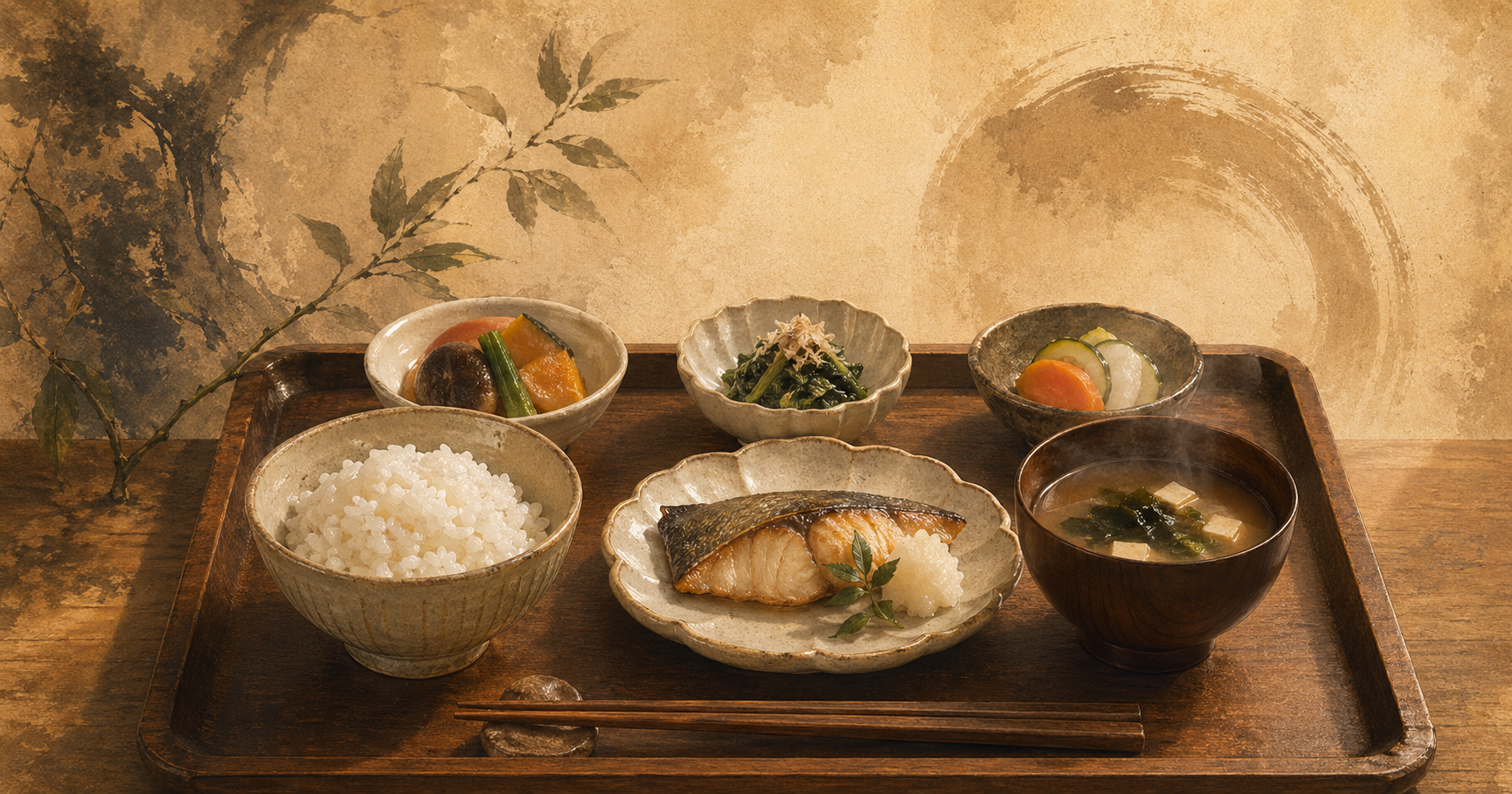
和食は2013年、ユネスコの無形文化遺産に登録されました。「フランス料理」「地中海料理」「メキシコ料理」などに続く食に関する登録で、正式名称は「和食:日本人の伝統的な食文化」です。料理そのものではなく、食をめぐる文化と習慣全体が評価された点が特徴です。
Washoku was inscribed on UNESCO's Intangible Cultural Heritage list in 2013. Following French cuisine, Mediterranean cuisine, and Mexican cuisine, this was a registration related to food, with the official title "Washoku: Traditional Dietary Cultures of the Japanese." A distinguishing feature is that what was honored was not the dishes themselves, but the entire surrounding culture and customs of food.
ユネスコが評価した四つの特徴
ユネスコは和食の四つの特徴を挙げています。第一に「多様で新鮮な食材とその持ち味の尊重」、第二に「栄養バランスに優れた健康な食生活」、第三に「自然の美しさや季節の移ろいの表現」、第四に「正月などの年中行事との密接な関わり」です。
UNESCO cited four features of washoku. First, "respect for diverse, fresh ingredients and their natural flavors." Second, "a healthful diet with excellent nutritional balance." Third, "the expression of natural beauty and the changing of the seasons." Fourth, "a close connection with annual events such as the New Year."
一汁三菜 — 和食の基本構成
和食の最も基本的な献立の組み立て方が「一汁三菜」です。一つの汁物と、三つの菜(おかず)からなります。具体的には、主食のご飯、汁物(多くは味噌汁)、主菜(魚や肉など、たんぱく質の中心)、副菜が二つ(野菜や海藻など)という構成です。
The most basic way of composing a washoku menu is "ichijū sansai" — one soup and three dishes. Concretely, this means the staple rice, a soup (often miso soup), a main dish (the protein center, such as fish or meat), and two side dishes (vegetables, seaweed, and so on).
この構成には栄養バランスを自然に整える知恵が込められています。炭水化物、たんぱく質、ビタミン・ミネラル、食物繊維が一食で揃うよう設計されており、厚生労働省が推奨する食事バランスガイドの基礎にもなっています。
This composition contains the wisdom for naturally balancing nutrition. It is designed so that carbohydrates, protein, vitamins, minerals, and dietary fiber all come together in a single meal — and it forms the basis of the Ministry of Health, Labour and Welfare's recommended dietary balance guide.
出汁 — 旨味の文化
和食を他国の料理から際立たせているのが、出汁をベースとする「旨味」の文化です。昆布に含まれるグルタミン酸、鰹節に含まれるイノシン酸、椎茸に含まれるグアニル酸—これらの組み合わせによる相乗効果で、強い旨味が生まれます。フランス料理のフォンや中華料理の湯と同じく、出汁は料理の骨格を支える要素です。
What sets washoku apart from other national cuisines is its umami culture, built on a foundation of dashi. Glutamic acid in kombu kelp, inosinic acid in dried bonito flakes, and guanylic acid in shiitake mushrooms — the combination of these creates a strong synergistic umami. Like the fond of French cuisine or the tang stock of Chinese cuisine, dashi is the element that supports the framework of the entire cuisine.
出汁が強いおかげで、和食は油やバターをほとんど使わずに味を組み立てることができます。これが低カロリー・低脂肪という健康な特徴につながり、ユネスコ登録の根拠の一つにもなりました。
Thanks to the strength of dashi, washoku can construct flavor with almost no oil or butter. This connects to its healthful, low-calorie, low-fat profile — and became one of the rationales for the UNESCO inscription.
旬と盛り付け — 目で味わう料理
和食では「旬」が極めて重要です。春は筍や山菜、夏は鱧や鮎、秋は松茸や秋刀魚、冬は牡蠣や鰤—四季それぞれに最も美味しい時期があり、その時期に合わせて食材を選ぶのが基本です。料理屋の献立は毎月変わり、器も季節に応じて変えます。
In washoku, the concept of "shun" (peak season) is extremely important. Bamboo shoots and mountain greens in spring; pike conger and sweetfish in summer; matsutake mushrooms and Pacific saury in autumn; oysters and yellowtail in winter — each season has its time of greatest deliciousness, and choosing ingredients to match that time is fundamental. Restaurant menus change every month, and even the serving vessels are changed according to the season.
盛り付けも和食の要です。空間の余白を残し、高さを出して立体感を作り、赤・緑・黄・白・黒の五色を意識します。紅葉や南天を添えて季節感を表現することも多く、「目で味わう」とよく言われます。
Presentation is also a cornerstone of washoku. Space is left as margin, height is added for a three-dimensional feel, and the five colors — red, green, yellow, white, and black — are kept in mind. Maple leaves and nandina berries are often added to express seasonal feeling, and washoku is often said to be cuisine you "taste with your eyes."
郷土料理 — 地域の多様性
日本は南北に長く、気候や食材が地域ごとに大きく異なります。そのため各地に独自の郷土料理が発達しました。秋田の「きりたんぽ」は新米を潰して杉の棒に巻きつけて焼いたもので、比内地鶏の出汁で鍋にして食べます。
Japan is long from north to south, and its climate and ingredients differ greatly by region. As a result, distinctive regional cuisines developed in each area. Akita's "kiritanpo" — new rice mashed and wrapped around a cedar stick, then grilled — is eaten in a hot pot made with broth from Hinai chicken.
沖縄の「ゴーヤチャンプルー」は苦味の強いゴーヤを豆腐・豚肉・卵と炒めた料理で、亜熱帯気候と豚肉文化を象徴しています。京都の「おばんざい」は家庭の日常料理で、小皿に盛られた煮物や和え物を少しずつ楽しみます。地味ながらも出汁と季節感を大切にした、和食の原点とも言える料理です。
Okinawa's "gōyā chanpurū" stir-fries the strongly bitter bitter-melon with tofu, pork, and egg — symbolizing the subtropical climate and the islands' pork culture. Kyoto's "obanzai" are home-style everyday dishes: simmered and dressed preparations served a little at a time on small plates. Plain but valuing dashi and seasonality, they can be called the very origin of washoku.
おわりに
和食は、単にご飯と味噌汁を食べるという行為ではなく、自然とのつながり、家族や共同体との食卓、四季を感じる感性など、日本人の生き方そのものを映す文化です。海外からの評価が高まる今こそ、私たち自身も一汁三菜の食卓を見直してみる価値があるのではないでしょうか。
Washoku is not merely the act of eating rice and miso soup — it is a culture that reflects the very way of life of the Japanese people: a connection to nature, the dining table shared with family and community, and a sensibility for the four seasons. Now, when international acclaim is rising, perhaps it is worth our own time to revisit the ichijū sansai dining table.