獺祭、日本橋三越でアートと日本酒の特別展を開始
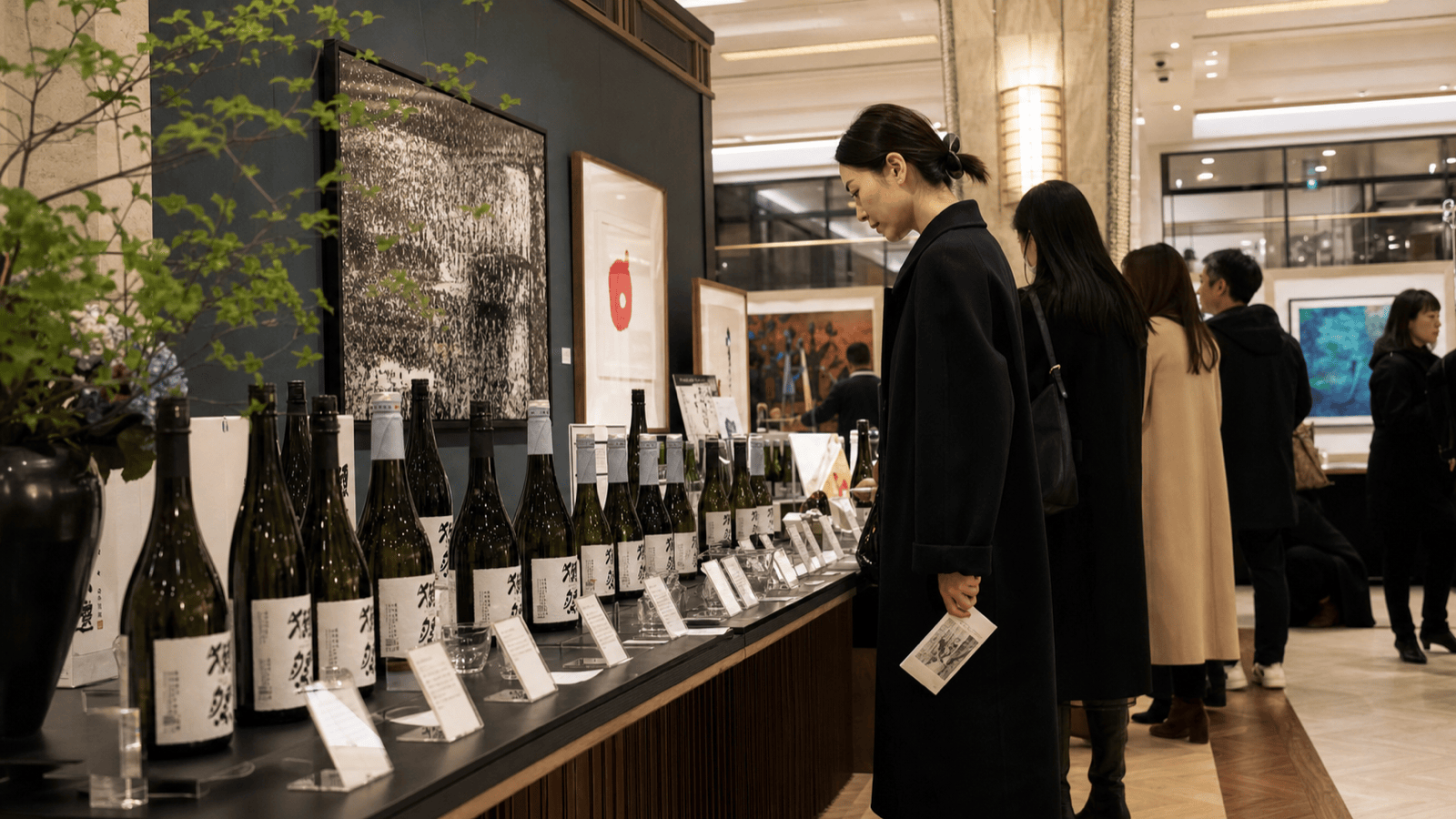
日本酒ブランドの獺祭が、東京の日本橋三越本店で、アートと酒を組み合わせた特別展を5月13日に始めたと報じられた。
Dassai, a sake brand, was reported to have started a special exhibition combining art and sake on May 13 at Mitsukoshi Nihonbashi in Tokyo.
作品と酒造りを並べる企画
会場では、日本の若手芸術家が手がけた芸術作品と、獺祭の商品が一緒に展示されているとされる。
At the venue, artworks created by young Japanese artists are said to be displayed together with Dassai products.
これらの作家は、山口県 岩国市にある酒蔵を訪れ、酒造りの様子や空気を感じたうえで作品を制作したと伝えられている。
These artists are reported to have visited the brewery in Iwakuni, Yamaguchi Prefecture, and then produced works after taking in the process and atmosphere of sake brewing.
展示は、酒をただ飲み物として見せるのではなく、その背景にある考え方や手仕事まで伝えることを意識したものだと見られる。
The display appears intended to present sake not only as a drink, but also to convey the ideas and craftsmanship behind it.
日本橋の百貨店で5月26日まで
会場は、三越伊勢丹グループの旗艦店とされる日本橋三越本店だ。この催しは5月26日まで続く予定と報じられている。
The venue is Mitsukoshi Nihonbashi, described as a flagship store of the Mitsukoshi Isetan group. The event is reported to be scheduled to continue through May 26.
店内には、酒瓶のそばに絵画などが置かれ、買い物に来た 人も立ち止まりながら 見比べられるような空間になっているようだ。
Inside the store, paintings and other works are placed beside sake bottles, creating a space where shoppers can stop and compare them.
商品には、酒米として「王」と呼ばれる 山田錦を使った酒が並ぶとされる。素材そのものへの注目も、この展示の一部になっていると見られる。
The products are said to include sake made with Yamada Nishiki, the rice often called the "king" of sake rice. Attention to ingredients themselves also appears to be part of the exhibition.
日本文化としての日本酒
獺祭は海外でも知られる 日本酒ブランドで、今回の催しでも日本文化をより広く知ってもらうことが目標だと伝えられた。
Dassai is a sake brand known overseas, and the event was described as aiming to help people learn more broadly about Japanese culture.
アートと発酵の世界を結びつけるこの試みは、飲食だけでなく、鑑賞の時間も含めた体験を来場者に届けるものになっているようだ。
This attempt to connect art and the world of fermentation seems designed to offer visitors an experience that includes time for appreciation, not just food and drink.
百貨店の売り場に芸術作品を持ち込み、日本酒の本質を別の角度から見せるこの企画は、東京の日常の中で文化に触れる機会を広げていると見られる。
By bringing artworks into a department-store sales floor and showing the essence of sake from another angle, the project is seen as expanding chances to encounter culture in everyday Tokyo life.