富士山の湧水減少と河口湖の水位低下 — ゴールデンウィーク観光に影
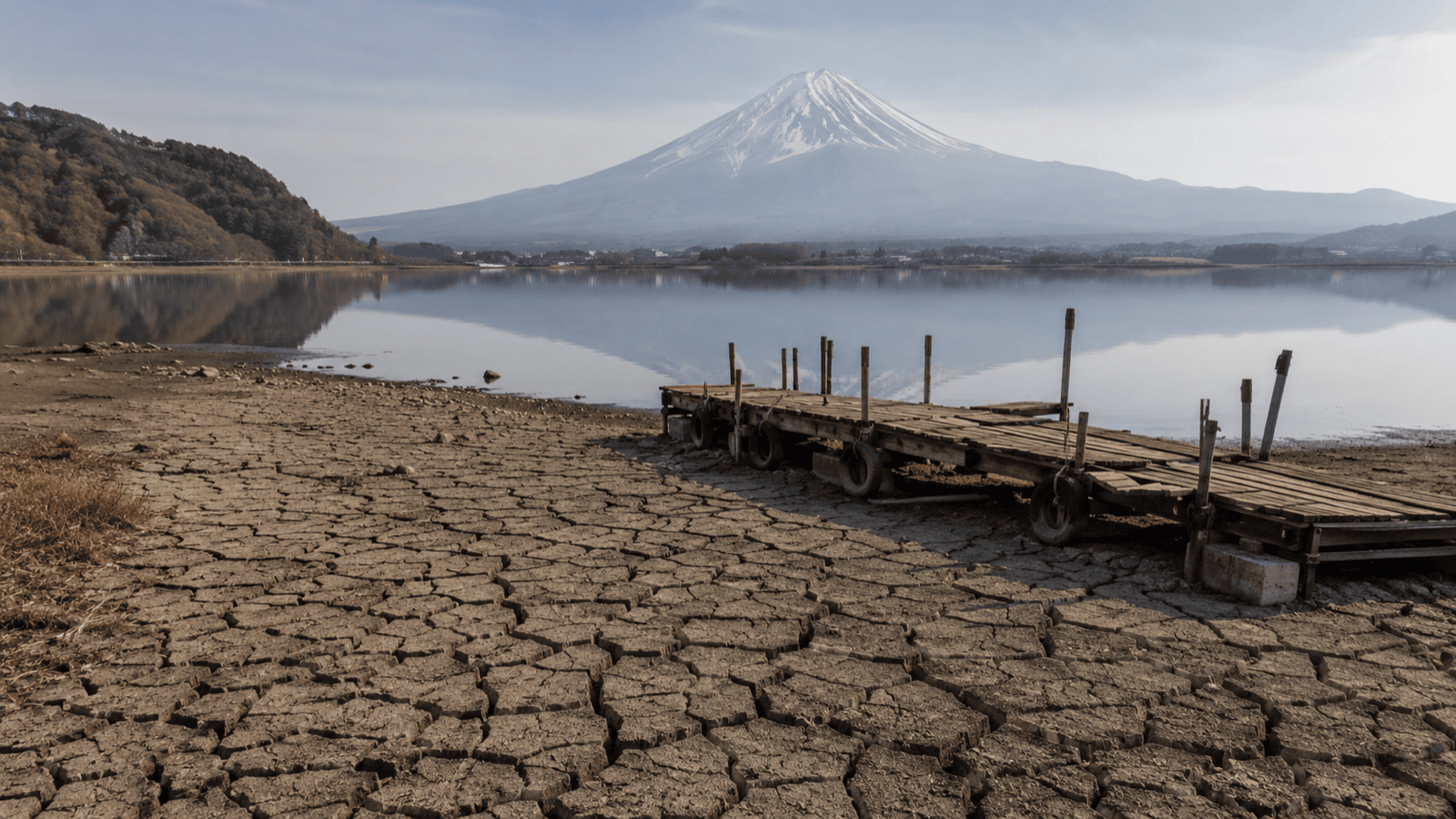
2026年のゴールデンウィークに合わせて、富士山周辺の湧水の減少と河口湖の水位低下が相次いで報じられています。湖の岸辺では湖底の一部が露出し、「逆さ富士」を映す名所でも水鏡が縮小しているとされ、観光に影響が広がっていると見られています。
Coinciding with Japan's 2026 Golden Week, reports have come one after another of shrinking spring water around Mount Fuji and falling water levels at nearby Lake Kawaguchi. Parts of the lakebed are exposed along the shoreline, and the "water mirror" at famous spots that reflect the upside-down Fuji is reportedly shrinking, with the impact on tourism seen as spreading.
積雪の少なさと降水パターンの変化
専門家は、富士山の湧水が山に蓄えられた雪や雨が長い年月をかけて地下水となって湧き出るものだと説明しています。2025年から2026年の冬は積雪が例年より少なかったとされ、湧水量や湖の水位に影響が出始めたと報じられています。
Experts explain that Mount Fuji's spring water comes from snow and rain stored on the mountain that, over many years, becomes groundwater and emerges as springs. The winter of 2025 to 2026 reportedly had less snowfall than typical years, and the impact is reported to be starting to appear in spring-water volumes and the lake's water level.
河口湖の岸辺に広がる干上がった湖底
河口湖は富士五湖のひとつで、湖面に映る富士山の姿が人気の撮影スポットとして知られています。今年は岸辺の一部で湖底が干上がり、本来水に沈んでいた岩場が露出するなど異変が相次いでいるとされ、訪れた観光客からも驚きの声が聞かれていると伝えられています。
Lake Kawaguchi is one of the Fuji Five Lakes and is known as a popular photo spot for the figure of Mount Fuji reflected on its surface. This year parts of the shoreline are reportedly drying up, with rocky areas that were originally submerged becoming exposed and other abnormal changes appearing one after another, while voices of surprise are reportedly being heard from visiting tourists as well.
温泉や宿泊業界にも懸念
湧水の減少は周辺の温泉宿や飲食店にも影響を及ぼす可能性があると指摘されています。豊富な湧水を売りにしてきた豆腐や蕎麦の名店、ワサビ栽培など、水に依存する地域産業は多く、長期的な傾向となれば地域経済に影を落とすと懸念されています。
The decline in spring water is also pointed out as potentially affecting surrounding hot-spring inns and food and drink shops. Many local industries depend on water — famous tofu and soba shops that have made abundant spring water their selling point, wasabi cultivation and others — and there is concern that, if the trend becomes long-term, it could cast a shadow over the regional economy.
インバウンド需要とのジレンマ
今年のゴールデンウィークは5月2日から6日までの5連休で、国内旅行に加え、円安を追い風に訪日外国人観光客も多数が富士山周辺を訪れているとされます。一方で、人気スポットでの過剰利用やマナー違反も相次いでおり、自治体は環境保全と観光誘致の両立に悩んでいると報じられています。
This year's Golden Week runs as a five-day holiday from May 2 to May 6, and on top of domestic travel, many inbound foreign tourists are also reportedly visiting the area around Mount Fuji on the tailwind of a weak yen. At the same time, excessive use of popular spots and manners violations have also been reported one after another, and local authorities are reportedly struggling to balance environmental preservation with tourism promotion.
気候変動との関係を巡る議論
今回の現象が一時的な気象要因によるものか、長期的な気候変動の影響なのかについては、専門家の間でも見方が分かれているとされます。ただ、富士山の初冠雪が年々遅れている傾向も指摘されており、今後も湧水や湖の水量を継続的に監視する必要があると見られています。
Experts are reportedly divided over whether the current phenomenon is due to temporary weather factors or to the long-term impact of climate change. However, the trend of Mount Fuji's first snowfall arriving later year by year is also noted, and going forward there is seen as a need to continuously monitor spring water and lake water volumes.
日本を象徴する富士山とその麓の湖は、信仰・芸術・観光の源として長く人々に親しまれてきました。今年のゴールデンウィークに現れた水の異変は、自然と文化が結びつくこの地域の今後を考える契機になりそうだと見られています。
Mount Fuji, which symbolizes Japan, and the lakes at its foothills have long been beloved by people as sources of faith, art, and tourism. The water-related changes that have appeared this Golden Week are seen as likely to become an opportunity to think about the future of this region, where nature and culture are intertwined.