トヨタのBEV戦略 — マルチパスウェイから本格量産へ
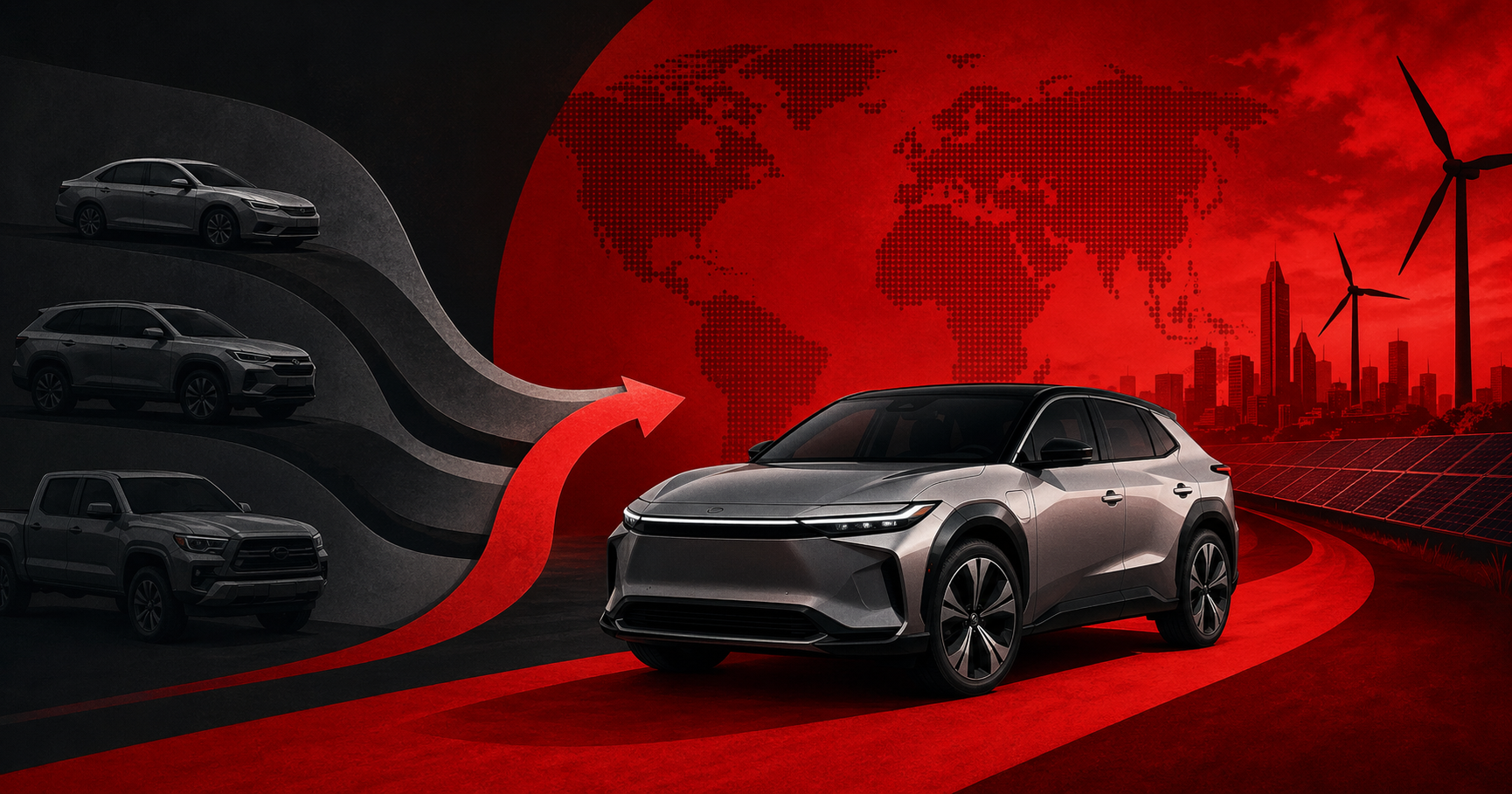
トヨタ自動車は、電気自動車(BEV)への移行が世界的に加速する中で、独自の「マルチパスウェイ戦略」を掲げてきました。BEV一辺倒ではなく、HEV(ハイブリッド)、PHEV(プラグインハイブリッド)、FCEV(燃料電池車)、水素エンジンなど複数の選択肢を並行して追求する全方位アプローチが特徴とされます。本記事では、公開情報を基に現状を整理します。
Amid the global acceleration of the transition to battery electric vehicles (BEVs), Toyota Motor has advocated its unique "multipathway strategy." Rather than a single-track BEV-only approach, it is reportedly characterized by an all-directions approach pursuing multiple options in parallel — HEV (hybrid), PHEV (plug-in hybrid), FCEV (fuel-cell vehicle), and hydrogen engines, among others. Based on publicly disclosed information, this article organizes the current state.
マルチパスウェイ戦略とは
マルチパスウェイ戦略とは、各市場・各地域のエネルギー事情やインフラ整備状況に応じて最適な電動化手段を組み合わせるという考え方とされます。トヨタは、電力の脱炭素化が進んでいない地域でBEVに全面移行しても全体のCO2排出は十分に減らないと主張してきました。
The multipathway strategy is reportedly the way of thinking that combines optimal electrification means according to the energy circumstances and infrastructure-development status of each market and each region. Toyota has argued that even if a region whose electricity has not advanced in decarbonization wholly transitions to BEVs, overall CO2 emissions will not sufficiently reduce.
BEV出遅れ批判と反論
テスラや中国のBYDがBEV市場で急速にシェアを拡大する一方、トヨタのBEV販売台数は相対的に小さい水準にとどまっているとされます。これに対してトヨタは、HEVを含めた電動車全体では世界最大級の販売実績を持っており、累計CO2削減効果はBEV専業メーカーを上回ると反論してきました。
While Tesla and China's BYD are rapidly expanding their share in the BEV market, Toyota's BEV sales units are reportedly remaining at a relatively small level. Against this, Toyota has counterargued that, in overall electrified vehicles including HEVs, it holds a world-largest-class sales track record, and that the cumulative CO2-reduction effect exceeds that of BEV-only makers.
2026年新世代BEV — 走行距離1000km級
トヨタは2026年に新世代BEVプラットフォームを投入し、トヨタ・レクサス両ブランドから新型車を発売する計画とされます。発表資料では、一充電当たりの走行距離を1000km前後まで伸ばす目標が掲げられており、充電時間の短縮や電池コストの削減も併せて進められるとされます。ただし、実走行での達成可否は今後の検証次第とされます。
Toyota is reportedly planning to deploy a new-generation BEV platform in 2026 and release new-model vehicles from both the Toyota and Lexus brands. In the announced materials, a target of extending the driving range per single charge to around 1000 km is reportedly set out, and shortening of charging time and reduction of battery cost are reportedly being advanced together. However, feasibility of achievement in actual driving reportedly depends on verification going forward.
全固体電池の実用化
次世代電池技術の本命として注目されているのが全固体電池(ぜんこたいでんち)です。液体電解質を固体材料に置き換えることで、エネルギー密度・安全性・充電速度の向上が期待されています。トヨタは2027年頃の商用化を目標に掲げているとされ、出光興産など素材メーカーとの協業も公表されています。
What is gathering attention as the leading candidate of next-generation battery technology is the all-solid-state battery (zenkotai-denchi). By replacing the liquid electrolyte with a solid material, improvements in energy density, safety, and charging speed are expected. Toyota is reportedly setting out a target of commercialization around 2027, and collaboration with materials makers such as Idemitsu Kosan has also been publicly disclosed.
中国EV市場での競争
中国市場では、BYDやテスラを筆頭にBEV・PHEVの新車シェアが急速に拡大しており、現地メーカーの低価格・高機能モデルが消費者の支持を集めているとされます。トヨタの中国販売は近年減少傾向にあると報じられており、現地企業との提携や中国専用モデルの開発を強化しているとされます。
In the China market, the new-car share of BEVs and PHEVs led by BYD and Tesla is reportedly rapidly expanding, and low-price, high-function models from local makers are reportedly gathering consumer support. Toyota's China sales are reportedly in a declining tendency in recent years, and it is reportedly strengthening partnerships with local firms and the development of China-dedicated models.
北米市場 — ハイブリッドが好調
北米市場では、ガソリン価格の変動や充電インフラの地域偏在を背景に、ハイブリッド車の需要が根強いとされます。トヨタのRAV4ハイブリッドやカムリハイブリッドは販売好調と報じられており、結果的に同社の北米事業は収益性が高い状態が続いているとされます。テスラのCybertruckやModel YといったBEV専業モデルとの直接対比もしばしば報道されています。
In the North America market, against the backdrop of gasoline-price fluctuation and regional unevenness of charging infrastructure, demand for hybrid vehicles is reportedly firmly rooted. Toyota's RAV4 Hybrid and Camry Hybrid are reportedly seeing strong sales, and as a result, the company's North America business is reportedly continuing in a state of high profitability. Direct comparisons with Tesla's BEV-only models such as the Cybertruck and Model Y are also often reported.
環境規制への対応
欧州連合(EU)は2035年までに新車の内燃機関車販売を原則禁止する方向を打ち出しており、米国カリフォルニア州も同様のZEV規制を段階的に強化しています。トヨタはこれらの市場向けにBEVラインアップを拡充する必要性に直面しているとされ、現地生産の増強も検討しているとされます。
The European Union (EU) is setting out the direction of in-principle banning new-car sales of internal-combustion-engine vehicles by 2035, and the US state of California is also strengthening similar ZEV (zero-emission vehicle) regulations in stages. Toyota is reportedly facing the necessity of expanding its BEV lineup for these markets, and is reportedly also considering augmentation of local production.
充電インフラ整備の遅れ
日本国内におけるBEV普及の制約要因として挙げられるのが、公共充電インフラ整備の遅れです。急速充電器の設置台数は欧州・中国と比較して少ないとされ、集合住宅での基礎充電環境整備も課題とされています。政府は充電器設置の補助金を拡充しているとされますが、本格普及にはなお時間を要するとの見方が一般的です。
What is cited as a constraint factor for BEV diffusion within Japan is the lag in development of public charging infrastructure. The number of fast chargers installed is reportedly few in comparison with Europe and China, and the development of basic charging environments at multi-unit housing is also reportedly a challenge. The government is reportedly expanding subsidies for charger installation, but the common view is that full-scale diffusion still requires time.
まとめると、トヨタはマルチパスウェイ戦略を維持しつつも、2026年の新世代BEVと2027年頃の全固体電池商用化を転換点に、BEV本格量産フェーズに移行しようとしているとされます。各地域の規制・インフラ・消費者嗜好の差が大きい中、同社の戦略が今後どのように評価されるかは業界の注目を集めています。
Summarizing, Toyota is reportedly attempting to transition into a full-scale BEV mass-production phase, with the 2026 new-generation BEVs and the around-2027 commercialization of all-solid-state batteries as the turning point, while still maintaining the multipathway strategy. Amid large differences in regulations, infrastructure, and consumer preferences in each region, how the company's strategy will be evaluated going forward is gathering industry attention.