シカゴで「激しい雨」が7倍に — 気候変動で都市浸水リスク拡大と研究者
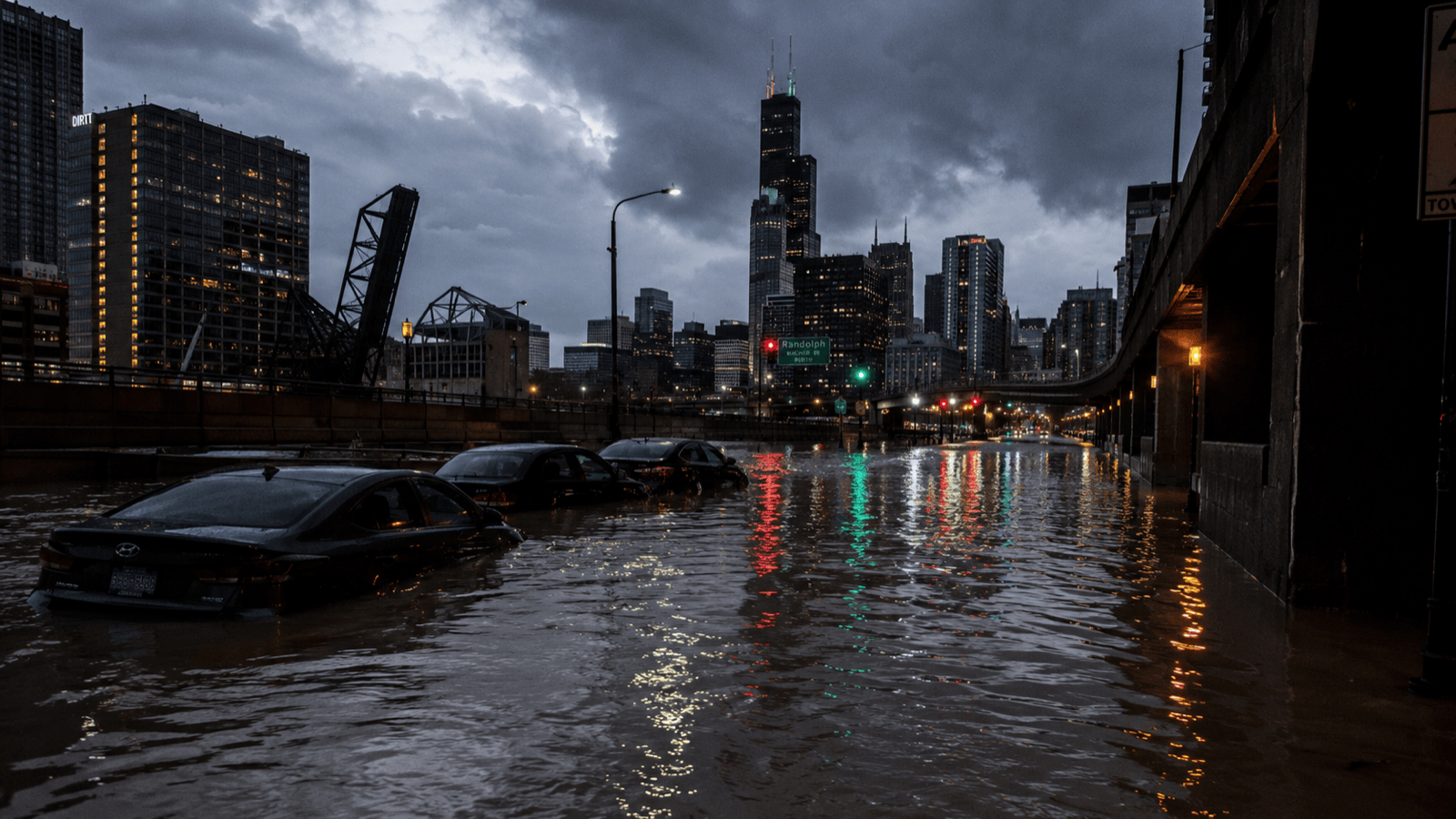
米国・シカゴ周辺で気候変動による豪雨が激しさを増し、都市浸水のリスクが急速に拡大していると報じられています。2026年5月初旬、イリノイ大学の研究者は今後25年で状況が更に深刻化する可能性が高いと警告したとされます。
In the area around Chicago in the United States, torrential rain caused by climate change is reportedly intensifying, and the risk of urban flooding is rapidly expanding. In early May 2026, researchers at the University of Illinois reportedly warned that the situation is highly likely to worsen further over the next 25 years.
豪雨の確率が7倍に
報道によれば、シカゴでは過去100年間で激しい豪雨が発生する確率が約7倍に増加したとされています。気温が上昇すると大気がより多くの水蒸気を保持できるため、降雨が一度に集中しやすくなると説明されています。
According to reports, the probability of heavy rainstorms occurring in Chicago has reportedly increased about sevenfold over the past 100 years. As air temperature rises, the atmosphere can hold more water vapor, making it easier for rainfall to concentrate at one time, the explanation goes.
老朽化した下水道の限界
シカゴの下水道は24時間に2インチ(約5センチ)程度の降雨しか処理できないとされ、これを超える豪雨が降ると排水が追いつかず、多くの住宅の地下室が浸水すると報じられています。インフラの老朽化が被害の拡大を加速していると見られています。
Chicago's sewer system reportedly can only handle about 2 inches (about 5 centimeters) of rainfall in 24 hours, and when downpours exceeding this fall, drainage cannot keep up and many residences' basements are flooded, it is reported. Aging deterioration of the infrastructure is seen as accelerating the expansion of damage.
今後25年の見通し
研究者は、温室効果ガス排出の削減が進まなければ、今後25年でシカゴの豪雨は更に激しくなる可能性が高いと指摘しています。市当局は排水インフラの抜本的な整備を迫られていると見られています。
Researchers point out that if reduction of greenhouse gas emissions does not progress, Chicago's downpours are highly likely to become further intense over the next 25 years. City authorities are seen as being pressed to fundamentally upgrade drainage infrastructure.
日本にとっての示唆
日本でも近年、線状降水帯やゲリラ豪雨による都市型水害が頻発しており、シカゴと同様の課題を抱えているとされます。古い下水道の更新や雨水貯留施設の整備など、日本の都市も気候変動への適応が急務になっていると見られています。
In Japan as well, urban-type flooding caused by linear precipitation bands and guerrilla downpours has been frequent in recent years, and Japan reportedly faces the same challenges as Chicago. Renewal of aging sewer systems and expansion of rainwater retention facilities — for Japan's cities too, adaptation to climate change is seen as having become an urgent task.
今後の論点
今後は、インフラ投資の財源、低所得地区への優先対応、緑地や透水性舗装など自然基盤解決策(NbS)の導入、そして排出削減と適応の両立が焦点になると見られています。
Going forward, the focus is seen as funding sources for infrastructure investment, priority response to low-income districts, introduction of nature-based solutions (NbS) such as green space and permeable pavement, and balancing emissions reduction with adaptation.